




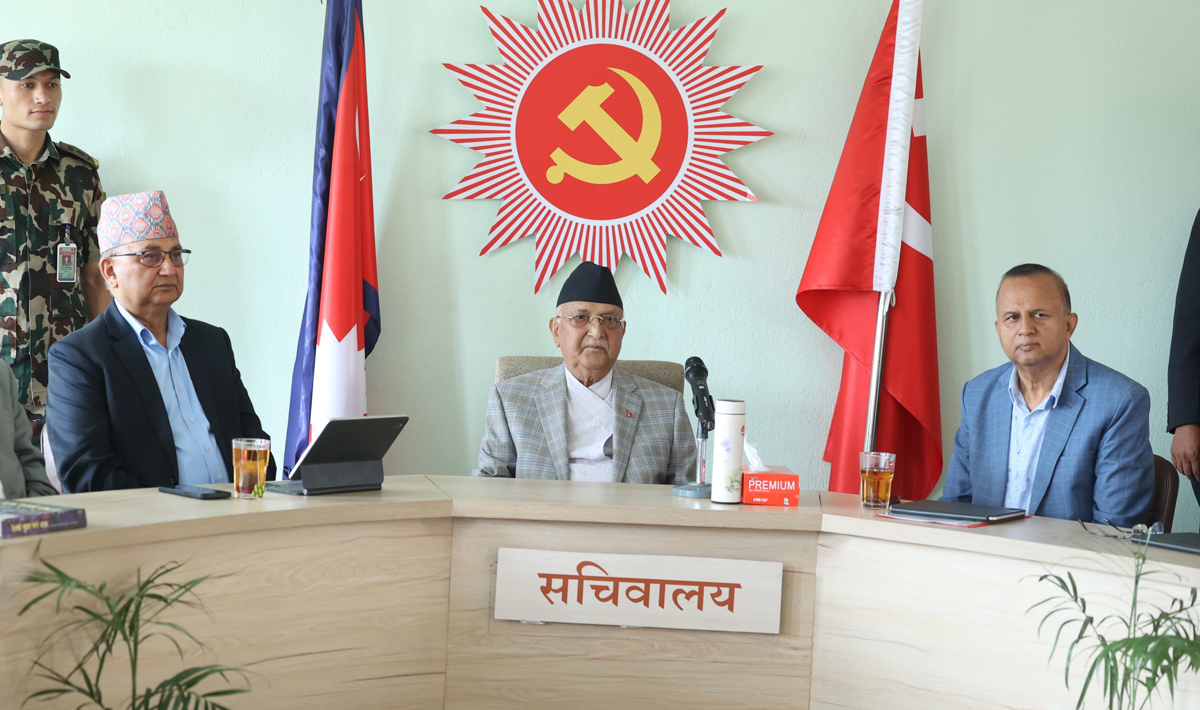
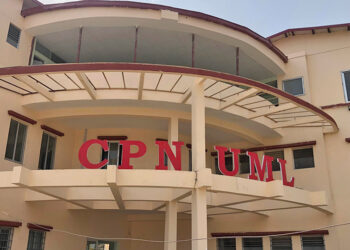
KATHMANDU: An internal rift has surfaced within Nepal’s ruling CPN-UML after its own intellectual wing launched a public survey questioning key decisions made by the party’s Central Committee, including the removal of the two-term limit for executive positions and the 70-year age cap for leadership roles.
The survey comes just weeks after the party’s Central Committee meeting on July 21–22, where changes were endorsed to pave the way for UML Chair KP Sharma Oli’s continued leadership.
The Nepal Intellectual Council, UML’s intellectual wing, however, has initiated a series of consultations aimed at reigniting debate ahead of the party’s Second Statute Convention, scheduled for September 5–7 in Godavari, Lalitpur.
The move is seen as a direct challenge to the intra-party directive issued by Oli following the Central Committee meeting. The directive discouraged party leaders from publicly opposing the leadership’s decisions. Yet, Council Chair Gajendra Thapaliya defended the survey as a legitimate attempt to gather broader input and facilitate internal debate.
“If we’re not allowed to discuss the party statute, what’s the point of holding a convention?” Thapaliya told local media. “The Central Committee may have restrained its own members, but our survey is aimed at the general public. It will continue regardless.”
The Council’s 12-question survey addresses various issues, including party structure, term limits, transparency, leadership qualifications, and financial accountability. One of the questions asks whether there should be a statutory provision to bar former members who rejoin the party from reclaiming their previous posts—a subtle jab at recent trends within UML.
Another question directly probes the removal of the two-term limit for executive office-bearers, asking: “Do you support a provision that bars individuals from holding executive positions for more than two terms?” Other questions deal with the appropriateness of the 70-year age limit, the size of the Central Committee, the automatic delegate status of event organizers, and the inclusion of former constitutional commissioners in party responsibilities.
The survey also gauges opinion on women’s representation, financial transparency in party funding, and whether new, talented individuals should be fast-tracked into leadership through a quota system—proposals that hint at underlying dissatisfaction among party cadres.
Although framed as preparatory work for the upcoming Statute Convention, the survey is already being viewed by UML insiders as a veiled critique of the party leadership’s recent direction. Senior leaders have privately expressed concern that the Council’s initiative could undermine the party’s internal unity ahead of the crucial convention.
Nonetheless, the Council maintains that its actions are within the party’s democratic tradition and are intended to foster meaningful discussion.
“We are not violating any rules,” said Thapaliya. “We are simply helping the party engage with the broader public on issues that affect its future.”

Comment