




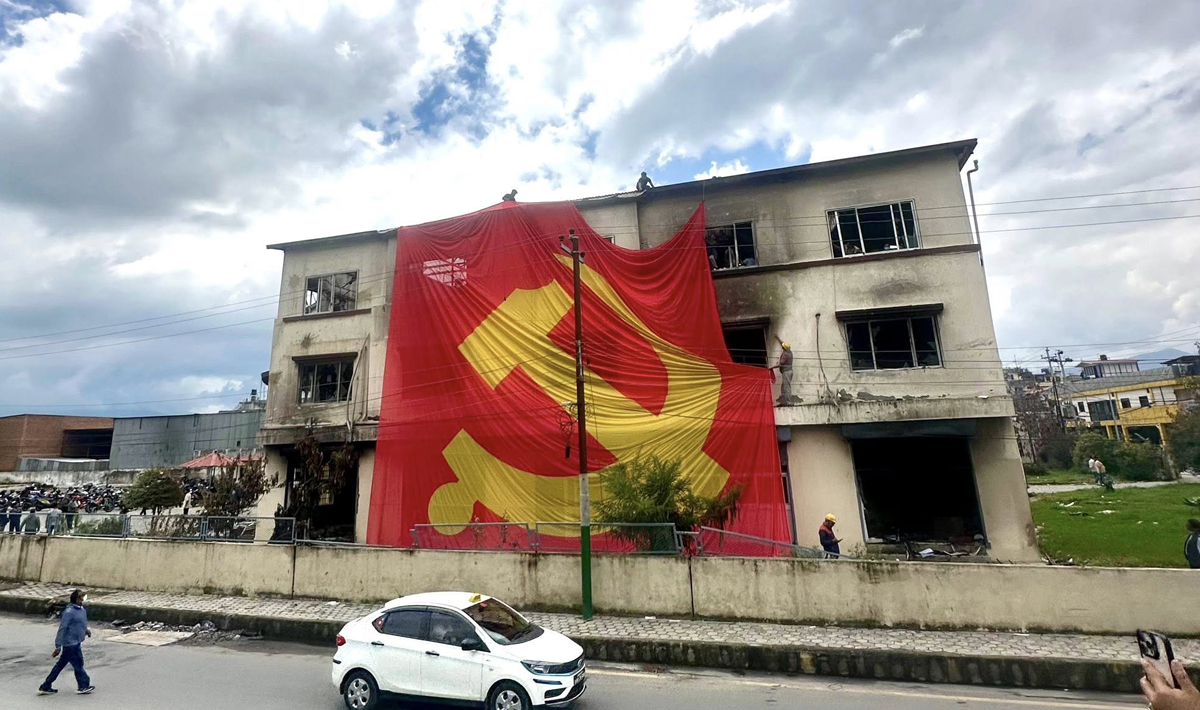
KATHMANDU: The CPN-UML has clarified the representation structure for its 11th general convention, scheduled to take place from December 13 to 15 in Kathmandu.
A total of 2,127 delegates will participate, with the party issuing an internal party directive (IPD) to outline how representatives from various sectors and regions will be selected.
According to IPD, the party has defined the delegate selection criteria based on membership numbers across different clusters.
“The directive specifies representation from all regions, along with the proportional allocation based on party membership. District committees will implement these provisions, and any doubts can be clarified with the central office or the organizational department,” said central office secretary Dr. Bhishma Adhikari.
The central committee, three commissions, and the central advisory council will collectively contribute 464 delegates. Of these, 355 will come from the central committee, 29 from the disciplinary commission, 30 from the election commission, 25 from the audit commission, and 25 from the central advisory council.
Provincial-level committees, including special provinces, will contribute 45 delegates, with at least two women among five representatives from each committee.
The largest representation cluster will be based on geography, divided according to federal electoral constituencies. Under this system, 1,135 delegates will be selected from 165 constituencies, with one youth under 40, one woman, and two additional delegates for every 1,200 party members in a constituency.
IPD further clarifies that for every additional eight hundred members beyond the base, one more woman and one open elected delegate will be included. For special districts within the country, a minimum of three elected delegates, including at least one woman, will represent 1,200 members, resulting in 47 delegates from these districts.
The party has also allocated 81 delegates under Dalit representation. In each constituency, one delegate is selected for every 500 party members, with provisions for additional delegates based on higher membership. Each Dalit delegate cluster must include at least one woman.
From the labor cluster, 49 delegates will participate. Each province will contribute seven representatives, including at least three women, based on working party members.
Expatriate committees will send 35 delegates. India’s special expatriate committee will contribute 10 delegates, including at least three women, while committees from the U.S./Canada, Europe, Asia-Pacific, Gulf, and Oceania will send five delegates each, including two women, totaling 35.
Thirty-two delegates will be selected from party members in central departments, and one representative will come from members working in the central office.
Among the party’s 23 mass organizations, seven representatives, including at least three women, will attend from organizations under Schedule One and the federal structure. These include the sports federation, farmers’ federation, ANNFSU, and the National Youth Federation Nepal, among others.
Additionally, 12 organizations under Schedule Two will contribute five representatives, including at least two women. In total, 137 delegates from mass organizations will participate in the convention.
After including five percent nominated delegates as per the party constitution, the total number of delegates reaches 2,127.
“The IPD clearly outlines the representation structure from all sectors and regions, ensuring inclusivity and proportional participation,” said Bhanu Bhakta Dhakal, head of the party’s mass organization mechanism.
The party’s emphasis on geographic, gender, Dalit, labor, and expatriate representation reflects an effort to make the convention inclusive and representative of its diverse membership base. Party officials said the directive is intended to provide transparency and uniformity in the selection process, leaving little room for ambiguity at district and provincial levels.
The upcoming 11th general convention will focus on evaluating the party’s current political strategies, reviewing internal structures, and electing leadership positions. The detailed representation structure is expected to help maintain balance among various party factions, while also ensuring participation from all regions and special groups.


Comment