




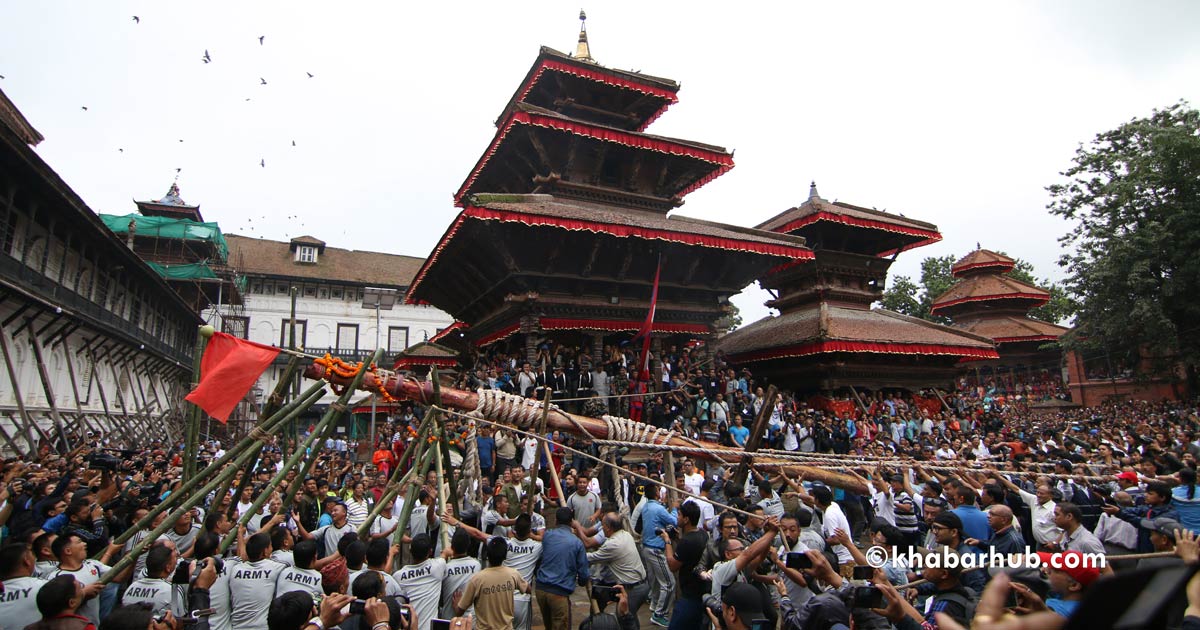
KATHMANDU: The traditional festival of Indrajatra is being celebrated today with the worship of Devraj Indra, the god of rain and good harvest.
This annual festival is primarily observed in the three districts of the Kathmandu Valley, as well as in Dhulikhel and Dolakha. It begins on Bhadra Shukla Chaturdashi (the fourteenth day of the waxing moon in the Nepali month of Bhadra) and continues for eight days.
On the first day of the festival, a sacred wooden pole known as the Lingo, adorned with flags at the top, is ceremoniously erected at Hanuman Dhoka, the historic palace square in Kathmandu. This ritual is known as Indradhwajotthan, and Lord Bhairav is worshipped at the base of the pole.
The Lingo is traditionally sourced from a forest in Nala, Kavrepalanchok district, and is transported to Kathmandu through a Tantric ritual process. Once brought to the city, it is sanctified with religious rites at Bhotahiti before being erected.
Throughout the festival, the city comes alive with vibrant chariot processions, cultural songs, and traditional dances such as Bhakku, Mahakali, Lakhey, Dashavatar, and Pulukisi—the latter representing Airavata, the elephant mount of Lord Indra.
Indrajatra is considered a celebration of victory over evil and is believed to bestow strength upon devotees who worship Lord Indra.
As part of the main celebration, the President of Nepal observes the grand chariot processions of Shree Kumari (the Living Goddess), Shree Ganesh, and Shree Bhairav at Hanuman Dhoka. On this occasion, the President also offers worship to the Kumari and receives prasad (blessed offerings).




Comment