




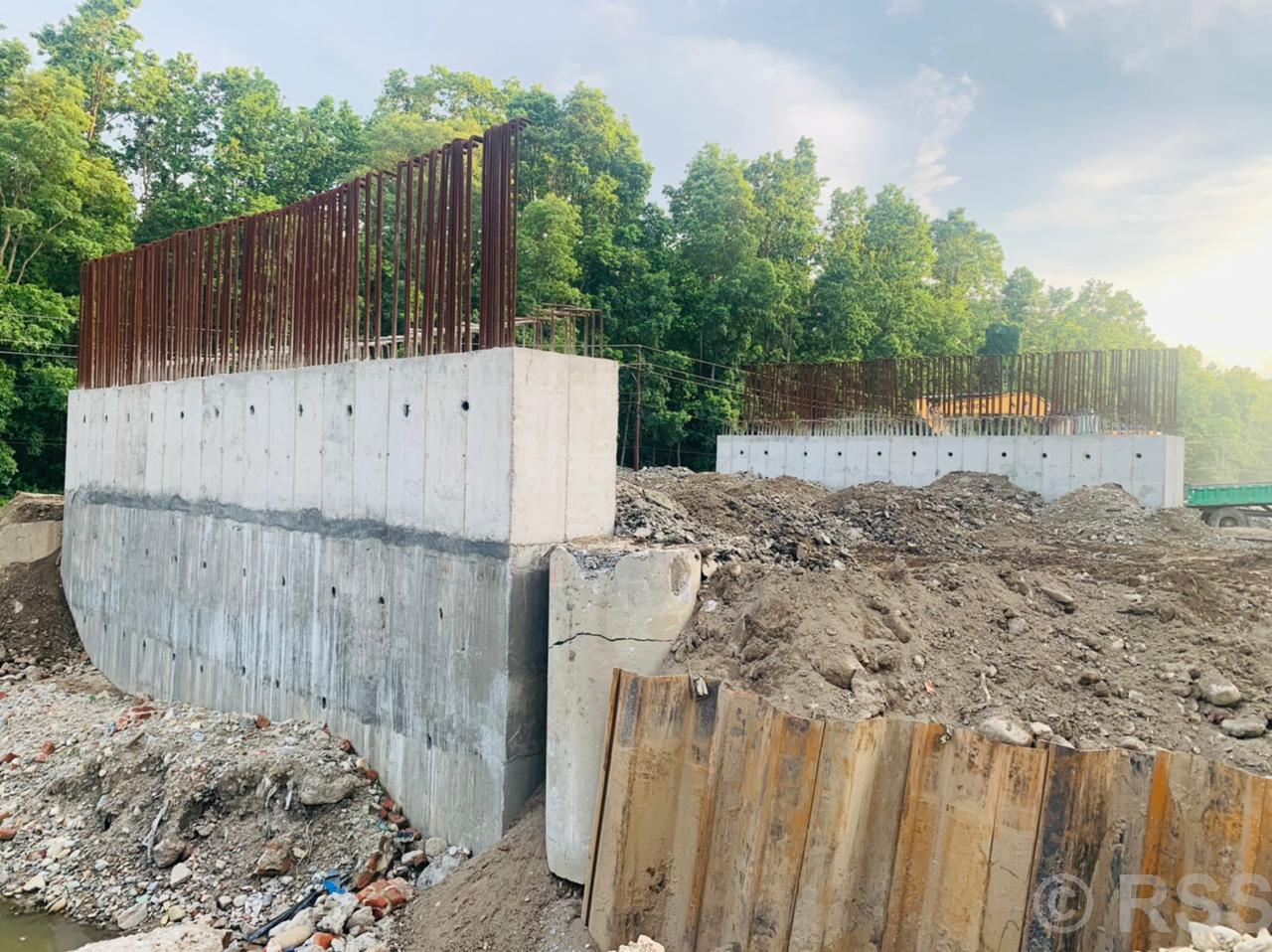
BIRTAMOD: Construction of the ‘elephant crossing’ on the Birtamod–Charali section of the Asian Highway in Jhapa has reached 45 percent completion.
According to project engineer Ashray Mahat, the structure is being built with wildlife safety in mind and is the only such crossing under the highway project in Koshi Province. So far, 60 percent of the single-lane section and 35 percent of the double-lane section have been completed.
After floodwaters in June washed away the temporary diversion, it was rebuilt using a large hampipe, allowing construction to resume, said chief engineer Sunilbabu Pant. The crossing, 15 meters long and 6.5 meters high, has a total budget of Rs 33.958 million, with Rs 15.2 million worth of work completed so far.
The Charali area is a known hotspot for human-wildlife conflict due to surrounding community forests, the Nepal Army’s forest protection unit, and cross-border wildlife movement from India.
Engineer Pant reported that 30 people have been killed in recent years due to elephant, leopard, and tiger attacks—elephants being the primary cause of loss of life and property in Jhapa and Morang.
Division Forest Office officer Rishi Timsina noted ongoing issues with monkey and elephant activity in Mechinagar, Arjundhara, Bhadrapur, and Birtamod, and leopard and tiger sightings in northern Jhapa.
Locals and conservationists believe the elephant crossing will offer a safer passage for wildlife. Forest activist Badri Pyakurel of Birtamod-7 said past efforts, including fencing wires installed under the initiative of Speaker Devraj Ghimire, were only partially effective. He emphasized the need for a more robust solution.
Charali resident Badri Mahat expressed hope that the crossing will reduce both human and wildlife casualties, as community forests lie on both sides of the highway. “This structure will protect animals and help save lives,” he said.
Bahundangi-based elephant conservationist Arjun Karki stressed that elephant encounters should not be seen solely as conflict. He called for integrated efforts from all three levels of government to manage elephant movement and explore ways to generate employment and income through proper wildlife management.
The under-construction elephant crossing is expected to significantly reduce human-wildlife conflict and contribute to long-term wildlife conservation in eastern Jhapa.






Comment