




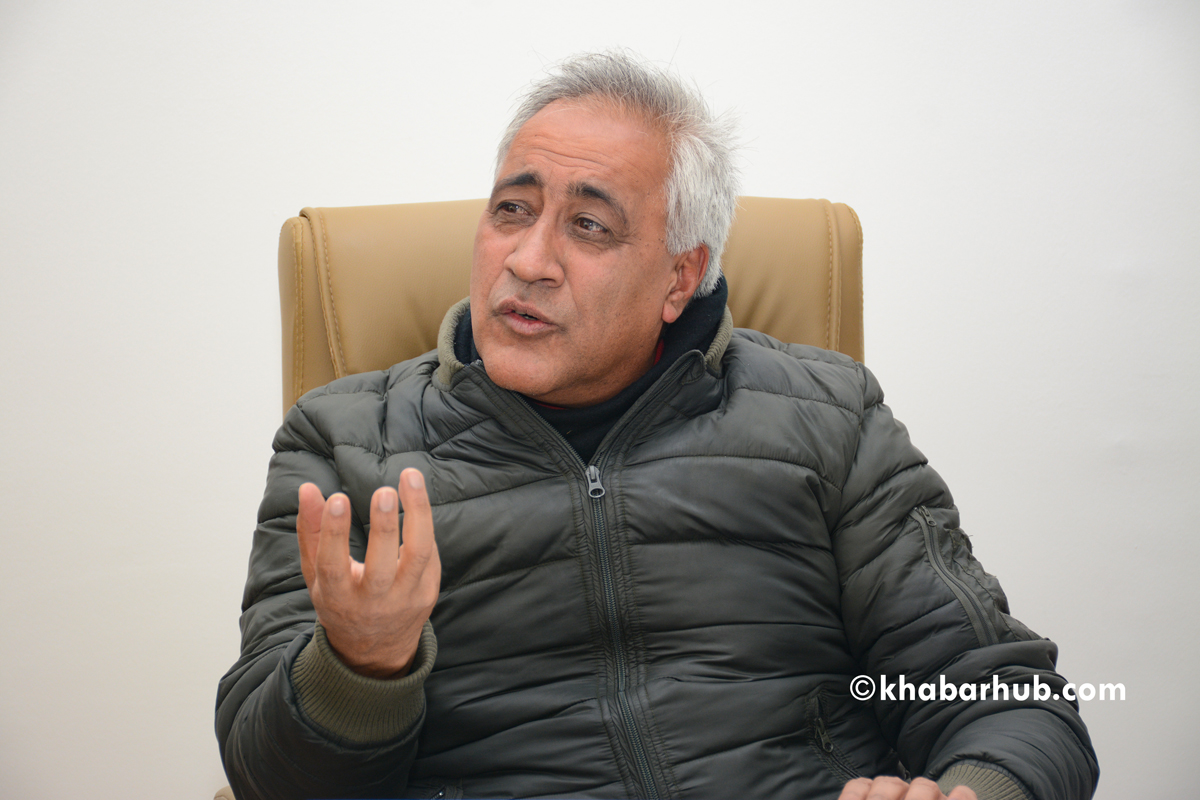
KATHMANDU: Nepali Congress (NC) leader Dr. Chandra Bhandari has called for a comprehensive self-assessment of the party, making sharp remarks on its organizational structure, government performance, and future strategy.
Speaking at the Central Working Committee meeting held at the party’s central office in Sanepa, Lalitpur, on Sunday, Bhandari said that although the Nepali Congress is part of a coalition government led by two major parties, the expected progress has not been achieved.
“Our leaders are quick to take office but reluctant to work,” he remarked. “Because responsibilities are not assigned to the right people at the right time, the government is like a shepherd who doesn’t cut grass—the buffalo will starve.”
As the 2027 elections approach, Bhandari suggested the party should aim to contest independently rather than rely on alliances. “The alliance has cost the Nepali Congress dearly; now we must prepare to win on our own,” he said.
He emphasized the need for a generational shift in leadership, stating, “The older generation is stepping back—it’s time for the new generation to lead the Nepali Congress.”
Calling for an open review of the party’s disputes and shortcomings, Bhandari said, “Every party has internal fights, but we must honestly acknowledge both internal and external failures.”
He also criticized former high office bearers for re-engaging in active politics, saying, “It is inappropriate for former Presidents and Vice Presidents to return to party politics after holding those positions.”
Addressing the ongoing controversy in Parliament over the Civil Servants Bill, Bhandari condemned the removal of the ‘cooling-off period’ provision. “It’s a shameful decision. I feel embarrassed to even call myself a Member of Parliament. Those responsible must be held accountable,” he said firmly.
He also expressed concern over the plight of farmers, saying they continue to face fertilizer shortages. “Farmers are planting paddy without fertilizer. There’s no irrigation, no market access, and no pricing mechanism,” he said, criticizing the government’s failure to prioritize production despite Nepal’s vast water resources.
Bhandari concluded that the root problems lie in the Nepali Congress party’s leadership, policymaking, governance style, and lack of strategic direction. “If the party doesn’t adapt to the changing times and formulate a solid election strategy, the 2027 elections will be extremely difficult for us,” he warned.





Comment