




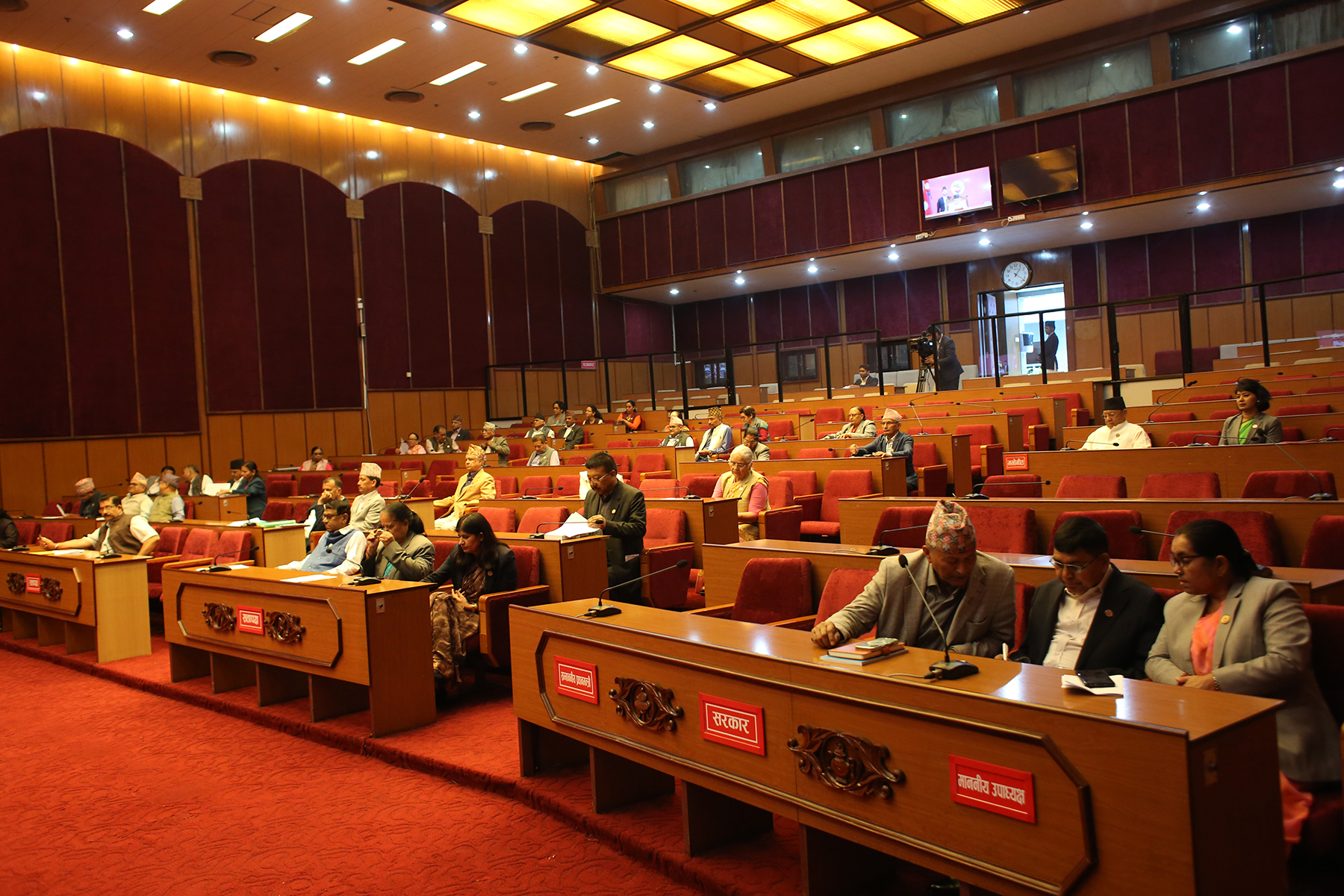
KATHMANDU: Nepali Congress (NC) lawmaker Jitjung Basnet has called for a substantial increase in the salaries of civil servants, arguing that better remuneration is necessary to curb corruption and promote good governance.
Speaking during the general discussion on the annual estimate of revenue and expenditure for fiscal year 2082/83 at the National Assembly on Sunday, MP Basnet said the rising cost of living has made it difficult for government employees to sustain themselves on current salaries.
“We often hear that civil servants don’t work or are corrupt. But are they truly corrupt, or are they victims of a broken system?” he asked.
“Inflation and black-market activities are on the rise. If we look at the salary structure—from junior staff to senior officials—and compare it with the private sector or with security personnel like the police and army, it becomes clear that the current pay is insufficient. To promote good governance, we must consider doubling or even tripling their salaries.”
Basnet also described the newly announced budget as “good and balanced,” but emphasized the need for robust monitoring to ensure effective implementation.
“A budget is not just a government document; it reflects national aspirations,” he said. “It should not be limited to figures and statistics—it must point toward the future of the nation. The work outlined in the budget should be completed in line with the people’s expectations.”
Highlighting infrastructure concerns, he pointed to the Narayangadh-Mugling road section as the country’s “lifeline,” lamenting that despite billions being spent, its completion remains uncertain.
He called for the development of an alternative route to prevent frequent disruptions caused by floods and landslides.
In the same session, Unified Socialist lawmaker Jayanti Devi Rai criticized the budget, stating it failed to address public expectations.
“A two-thirds majority government should have brought a budget that builds trust rather than just raising hope,” she said.
While noting the 5.6 percent increase in the overall budget compared to the current fiscal year, she expressed concern over weak revenue collection and insufficient allocations.
“More than 80 percent of the work of the Ministry of Women and Children remains unfunded,” she said. “Without prioritizing agricultural production, the country cannot become self-reliant.”





Comment