




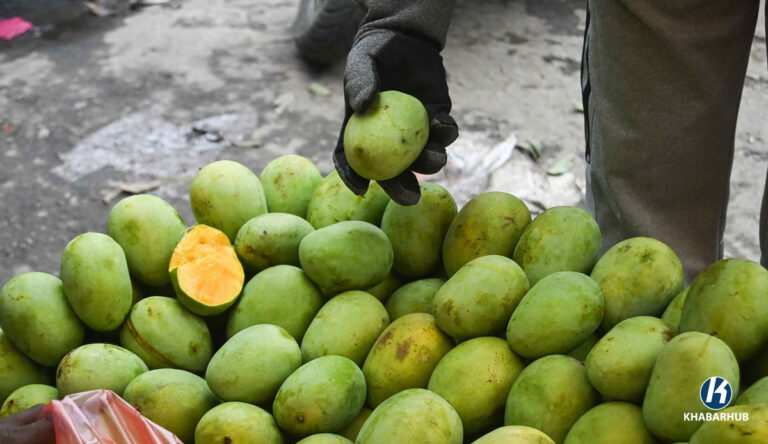
KATHMANDU: Even before the mango season has officially begun, mangoes have started flooding markets across Nepal.
Despite Nepali mangoes typically ripening only after the monsoon month of Asar (mid-June onward), fruits ripened artificially using harmful chemicals like calcium carbide are being sold widely—from wholesalers down to street vendors and door-to-door retailers.
Health experts have raised concerns over this practice, warning that mangoes ripened with carbide are hazardous to human health. They recommend consuming only naturally ripened seasonal fruits to avoid health complications.
Consumption of chemically ripened fruits can lead to various health issues, ranging from stomach aches, vomiting, and diarrhea to more serious damage to vital organs like the lungs, heart, and kidneys.
Farmers are reportedly selling unripe mangoes to traders early in the season due to attractive pricing, but such mangoes are often lacking in taste and nutrition, according to agricultural experts.
According to the National Fruit Development Centre, the natural ripening time for early varieties of mangoes in Nepal has not yet arrived. Mangoes are expected to reach markets naturally only after the onset of Asar. However, early sales have already become widespread.
Just this week, the Dhangadhi Sub-Metropolitan City destroyed 2,276 kilograms of mangoes found to be contaminated with pesticides. In contrast, monitoring in Kathmandu remains relatively ineffective.
Earlier this week, Kathmandu Metropolitan City conducted pesticide tests at the Kalimati Fruits and Vegetable Market. While tests were conducted on vegetables and lychees, only the lychees were found to be free of pesticide contamination.
Health officials and consumer rights advocates are calling for stronger surveillance, public awareness, and stricter penalties to curb the sale of harmful, chemically treated fruits in the name of profit.






Comment