




DHARAN: Dharan Sub-Metropolitan City, one of Nepal’s most water-stressed urban areas, has decided not to proceed with its long-awaited drinking water project using loans from the Asian Development Bank (ADB).
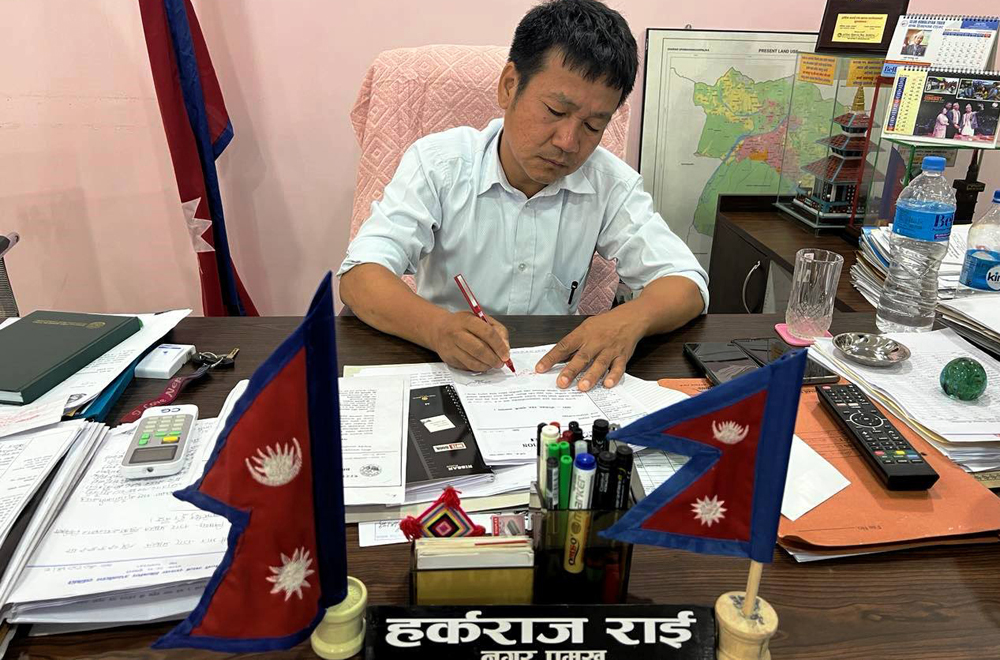
Mayor Harka Sampang Rai, who also chairs the Dharan Water Management Board, officially informed the Ministry of Water Supply on Thursday, urging the government to implement the project using national revenue rather than burdening the country with additional foreign debt.
In a letter addressed to the Ministry and the Minister for Water Supply, Mayor Rai said that although the government had allocated Rs 40 million in the fiscal year 2025/26 for the long-term plan to bring water from the Saptakoshi River to Dharan, there were concerns that the rest of the financing would be sourced through ADB loans.
“It would not be appropriate to burden the country with foreign loans,” the mayor wrote. “Since the city has yet to repay its previous ADB loans, we urge that any further work be carried out using national funds. If not, we will continue to manage with the local streams and sources as best we can.”
Dharan’s chronic water shortage is well-documented. A 2012 agreement between the ADB, the Government of Nepal, and then-Dharan Municipality introduced a $22 million water supply project.
The project involved constructing deep tube wells in the southern forest and supplying groundwater through pumping systems.
Though the infrastructure was completed and both the contractor (Tianjin Tundi JV) and consultant (Building Design Authority) have exited, the water supply remains unstable and costly due to the need to pump water from over 100 meters underground using electricity and generators.
While monsoon season provides some relief through the Sardu and Khardu watersheds, these sources dry up by up to 80 percent in the dry season. According to Mayor Rai, this makes the project unsustainable in the long term, especially considering the high electricity and fuel costs required for pumping.
The ADB’s support was part of an integrated urban development program, with 35 percent as loans, 26 percent as grants, 24 percent funded by the Government of Nepal, and the remaining 15 percent covered by the local government. Despite these financial arrangements, the local leadership is now calling for a complete rethinking of how the project is funded.
Currently, the Dharan Water Management Board — which now also oversees the merged Nepal Water Supply Corporation branch in Dharan — is responsible for supplying water to 28,000 taps across the city’s 19 former wards. While the city’s daily demand stands at 30 million liters, the Board has managed to supply only around 20 million liters during monsoon and a mere 15 million liters in the dry season.
The water crisis has had significant impacts on Dharan’s development. The scarcity has prevented the establishment of major industries and luxury hotels. During the dry months, residents often rely on tanker water supplied from Tarahara, a neighboring area in Itahari, paying between NPR 0.50 and NPR 1 per liter.
Last year, the Province Government allocated Rs 40 million to build two additional deep tube wells to boost underground water production. However, due to a lack of funding for essential equipment such as generators, pumps, and trunk line connections, these wells remain non-operational.
Mayor Rai was elected on a drinking water agenda, pledging to bring water from the Saptakoshi River. But the technical and diplomatic hurdles remain significant.
The proposed project involves pumping water from Saptakoshi, located 20 kilometers away, which would require coordination with the local governments, formal agreements between Nepal and India, and hundreds of millions in investment for pumping stations and sand filtration systems.
A past survey conducted during Ashok Kumar Rai’s tenure as Minister for Science, Education, and Technology, estimated the Saptakoshi water project would cost approximately Rs 5 billion. Mayor Rai has expressed his wish that this amount be funded entirely by the Government of Nepal.
An alternative plan was also studied: bringing water from the Tamor River via a 3.86-kilometer-long tunnel. The feasibility study, completed in 2022, estimated the cost of the project at Rs 10.63 billion.
The proposed entry points for the tunnel would be at Khardu and Leuti in Dharan, with potential to not only meet Dharan’s needs but also supply areas from Itahari to Duhabi. However, Mayor Rai has firmly opposed bringing water from the Tamor River through a tunnel, stating that he would not allow such a project under any circumstances.
With long-term solutions facing funding and technical challenges and short-term measures proving inadequate, Dharan’s drinking water crisis remains unresolved. The city now waits to see whether the central government will respond to the mayor’s call for national investment — or whether another dry season will force residents to continue buying water by the liter.






Comment