




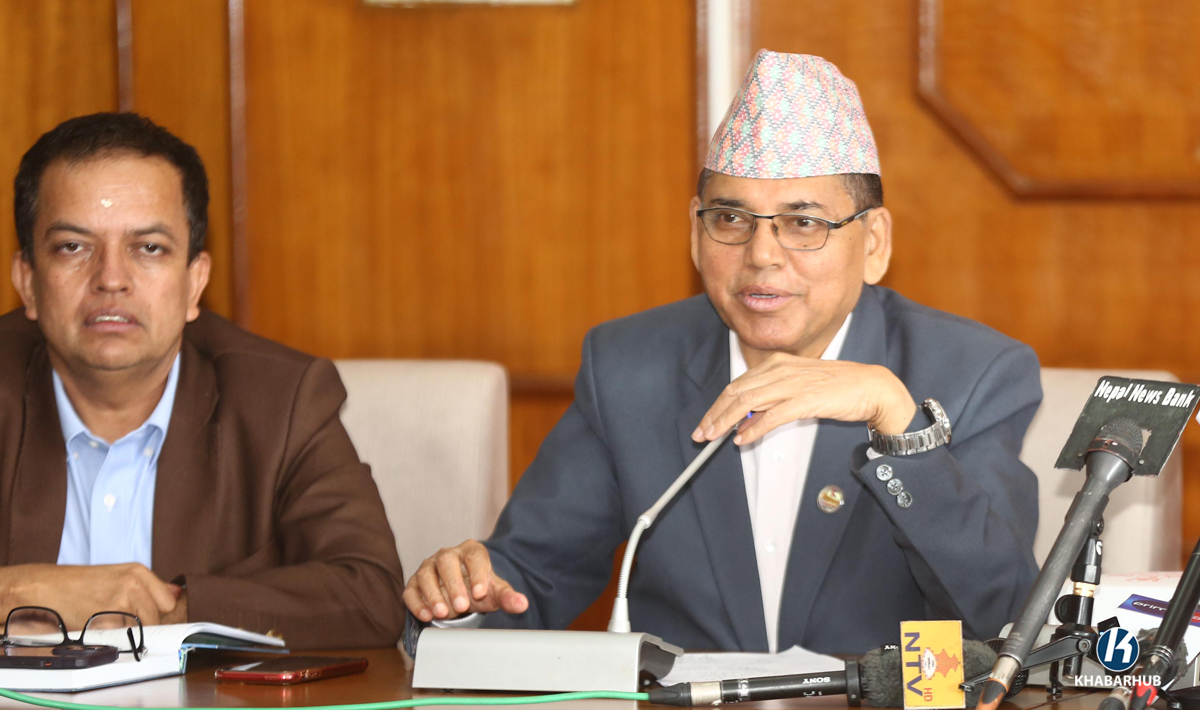
KATHMANDU: Minister for Physical Infrastructure and Transport, Devendra Dahal, has said that the government is moving toward prioritizing development projects with budgets above Rs 50 million in future fiscal planning.
Speaking at an event organized by the Society of Infrastructure Journalists on effective implementation of the infrastructure budget, Minister Dahal explained that this approach will allow the government to better allocate funds to large-scale and impactful projects.
Highlighting recurring inefficiencies, Dahal remarked that despite extensive discussions during the budget-making process, outdated practices continue to hamper project execution.
“We hold a lot of discussions, but the outcome still reflects past habits. Even for projects of national pride, preparatory work begins only after budget allocation,” he said, citing this as a key reason for delays and inefficiency.
The minister criticized systemic flaws, including government delays in clearing project-related hurdles and contractors starting late or extending deadlines using political influence.
“In some bridge construction projects, contracts are issued without ensuring funding, which has led to today’s resource crunch,” he added.
Dahal also pointed to the lack of coordination among regulatory bodies, despite their growing numbers, and called for more synchronized efforts aligned with sustainable development goals.
He said the government is serious about reforming problematic provisions in the Public Procurement Regulations.
“We are revising policies so that when contractors are granted deadline extensions, they will bear the extra costs themselves,” he stated.
The minister acknowledged that many projects under his ministry are still in the tender process and have not moved into execution. He stressed the need for the National Planning Commission to become more proactive in driving implementation.
Minister Dahal’s remarks signal a shift in the government’s development approach—one that focuses more on project readiness, assured resources, and capacity-driven execution to achieve sustainable and impactful infrastructure development.






Comment