




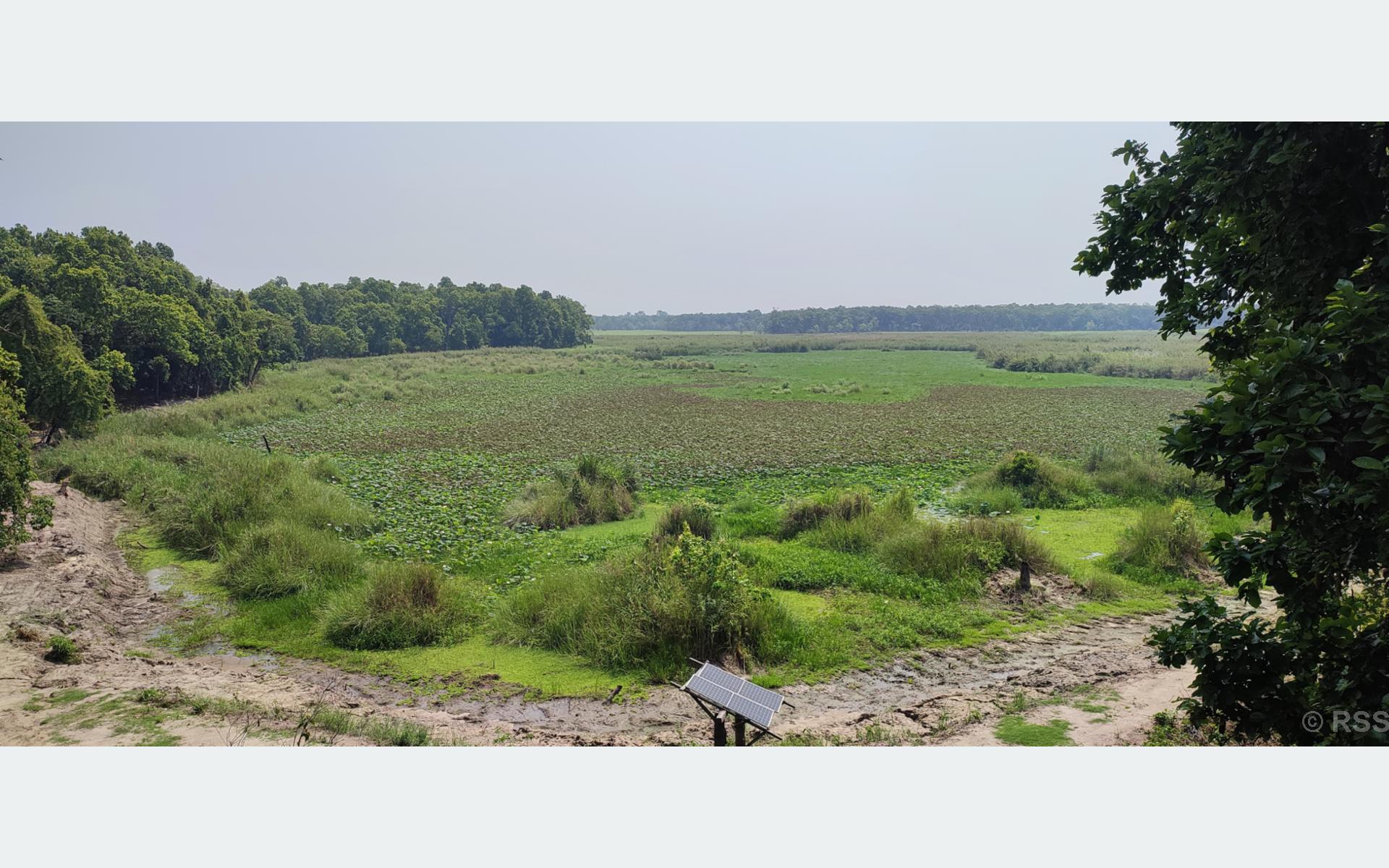
KANCHANPUR: Several lakes inside Shuklaphanta National Park are drying up and becoming overrun with water lilies and invasive weeds—an alarming sign attributed to the effects of climate change. Conservation efforts, according to officials, are being hindered by limited funding.
According to Purushottam Wagle, the park’s information officer, major natural lakes such as Ranital, Sikari Tal, Babatal, Kalital, Taratal, and Salgaudi Tal are gradually shrinking and getting choked by vegetation. These lakes serve as crucial water sources for the park’s wildlife.
“We have a capital budget of only Rs 3.4 million, which we’re required to use not just for conservation but also for building tourist trails and other infrastructure within the park,” said Wagle. In addition to the natural lakes, the park also contains around 40 artificial water bodies.
Shuklaphanta National Park, known for its rich biodiversity, is a significant destination for both domestic and international tourists. The park is home to diverse flora and fauna, as well as numerous wetland ecosystems. Wagle stressed the urgent need for increased funding to protect and preserve the park’s vital lakes and wetlands.






Comment