




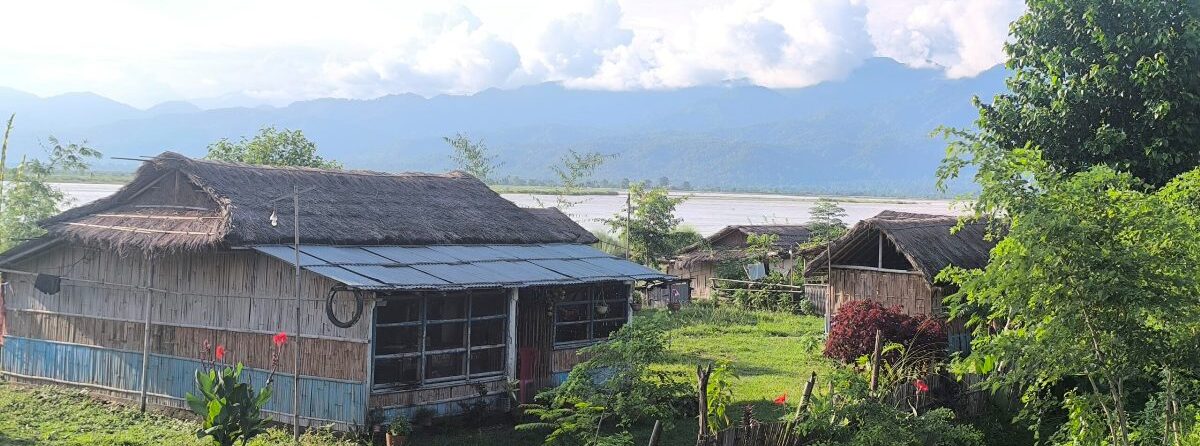
SUNSARI: The banks of the Saptakoshi River in Barahakshetra Municipality, Sunsari, hold immense potential for religious tourism, water-based recreation, agrotourism, and ecotourism.
However, despite early policy commitments, a lack of government initiative and bureaucratic challenges continue to hinder development.
After the formation of Barahakshetra Municipality — the youngest in the district — former local leaders prioritized agriculture, water-based tourism, and ecotourism as key pillars for development.
Then-Mayor Nilam Khanal even envisioned Barahakshetra as a “summer city” — a destination ideal for summer vacations, featuring modern agriculture, eco-resorts, and water tourism along the Koshi River.
Plans included the scientific expansion of the Koshi Tappu Wildlife Reserve, agricultural modernization in the Koshi River’s wide floodplains, plantation initiatives, and incentives for private-sector resorts and restaurants along the riverbanks — all aimed at monetizing the Koshi and boosting local revenue.
Eight years later, still no infrastructure
Nearly eight years have passed since these ambitious plans were set, yet very little infrastructure has been developed. Despite policy declarations, implementation has faltered. The Koshi Riverbank, which holds potential not just in summer but also during winter for picnic tourism and seasonal recreation, remains underutilized.
Local youth, eager to build businesses around these possibilities, say they have not received support from the local government.
Young entrepreneurs face roadblocks
Harka Bahadur Rai, a youth from Barahakshetra-7, returned from nearly a decade of foreign employment in the UAE to invest in agrotourism. Leasing land near the river, he established a small agricultural farm and built a basic hut to operate a riverside tea and snack shop. His vision was to turn buffalo-grazing areas into tourist-friendly spaces.
“The place has great potential,” says Harka. “Especially after the Bihar government of India built a single-lane blacktop road along the Koshi for monitoring river flow, the area has become more accessible, attracting domestic tourists. But there’s no official support.”
Like Harka, Mani Kumar Tamang has also invested in agrotourism on the Koshi’s banks. He started with Rs 500,000, planting crops like coconuts and areca nuts, and began building recreational infrastructure like a children’s park. However, last year’s floods washed away much of his investment. “Everything was buried in Koshi’s sand,” he says.
Still, Mani continues to run a modest hotel and small livestock operation. “I followed the city’s policy guidelines. But later, many new landowners claimed ownership. There’s no guarantee of security for our investment,” he says. “The biggest challenge is the unpredictable behavior of the Koshi River.”
Both entrepreneurs also point to the Koshi Agreement between Nepal and India as a major hurdle. Harka notes that the agreement prevents sustainable development in certain areas, particularly those below the 13 RD mark. “Until the Koshi Agreement is revised or revoked, real development on the riverbanks remains impossible,” he argues.
Need for government support and vision
According to local youths and stakeholders, the municipality must act now to harness the area’s potential. The absence of self-employment and startup programs is a serious gap.
“There’s not even a basic policy to encourage youth-led startups,” says Harka. “The city could easily provide grants — say, Rs 1 million for every 50 startups — using its own revenue.”
Local youth Vijay Kumar Raut echoes the sentiment: “The potential is real. What’s missing is political will and proper policy implementation.”
What is a ‘Summer City’?
The concept of a summer city refers to a destination ideal for summer tourism. Barahakshetra fits the model well — a place where visitors can swim in the Saptakoshi River, enjoy local cuisine, engage in water and adventure tourism, watch sunset views, and explore indigenous art and culture. Its potential for winter tourism, such as picnics and sports like volleyball and badminton, also remains untapped.
“Summer City” refers to an urban development concept that combines practical planning with long-term vision. It is also an academic subject taught at various universities around the world.
According to the Columbia University Pre-College Program, it involves the study and practice of ideas and skills that influence cities and communities, particularly in the areas of urban design and planning.
From a strategic perspective, urban planning can be categorized into seven key types: strategic urban planning, land-use planning, master planning, urban revitalization, economic development, environmental planning, and infrastructure planning.
Local governments can implement these planning approaches by incorporating them into their policies, development programs, and annual budgets.




Comment