




Artificial Intelligence (AI) is transforming life, work, and our interactions with the world. While millions of people are now familiar with AI through tools like ChatGPT, DeepSeek, or art-generation platforms such as Ghibli Illustrations, the use of AI in agriculture remains relatively unknown.
Agriculture is a vast and complex sector with tremendous potential for development, and AI has the power to completely revolutionize it. The trend of the future leans heavily toward AI—not to replace humans, but to support them.
Our everyday lives are already becoming more manageable with AI bots, software, and devices. So what role can AI play in the farming industry?
Imagine a world where plants could communicate with farmers, telling them when they lack water. Picture drones flying over fields to detect diseased crops, and self-operating vehicles working day and night. It may sound like science fiction, but it’s rapidly becoming reality thanks to AI.
Farmers today face growing challenges: climate change, underutilized resources, and increasing food demands. Traditional farming alone can no longer meet these needs.
High equipment costs, lack of technical know-how in rural areas, data privacy concerns, and over-reliance on machines are key challenges. David Friedberg, founder of The Climate Corporation, summarized it well: “Leveraging AI on farms is like having an army of digital agronomists working 24/7 and at global scale.”
“AI will not make farmers go away but will empower them,” said Dr. Ranveer Chandra, Chief Scientist at Microsoft Azure Global. “It’s about farmers farming with their minds—not just their hands.”
AI’s progress in agriculture is remarkable. According to Mordor Intelligence, the global AI in agriculture market is projected to grow from USD 2.55 billion in 2025 to USD 7.05 billion by 2030. This rapid growth reflects a global shift toward smarter, more efficient farming methods.
Success stories already show how AI is making a difference. For example, a farmer in Punjab, India, used AI-powered drones to detect pest attacks early. The early warning allowed him to save nearly 40% of his crops and reduce pesticide use by half. This level of impact is now achievable at nearly every stage of farming, thanks to AI.
Precision Farming is one of AI’s most influential areas, accounting for about 46% of the agricultural AI market, according to MarketsandMarkets. It ensures crops receive only what they need, optimizing resources. Drone analytics use AI to monitor vast fields and assess crop health. Pest detection and control benefit from early identification and timely intervention.
For soil health monitoring, AI-integrated sensors help farmers decide when and how to plant or fertilize. AI also improves local weather prediction, allowing farmers to act with greater confidence.
On large farms, autonomous machinery like smart tractors and harvesters are becoming increasingly popular. According to Jim Ethington, CEO of Arable Labs, AI in agriculture may have as profound an impact as GPS did in navigation.
Governments worldwide are also supporting this transformation. Since 2017, the U.S. Department of Agriculture (USDA) has invested over $200 million to advance AI in agriculture. In Europe, the EU’s Farm to Fork Strategy has allocated €1.2 billion in grants to convert over 25 million hectares into smart farms. Asian countries like Japan, South Korea, and Singapore are leading with innovation centers and public-private partnerships. As Aidan Connolly, CEO of AgriTech Capital, put it, “The meeting point of soil and silicon is the future of agriculture.”
Ultimately, AI in agriculture is not just about machines and data. It’s about empowering farmers to make better decisions and protect the environment while feeding the world. With government and industry support ensuring that these tools are available and accessible, we may be witnessing the dawn of a smarter green revolution. As Aidan Connolly so aptly said, “The future of agriculture is at the crossroads of silicon and soil.”
However, not all regions have embraced AI equally. According to a report by the U.S. Government Accountability Office (GAO), only 27% of U.S. farms currently implement precision agriculture.
High equipment costs, lack of technical know-how in rural areas, data privacy concerns, and over-reliance on machines are key challenges. David Friedberg, founder of The Climate Corporation, summarized it well: “Leveraging AI on farms is like having an army of digital agronomists working 24/7 and at global scale.”
Researchers agree that AI in agriculture is not just about boosting productivity—it’s also about building resilience. This was strongly emphasized in an expert LinkedIn survey and research by CAST.
The goal is to blend traditional farming knowledge with modern technology to create a secure and sustainable food system. Dr. Sonny Ramaswamy, former Director of USDA-NIFA, stated that AI is giving us the tools to feed a growing population without destroying the planet.
Looking ahead, the future of AI in agriculture is promising. We can expect smarter integration of IoT and satellite technologies to manage entire farming ecosystems. Real-time communication between farmers and advisors will become more efficient. Fully automated systems that plant, irrigate, and harvest without human intervention are on the horizon.
AI-powered predictive analytics will guide farmers on what, when, and how to plant. Sustainable techniques will help conserve water and soil and preserve biodiversity. These innovations will play a critical role in ensuring global food security.
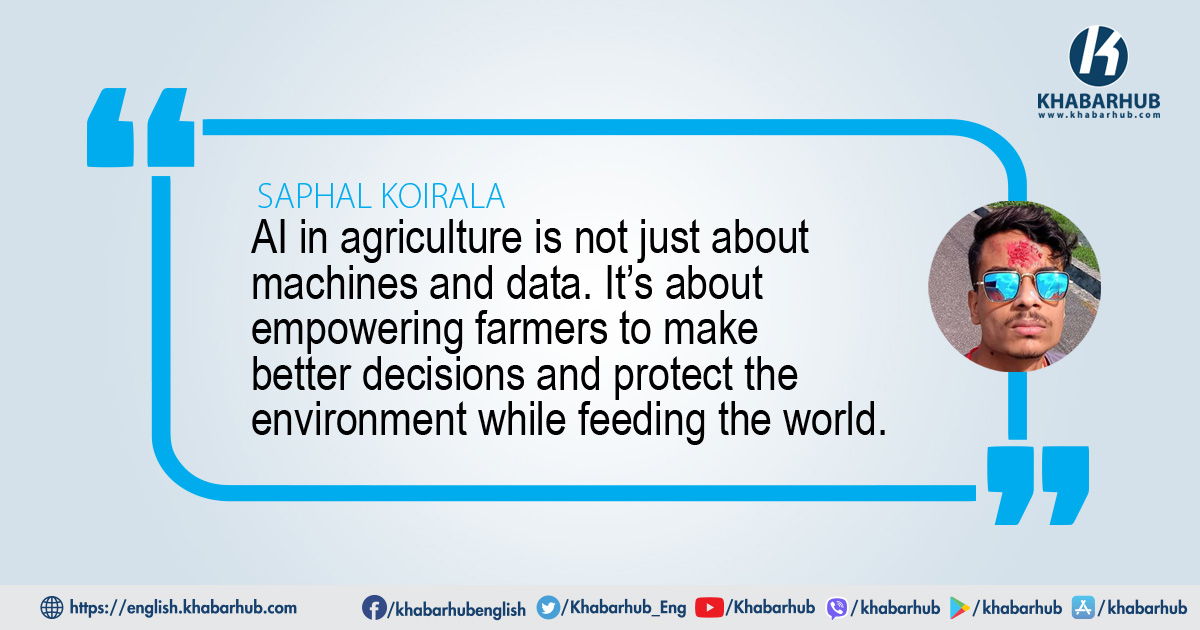
Ultimately, AI in agriculture is not just about machines and data. It’s about empowering farmers to make better decisions and protect the environment while feeding the world. With government and industry support ensuring that these tools are available and accessible, we may be witnessing the dawn of a smarter green revolution. As Aidan Connolly so aptly said, “The future of agriculture is at the crossroads of silicon and soil.”






Comment