




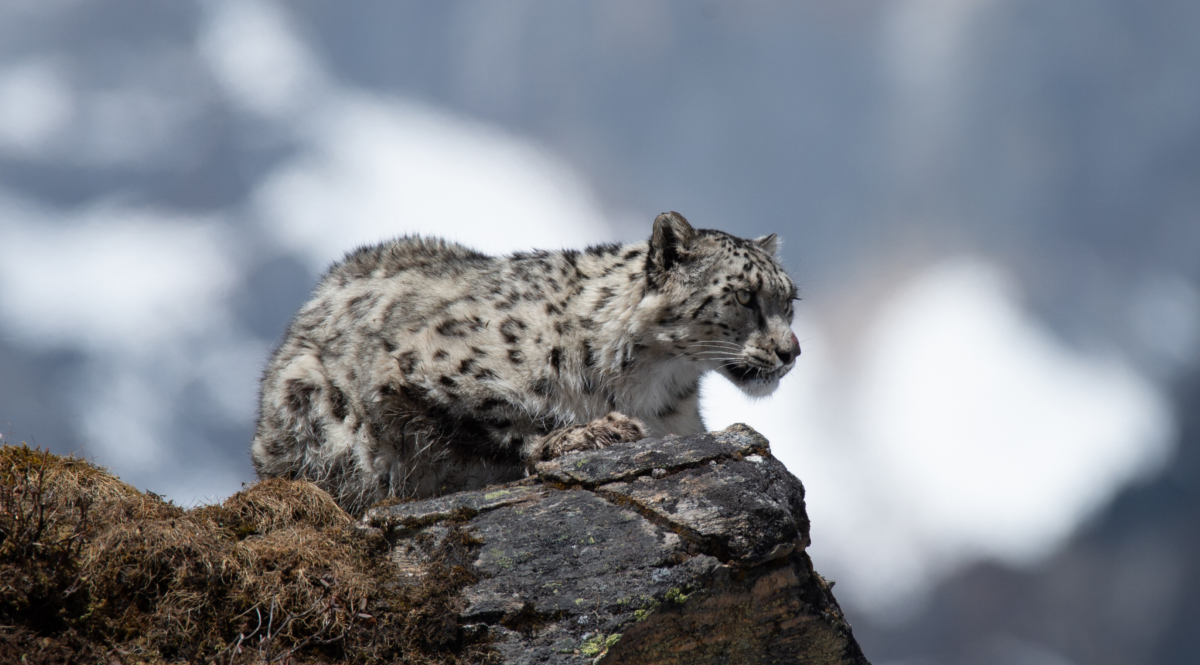
KATHMANDU: A detailed survey of snow leopards and their prey species has officially begun in Mustang, initiated jointly by the National Trust for Nature Conservation (NTNC) and the Annapurna Conservation Area Project (ACAP) Area Conservation Office in Jomsom.
According to ACAP Jomsom chief Rajesh Gupta, the survey is being conducted in the high-altitude regions, alpine meadows, and forested zones of Thasang, Gharapjhong, and Varagung Muktichhetra rural municipalities. The initiative aims to study snow leopard activity, the distribution of prey species, and areas where snow leopards and common leopards may have overlapping habitats.
A total of 32 motion-sensitive camera traps have been deployed at elevations ranging from 3,000 to 4,600 meters above sea level. These cameras are equipped to capture both images and audio, enabling comprehensive monitoring of wildlife movements, especially that of snow leopards and their prey.
“This survey will help us understand not just snow leopard populations but also the availability and movement patterns of their prey,” said Gupta. “It will also allow us to detect whether snow leopards and common leopards are occupying overlapping territories.”
Forest Ranger Deepak Oli of ACAP Jomsom added that camera traps have been strategically placed in remote areas such as Ghansa, Sangta, Muktinath, Jhong, Lupra, Chhusang, Samar, Tetang, Jomsom Lekh, and Batase Lekh along the Mustang-Myagdi border. The survey is scheduled to run for 45 days, with cameras spaced approximately five kilometers apart.
“This year’s survey includes an expanded study of prey species and overlap zones between snow leopards and other predators,” Oli explained. “We’re also collecting scat samples for lab testing to gain accurate insights into the diet and presence of snow leopards.”
ACAP had previously installed dozens of cameras for snow leopard monitoring in both Upper and Lower Mustang, but this year’s effort marks a more extensive and targeted approach in the lower region.
Officials hope the camera traps will not only provide critical data on wildlife but also aid in curbing poaching and illegal activities, especially during the seasonal collection of yarsagumba (a valuable medicinal fungus), which draws large crowds to these high-altitude regions.
ACAP staff, including Forest Ranger Oli, have been deployed in the field to carry out the survey, which is expected to significantly contribute to snow leopard conservation and broader biodiversity monitoring in the trans-Himalayan region.

Comment