




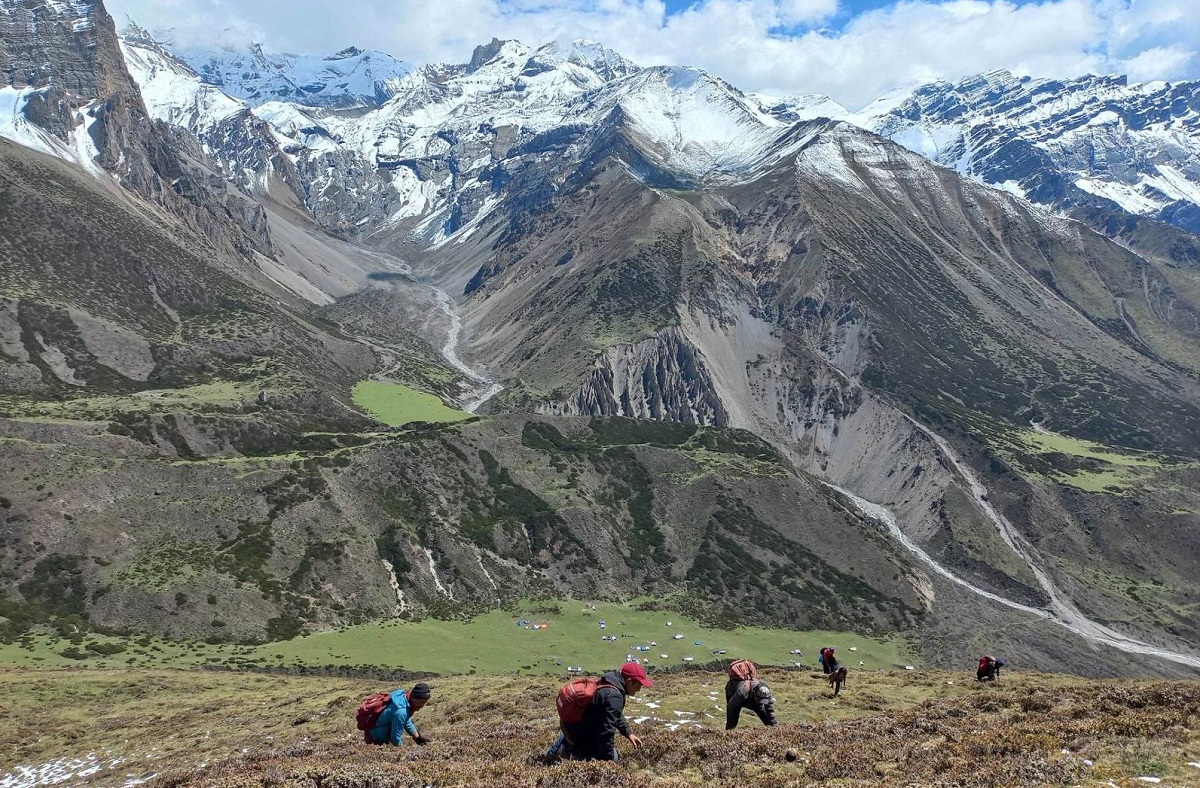
GORKHA: Residents of Chekampar, Ward No. 7 of Chumanubri Rural Municipality, have begun their annual migration to Baju Lake to harvest Yarsagumba, a highly prized medicinal herb found in the Himalayan highlands.
According to local resident Chhiringphunjo Lama, villagers have already started the journey, while others are still preparing.
“Some have already left, and some are getting ready,” he said. “But worsening weather conditions are making travel more difficult.”
Yarsagumba, often referred to as the “Himalayan Viagra,” grows in the alpine meadows of Samagaun (Chumanubri-1) and Chekampar (Ward No. 7). It is also found in parts of Ward No. 3 of Chumanubri and Dharche Rural Municipality. For the people of northern Gorkha, the herb is the primary source of income.
Former ward chairperson Pasang Phunjo Lama said locals have been heading toward the high-altitude lake since the first week of the Nepali month of Baisakh (last week of April).
“There’s still snow on the lake,” he noted. “Snowfall was delayed this year, so even those who’ve reached the area are busy clearing it.”
Once the season begins, families typically remain at the collection sites until Asar. They bring along yaks, donkeys, and enough rations, water, and clothing to sustain them for nearly two to two and a half months.
Many households lock up their homes and travel to the mountains with their entire families, livestock, and essential supplies.
“People set up temporary camps near the lake and even bring their children,” said Pasang. “Those with elderly members who cannot make the journey often hire Rongba (people from lower-altitude areas) to stay behind and look after their homes.”
Income from Yarsagumba ranges between Rs 200,000 to Rs 400,000 per household, making it a critical livelihood source for the region.
However, locals say that availability is sharply declining. “Nowadays, there are hardly any insects on the lake,” said Tshiring Phunjo. “Even after searching all day, you might find just one or two. At this rate, there may be none left in a few years.”
To collect Yarsagumba, each household must pay Rs 500 to the local committee and another Rs 500 to the rural municipality.




Comment