




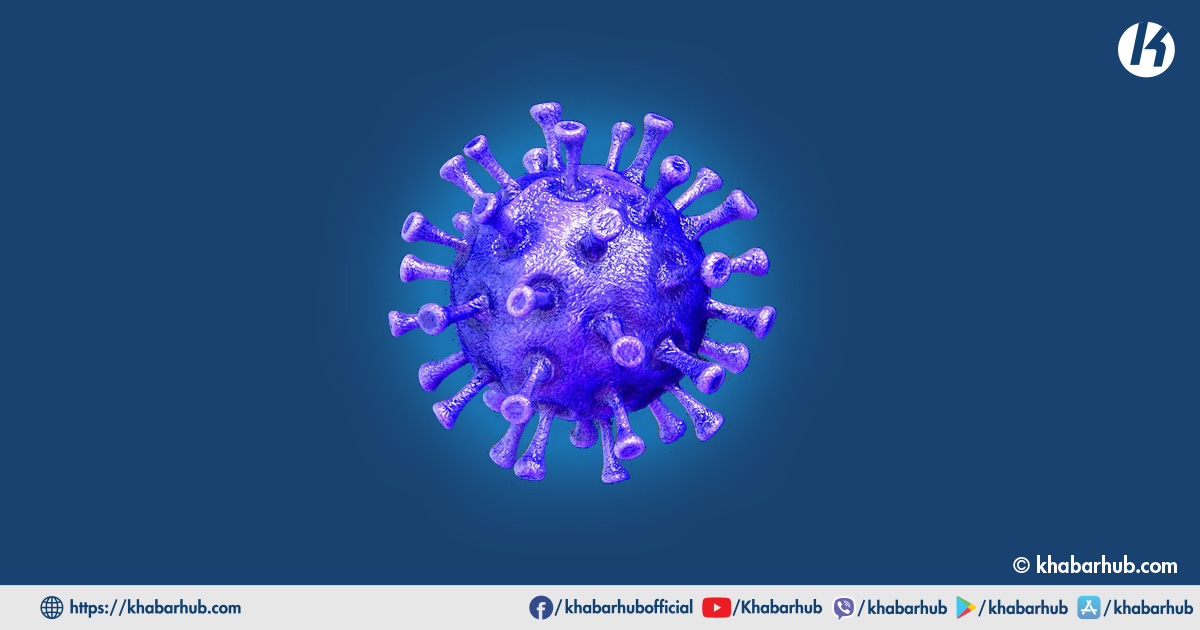
TOKYO, JAPAN: The Covid-19 epidemic in Japan has been heating up for nine consecutive weeks as new mutant strains have spread.
The Ministry of Health, Labor and Welfare of the Japanese government stated that the number of confirmed cases has increased for nine consecutive weeks, and some people believe that the 10th wave of the epidemic has occurred.
As new mutant strains with high contagiousness are spreading, experts call on the public not to ignore the epidemic and to continue to take anti-epidemic measures.
Japan Jiji News Agency reported that in May 2023, the Japanese government had lowered the Covid-19 epidemic prevention level to be equivalent to seasonal influenza.
Therefore, the method of controlling the number of Covid-19 patients has changed from the original case-by-case notification.
The results are reported by approximately 5,000 designated medical institutions across Japan.
The Ministry of Health, Labor and Welfare stated that the average number of Covid-19 patients reported in the week ending January 21 was 12.23 per medical institution, which was approximately 1.4 times that of the previous week and has continued to increase since late November 2023.
In Ishikawa Prefecture, where many people took refuge in evacuation centres due to the Noto Peninsula earthquake, the average number of people per medical facility was 14.33, about 1.4 times more than the previous week.
The reason behind the rising epidemic is that a new mutant strain that has rapidly expanded overseas since the fall of 2023 has also increased in Japan.
This new mutant strain is JN.1, which has been further mutated from Omicron’s BA.2.86.
The World Health Organisation (WHO) stated that there are currently no reports that JN.1 is more likely to cause severe illness than other mutant strains.
The WHO and the Institute of Medical Sciences in Japan said that the variant may be highly contagious because its mutations have improved immune escape capabilities.
The virus strain in Japan is rapidly being replaced by JN.1.
The National Institute of Infectious Diseases of Japan stated that a private screening agency surveyed 194 specimens from January 1 to 7 and found that JN.1 accounted for about 20 per cent, and it is estimated that the proportion will rise to 43 per cent in early February.
Norio Sugatani, a visiting professor at Japan’s Keio University who specialises in infectious diseases, said that JN.1’s ability to escape immunity seems to be higher.
Although it can be said to be the “10th wave” of the epidemic, the JN.1 expansion may lead to an even greater increase in the number of confirmed cases.
Sugatani pointed out that based on overseas reports, it is difficult to believe that the number of domestic deaths will increase rapidly due to the spread of JN.1, but he still emphasised that there is a certain degree of risk; hence, the elderly and others must pay more attention.
Sugatani further said that although influenza seems to have passed its epidemic peak, it is still prevalent.
He hoped that everyone will continue to practice epidemic prevention measures such as wearing masks and washing hands frequently.
(ANI/CNA)






Comment