




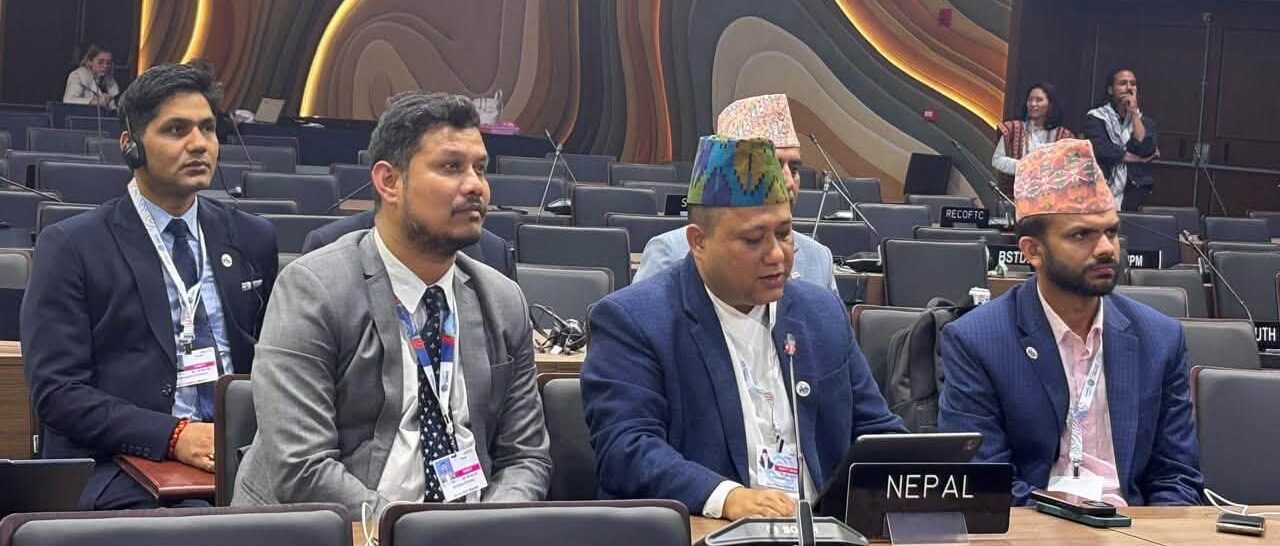
ANTALYA: Foreign Minister Shisir Khanal has said that climate adaptation should not be viewed merely as a technical or environmental response but also as an issue of climate justice.
Addressing the High-Level Dialogue on Adaptation organised by the Least Developed Countries (LDCs) on the sidelines of the ongoing United Nations Climate Change Conference (COP-31) in Antalya, Turkey, Khanal said that least developed countries, despite contributing the least to global climate change, are among the hardest hit by its increasingly severe impacts.
“For the least developed countries, adaptation is not only a technical or environmental response; it is also a matter of climate justice. Although our contribution to climate change is minimal, we are bearing the brunt of its increasingly severe impacts,” he said.
During his address, Khanal highlighted the human and economic losses Nepal has suffered from recent climate-induced disasters. He stressed that climate-vulnerable countries could no longer afford to delay urgent climate action.
He noted that least developed countries were continuing to advance locally led, people-centred adaptation initiatives through their National Adaptation Plans. However, he emphasised that these national efforts must be backed by adequate international climate finance and technical assistance.
Khanal said international support should respond to the evolving needs of countries that are particularly vulnerable to climate change and face development challenges.
He also called for commitments to increase financial support for climate adaptation in least developed countries to be translated into clear, credible and actionable mechanisms. Simplifying access to climate finance, he added, was equally important.
The Foreign Minister further stressed the need to accelerate adaptation efforts at both national and international levels in line with the UAE Framework for Global Climate Resilience and the Belém Adaptation Indicators.
He called for greater priority to be given to locally led adaptation initiatives, stronger institutional capacity at the local level and the empowerment of communities most exposed to climate risks. Such communities, he said, should have a greater role in determining their own adaptation priorities and investment needs.






Comment