




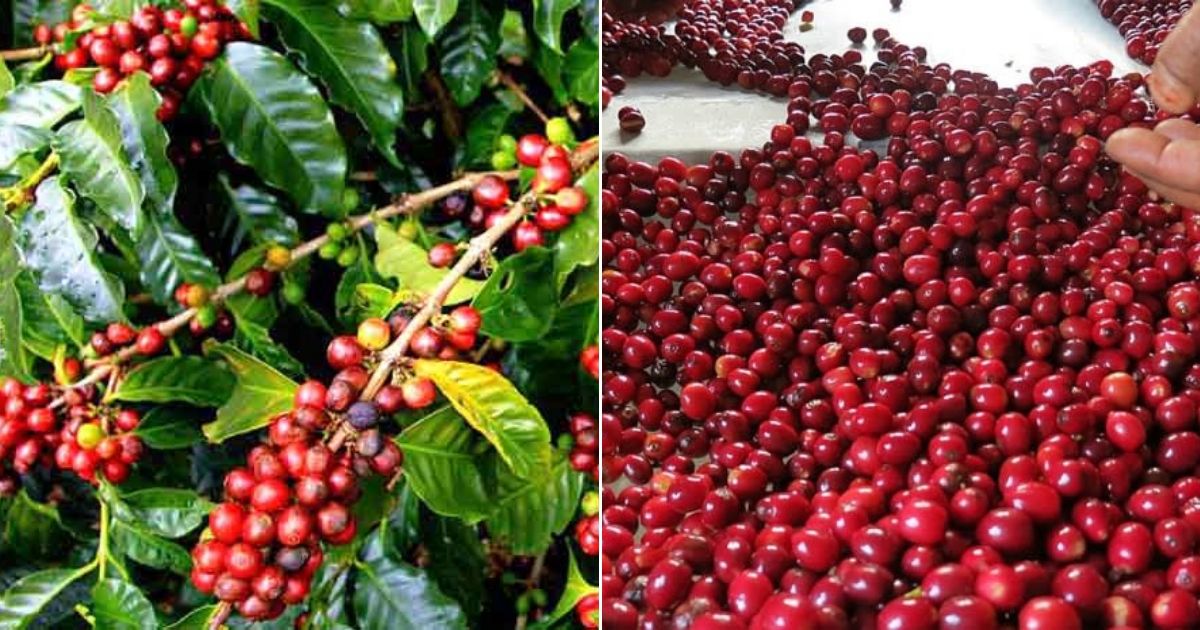
GULMI: Farmers in Sirseni, Gulmi, are increasingly abandoning traditional crops in favor of commercial coffee farming.
The fields Sirseni under Madane Rural Municipality-3, have been transformed into vibrant coffee gardens.
This shift marks a significant change from the region’s historical reliance on maize and sorghum cultivation.
One of the main reasons behind this transition is the lack of wildlife threats to coffee plants.
Unlike traditional crops, coffee farming faces minimal interference from animals such as monkeys and wild boars.
This benefit, coupled with encouragement from the Prime Minister and the Agricultural Modernization Project Implementation Unit, has driven many farmers to adopt coffee cultivation.
The project has been instrumental in supporting this shift by providing essential resources such as coffee plants, fertilizers, and netting, while also educating farmers about the production methods and benefits of coffee farming.
This support has made it easier for local farmers to embrace this new agricultural opportunity.
Coffee farming has sparked renewed hope among farmers who previously relied on crops like corn and millet.
The new cultivation method offers a viable alternative, particularly in areas plagued by wildlife that disrupts traditional farming practices.
In Sirseni, 30 households have organized into a three-tier coffee production group, established four years ago, to cultivate coffee more professionally.
Each farmer now tends between 50 and 2,000 coffee plants. Meghlal Aryal, a leading coffee grower in the region, reported that the plants he started cultivating four years ago have begun to bear fruit.
Aryal, who manages over 2,000 coffee plants, noted that his once-corn-and-millet field is now fully dedicated to coffee.
Aryal’s success has inspired other local farmers, like Shashidhar Aryal, who have found coffee farming to be a promising alternative to traditional crops.
The Prime Minister and Agricultural Modernization Project head, Gangakumari Pokhrel, highlighted ongoing support for coffee farmers, including subsidies for plants, fertilizers, irrigation, canopy management, and netting, as well as technical guidance through coffee schools.
Despite growing interest in coffee cultivation, farmers have reported challenges with white powdery mildew, mold, and other issues that affect coffee plants.
Gulmi, known as the birthplace of coffee, currently dedicates 241 hectares to coffee farming.
Various organizations, including the Agricultural Knowledge Center, the Coffee Development Center Ampchaur, the Coffee Research Center Bhandaridanda, and local offices, are actively working to support and advance coffee farming in the district.




Comment