




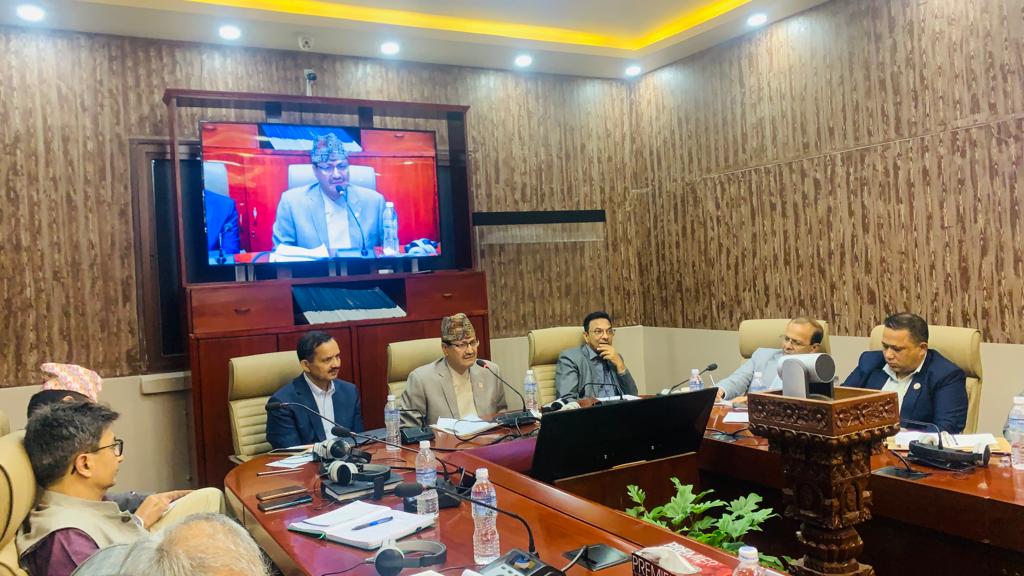
KATHMANDU: Minister of Foreign Affairs, NP Saud has emphasized his commitment to advancing foreign relations by placing national interest at the forefront.
Speaking at a program organized by the Institute for Strategic and Socio-Economic Research (ISSR) on “Challenges and Opportunities in Nepal’s Foreign Policy”, held at Pavilion Hall, Durbar Marg on Friday, Minister Saud highlighted the promotion of foreign relations guided by national priorities.
During the program, Minister Saud cited the ongoing Russia-Ukraine conflict as an example.
He explained that while Ukraine is an independent nation, the conflict arose due to its inability to address the security concerns of neighboring Russia.
Minister Saud clarified that Nepal’s non-aligned foreign policy, often misunderstood as diplomatic neutrality, maintains opposition to Russian intervention in Ukraine.
He emphasized that foreign relations are not balanced through mere mathematical calculations.
Instead, he advocated for prioritizing nations with strong economic and trade ties.
He noted the swift economic development of neighboring countries, India and China, and stressed the importance of cooperation with both for Nepal’s progress.
Elaborating further, Minister Saud expressed that India recognizes Nepal’s relationship with China and vice versa.
Acknowledging the prolonged stability in India and China’s neighboring governments, Minister Saud highlighted how Nepal’s political instability has impacted its foreign relations.
He called for unity among political parties to strengthen national coherence, suggesting a need for political maturity.
Minister Saud also noted recent shifts in global geopolitics and urged Nepali intellectuals to engage in discussions linking these changes to Nepal’s development.
Likewise, former Defense Minister and Nepali Congress leader Minendra Rizal highlighted Nepal’s potential amid the economic progress of neighboring giants, China and India.
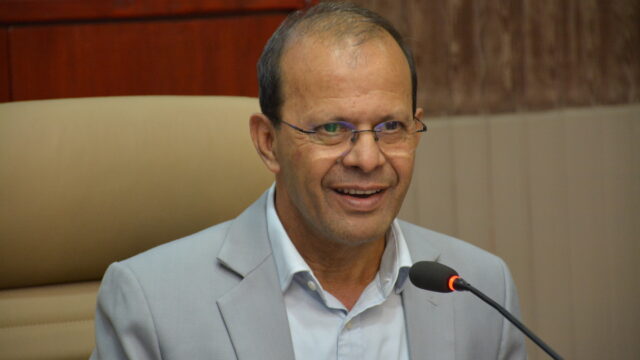
He emphasized that although Nepal is geographically and demographically smaller, its economy needs development.
Rizal emphasized the necessity of reform to counteract ongoing political disruption.
He highlighted the importance of improved governance, diplomatic skills, and capacity to maintain balanced foreign relations.
Rizal metaphorically conveyed that foreign policy should be substantiated by strategic decisions rather than being exposed like “naked politics.”
On the occasion he also praised Prime Minister Pushpa Kamal Dahal Prachanda’s diplomatic approach in visiting the US prior to China.
Nepali Congress leader and parliamentarian, Udaya Shumsher Rana discussed Nepal’s potential position between rapidly developing neighbors, China and India.
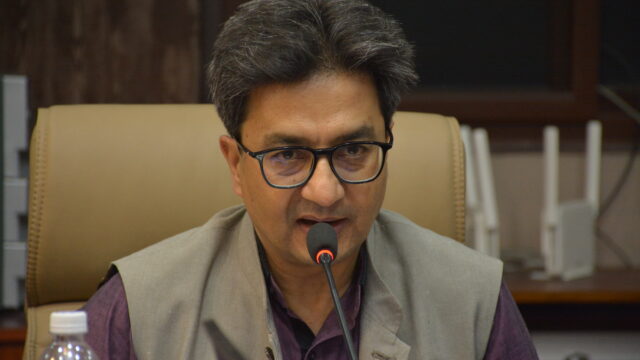
He urged leadership to act according to national interests while considering neighbors’ concerns.
He emphasized consistency in foreign policy irrespective of which party is in power.
Representing the Nepali Congress, Ram Hari Khatiwada, also a lawmaker, highlighted the need for neighboring countries’ cooperation to foster an investment-friendly environment in Nepal.
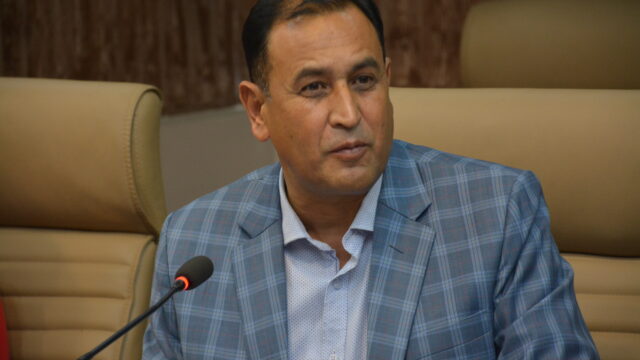
He expressed concern over foreign envoys’ involvement in local politics and urged for a more focused approach.
Shishir Khanal, from the Rastriya Swatantra Party, criticized Nepal’s weakening role on the global stage and stressed the necessity of defining clear national interests.
He advocated showcasing Nepal’s contributions to peacekeeping and prioritizing technology, water resources, and energy for national security.
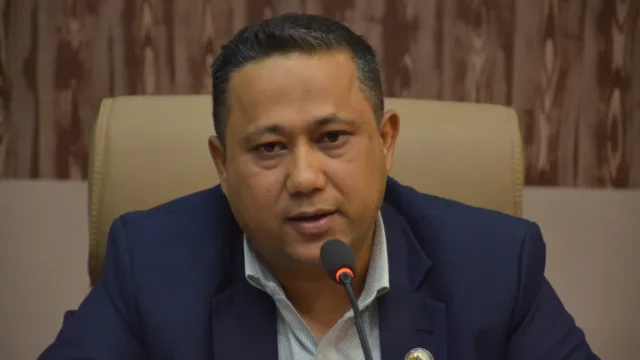
Khanal recommended enhancing structural capacity to strengthen foreign relations.
Prabhu Sah, President of the Aam Janata Party, discussed the transition from financial capitalism to data capitalism and the shift from a unipolar to a multipolar world.
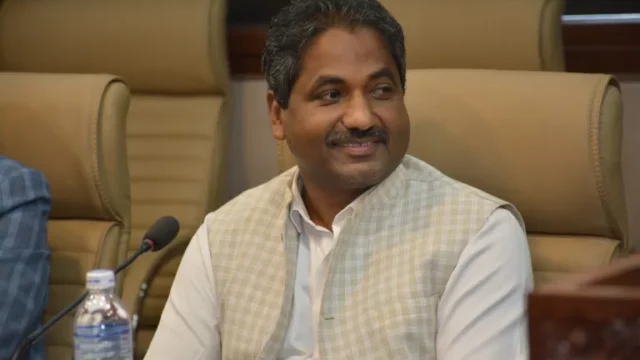
He noted Nepal’s significant role in this transformation and cautioned against letting foreign policy become entangled in party interests.
Binoj Basnyat, Nepali Army Major General (Retd.) and security expert drew parallels with countries like Mongolia, Kazakhstan, and Botswana, suggesting Nepal’s non-aligned foreign policy should shift towards multi-alignment.
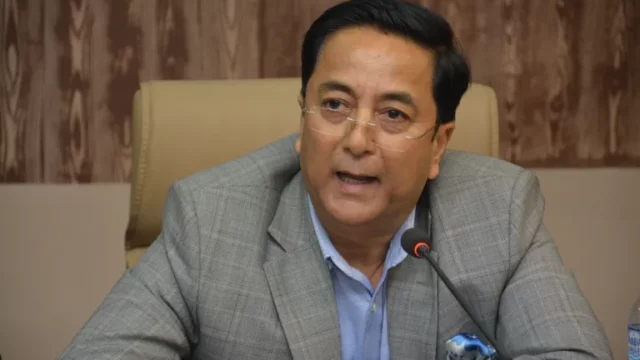
He stressed the growing geopolitical importance of the Himalayan region amid China’s rising influence.
Former ambassador to Denmark, and foreign affairs expert Vijay Kant Karna highlighted Nepal’s lack of a coherent strategy to address global changes.
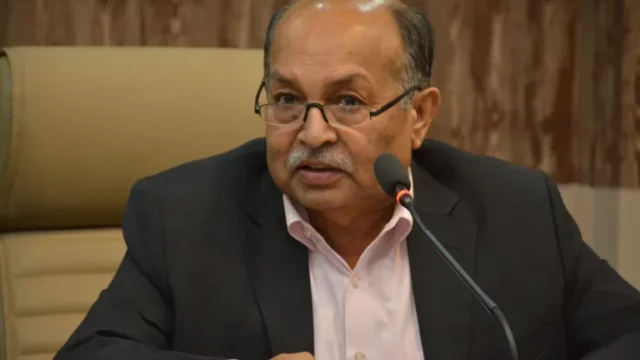
He emphasized the need for a well-defined approach to specific countries and advocated for a shift from non-alignment.
Karna cited instances where Nepal had to remain silent amid foreign interference.
Mohan Krishna Shrestha, former ambassador of Nepal to France, criticized Nepal’s foreign policy for being overly focused on India and China.
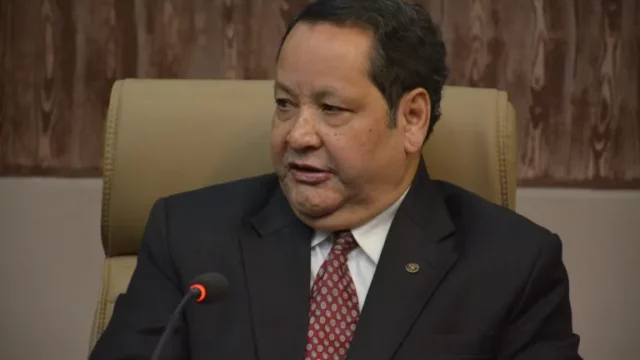
He highlighted budget constraints in foreign embassies and noted that Nepal and Nepalis have a positive image abroad.
Arun Kumar Subedi, a foreign affairs expert, called for a redefinition of Nepal’s non-aligned policy, particularly in light of labor diplomacy’s growing importance with Gulf countries.
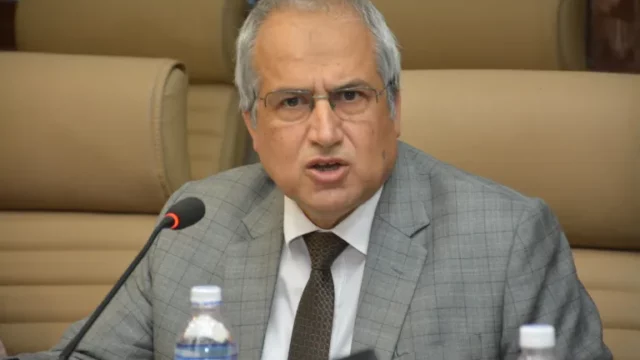
Subedi discussed changes in China’s foreign policy and its implications for Nepal in the context of President Xi Jinping’s tenure.
The program brought together foreign affairs experts, public representatives, business leaders, journalists, intellectuals, and civil society figures for a comprehensive discussion on Nepal’s foreign policy challenges and prospects.




Comment