




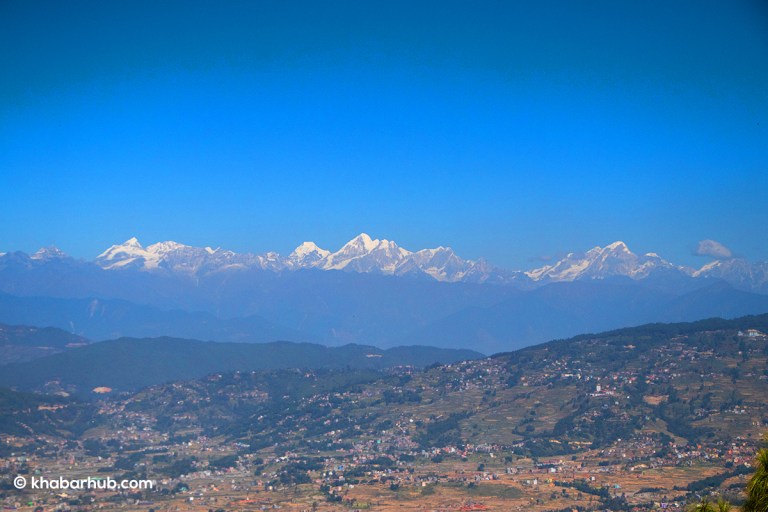
GANDAKI: Conservationists and climate activists are expressing growing concerns over the increasing barrenness of mountains throughout the country.
Attributing the rapid melting of snow to the denudation of mountains, impacting the entire ecosystem, they are urging all stakeholders to intensify efforts to minimize the impacts of climate change.
“Due to global heating, mountains are losing snow cover, turning mountain climbing into mere rock climbing,” warned Dr. Ghanashyam Gurung, Chief of World Wildlife Fund in Nepal and conservationist. He emphasized the urgent need to adopt and scale up measures for climate change mitigation and adaptation.
Dr. Gurung conveyed these concerns during a session on fading snow cover and its impacts on livelihood at the ongoing International Mountain Festival in Pokhara on Monday. He highlighted that Nepal is experiencing fast snow melting, leaving the mountains bare.
He further emphasized the importance of local initiatives in minimizing climate change impacts, even though Nepal has a negligible role in causing climate change. “The only culprits behind climate change are rich and industrialized countries. However, Nepal must not stay idle but build a moral ground to voice concern to the international community,” Gurung opined.
Dr. Amina Maharjan, an expert on livelihood and migration, expressed that the growing concern of mountains turning bare is not limited to Nepal but extends to the entire Hindu Kush region. She pointed out the negative impacts of climate change on ecology, agriculture, tourism, and health, stressing the need for proper adaptation to minimize the worsening situation.
She connected the flash flood in the Seti River in 2012 and recent floods in Kagbeni to climate change. Dr. Maharjan expressed concern about the inadequate discussions and research on climate change impacts on health, recommending that Nepal should raise its voice globally to receive compensation under the Loss and Damage Fund.
Prominent journalist Kunda Dixit suggested that it is time to term climate change a ‘climate crisis’ and emphasized the need to discuss and understand its economic and political angles. He highlighted that climate change is causing water-related problems as rivers and water sources are drying up, urging the government to consider it an urgent matter.
Dixit proposed promoting the use of renewable energy, especially given that 25 percent of Nepal’s total imports consist of petroleum products.
Dr. Jagannath Adhikari, a researcher on climate change and food security, underscored the cultural ties of mountains to Nepali culture. He warned that the loss of snow on mountains would result in a loss of culture and recommended continued national and international initiatives to cope with the impacts of climate change on agricultural products.





Comment