




Recent reports suggest that Italy is highly unlikely to renew its expiring Belt and Road Initiative (BRI) deal with China early next year.
These reports also signify a diminishing appeal of the initiative due to a lack of tangible results and growing tensions.
German Chancellor Olaf Scholz had also expressed frustration with the BRI and warned of a looming financial crisis.
The sanctions against Russia for the invasion of Ukraine and Western backlash against Beijing have sped the demise of the initiative.
The number of new projects signed under the BRI has declined over the years as Chinese companies are finding it difficult to find willing partners in host countries.
According to the Green Development and Finance Centre of the FISF Fudan University in Shanghai, 14 partner countries saw a 100% drop in BRI engagement in construction and investment in 2022, compared to 2021, including Russia, Angola, Sri Lanka, Nepal and Peru.
Domestically also the impetus for BRI has weakened. The Chinese economy is facing significant headwinds like contraction in real estate, shrinking population and slowing productivity growth along with increasingly challenging global geostrategic environment.
China’s engagement in Pakistan for the CPEC dropped by about 34%. Sub-Saharan Africa saw the highest drop in China’s engagement in both construction (-44%) and investment (-65%) in 2022 compared to 2021.
Similarly, West Asia saw significant drops in Chinese engagement. There have been increasing concerns from BRI partner countries over construction flaws in major infrastructure projects like Coca Codo Sinclair Hydroelectric Project in Ecuador and the housing project in Angola.
Other concerns include corruption and debt, project cancelations by Chinese companies due to financial problems, steep overvaluation, lack of investment transparency, inferior quality of the infrastructure and unsustainable projects like the Hambantota port and a trade center in Colombo, which are never likely to generate enough returns.
According to a 2021 study by AidData, 35% of Chinese BRI-related infrastructure projects are beset by corruption, labor abuses, environmental degradation, and public opposition and many countries have canceled or suspended major projects.
The study pointed out that Malaysia canceled USD 11.6 billion worth of infrastructure projects funded by China, while Kazakhstan and Bolivia canceled projects worth USD 1.5 billion and USD 1 billion, respectively.
Costa Rica, Sudan, Ethiopia, Ecuador, Zambia, and Cameroon have suspended or canceled Chinese projects worth USD 3.3 billion in total.
Since many developing countries faced economic headwinds due to Covid-19, negative sentiments against the BRI continued to build up against China as some projects failed to deliver their expected benefits and debt piled up.
One such country is Sri Lanka, which now faces debt distress due to Chinese loans.
The UK-based Overseas Development Institute (ODI) detailed 15 projects worth over USD 2.4 billion that faced financial difficulties in 2020, including the Kunzvi Dam electricity project in Zimbabwe, contracted to Sinohydro. Public sentiment is also increasingly turning against the initiative.
According to Moody, this is due to an increased awareness of the risks inherent to major BRI projects.
Earlier, he used to brag about the initiative being the ‘project of the century’ but has now speaks of it in terms of reforms.
According to a survey by Australia’s Lowy Institute, Indonesians have become skeptical of Chinese investments and almost half of the respondents said that within ten years, China would become the “most dangerous country”.
Domestically also the impetus for BRI has weakened. The Chinese economy is facing significant headwinds like contraction in real estate, shrinking population and slowing productivity growth along with increasingly challenging global geostrategic environment.
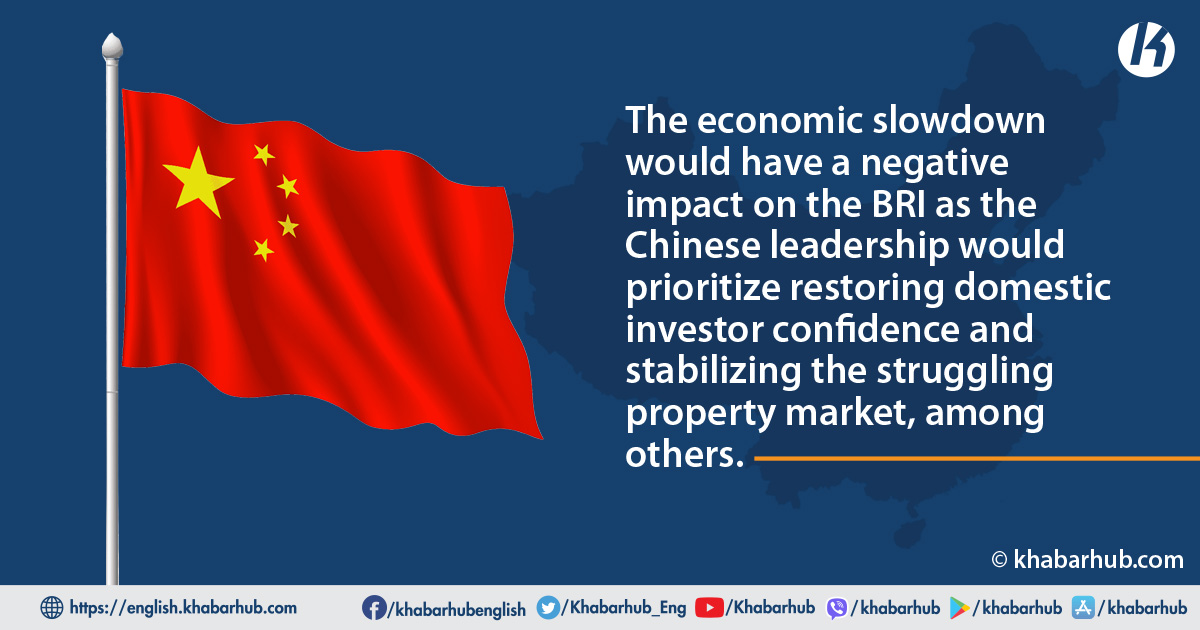
The economic slowdown would have a negative impact on the BRI as the Chinese leadership would prioritize restoring domestic investor confidence, stabilizing the struggling property market, revitalizing the domestic high-tech sector, and resolving potential debt crises faced by local governments.
The Chinese leadership apparently has also taken note of the steadily rising backlash and negativity against the BRI and is attempting a course correction.
References to the BRI in Chinese leaders’ speeches have become less frequent.
In fact, Xi Jinping never mentioned ‘BRI’ in any of his 2022 speeches.
Earlier, he used to brag about the initiative being the ‘project of the century’ but has now spoken of it in terms of reforms.
He now labels the BRI as ‘increasingly complex’ and in need of stronger risk controls and cooperation.





Comment