




JOHANNESBURG: The Hartbeespoort dam in South Africa used to be brimming with people enjoying scenic landscapes and recreational water sports. Now, the visitors are greeted to the sight of boats stuck in a sea of invasive green water hyacinth weed.
The spike in Harties – as Hartbeespoort is known – can be attributed to pollution, with sewage, industrial chemicals, heavy metals and litter flowing on rivers from Johannesburg and Pretoria.
“In South Africa, we are faced with highly polluted waters,” said Professor Julie Coetzee, who has studied water hyacinths for over 20 years and manages the aquatic weeds program at the Centre for Biological Control at Rhodes University.
Nutrients in the pollutants act as perfect fertilizers for the weed, a big concern for nearby communities due to its devastating impact on livelihoods.
Dion Mostert, 53, is on the verge of laying off 25 workers at his recreational boat company after his business came to a standstill because of the carpet of water hyacinths.
“The boats aren’t going anywhere. It’s affecting tourism in our town… tourist jobs,” Mostert said pointing towards his luxury cruise boat “Alba,” marooned in the weeds.
He has considered using herbicides, but admits it would only be a quick fix against the weed.
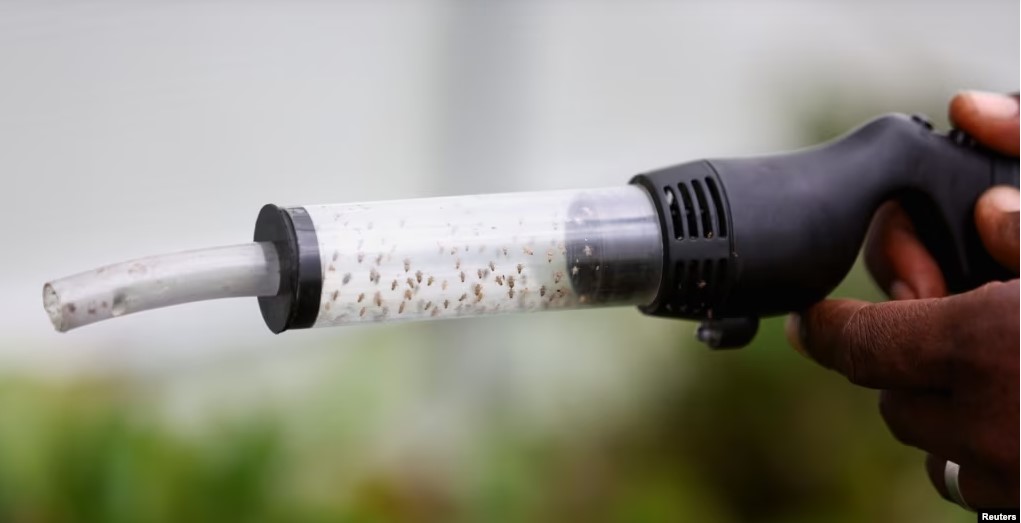
Scientists and community members have, however, found a unique way to deal with the invasion by introducing a water hyacinth eating bug called Megamelus scutellaris.
The tiny phloem-feeding insects are the natural enemy to the plants, both are originally from the Amazon basin in South America, and are released by thousands at a time.
The insects destroy the weed by attacking tissue that transports nutrients produced in the leaves during photosynthesis to the rest of the plant.
The insect army has previously reduced the expanse of water hyacinths to a mere 5% on the dam, Coetzee said. At times the weed has covered at least 50% of it.
Environmentalist Patrick Ganda, 41, mass rears the bugs at Grootvaly Blesbokspruit wetland conservancy southeast of Harties, once home to more than a hundred species of birds which attracted a lot of tourists.
But now, unable to find food such as fish and small plants with much of the wetland’s water covered in plants, there are only two to three species of birds left, he said.
Scientists warn that while the insects have been fairly successful in controlling the situation, more needs to be done to treat its cause, which authorities could tackle by tightening regulations on waste water management.
“We are only treating the symptom of a much larger problem,” says Kelby English, a scientist at Rhodes University.
(VOA/Reuters)






Comment