




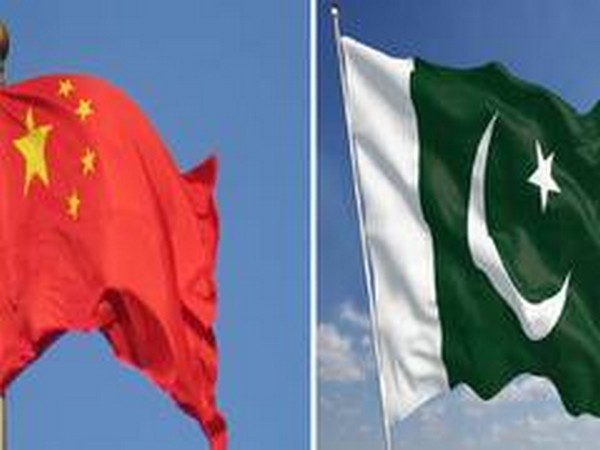
ISLAMABAD: Drawing warning lessons from the collapsing Chinese-dominated economies of Sri Lanka and Nepal, the Shehbaz Sharif government has decided to scrap the China-Pakistan Economic Corridor Authority (CPECA) to arrest Pakistan’s own slide towards a similar fate.
The authority, dominated by the Pakistan Army, will now be restructured and incorporated into the Ministry of Planning and Development.
With this move, the new government has re-seized the economic policymaking from the army. The army dominated economic policies during the Imran Khan government and the authority was part of the domineering game.
The immediate provocation for the decision seems to be the Chinese shutting down over 37 percent of the installed capacity of the CPEC power projects, or 1,980 megawatts, due to non-payment of dues to Chinese investors.
The three imported coal-fired power plants, Hubco, Sahiwal and Port Qasim have closed one of their two units due to the non-availability of the fuel.
The Chinese had been miffed at the erstwhile Imran Khan government for the mounting dues.
So even after the government made a partial payment of Rs 50 billion, the Chinese companies decided to cut down the working of the power plants to arm-twist the government in making the payment of over Rs 200 billion.
The Chinese have also been angry with Pakistan for delaying the creation of a revolving account pending since the signing of the CPEC Energy Projects Framework Agreement in 2014.
The new PML-N led coalition government, however, had been opposing the authority when it was mooted first by the army in 2016. The then Prime Minister Nawaz Sharif had outrightly rejected the idea.
It was felt that it was a clever way by the army to dominate the economic policymaking. The move was vehemently opposed by the parliamentarians in 2019 when the Imran Khan government pushed through an ordinance to create the authority.
The authority was headed by a former Lt. General Asim Bajwa who had to resign over corruption charges in 2020.
Since then there had been increasing opposition to the authority as it only created problems of coordination and responsibility with several ministries. Since the primary responsibility of executing the projects was entrusted to the ministries, a parallel organization like CPEC only created duplication of work and a lack of ownership.
The new Minister for Planning, Development and Special Initiatives, Ahsan Iqbal, in fact, pointed out that projects for more than USD 29 billion worth of investment had been channelized by the Planning Commission successfully without any authority.
He pointed out that the Imran Khan government, despite the authority, failed to complete critical projects by the dates agreed between the Chinese side and the PML-N government.
Of the nine Special Economic Zones (SEZs), the PTI government could only begin work on four of them. These SEZs were expected to draw foreign investment of about USD 40 billion.
The new government’s decision is also spurred by the pitfalls of Chinese domination of economic policies.
The economic meltdown of Chinese-dominated economies like Sri Lanka and Nepal has only made such a decision imperative and urgent for an economy that has been teetering on the edge of a tailspin. (ANI)






Comment