



KATHMANDU: Stakeholders have highlighted the essential role that media plays while disseminating the news related to women’s sexual and reproductive health rights (SRHR).
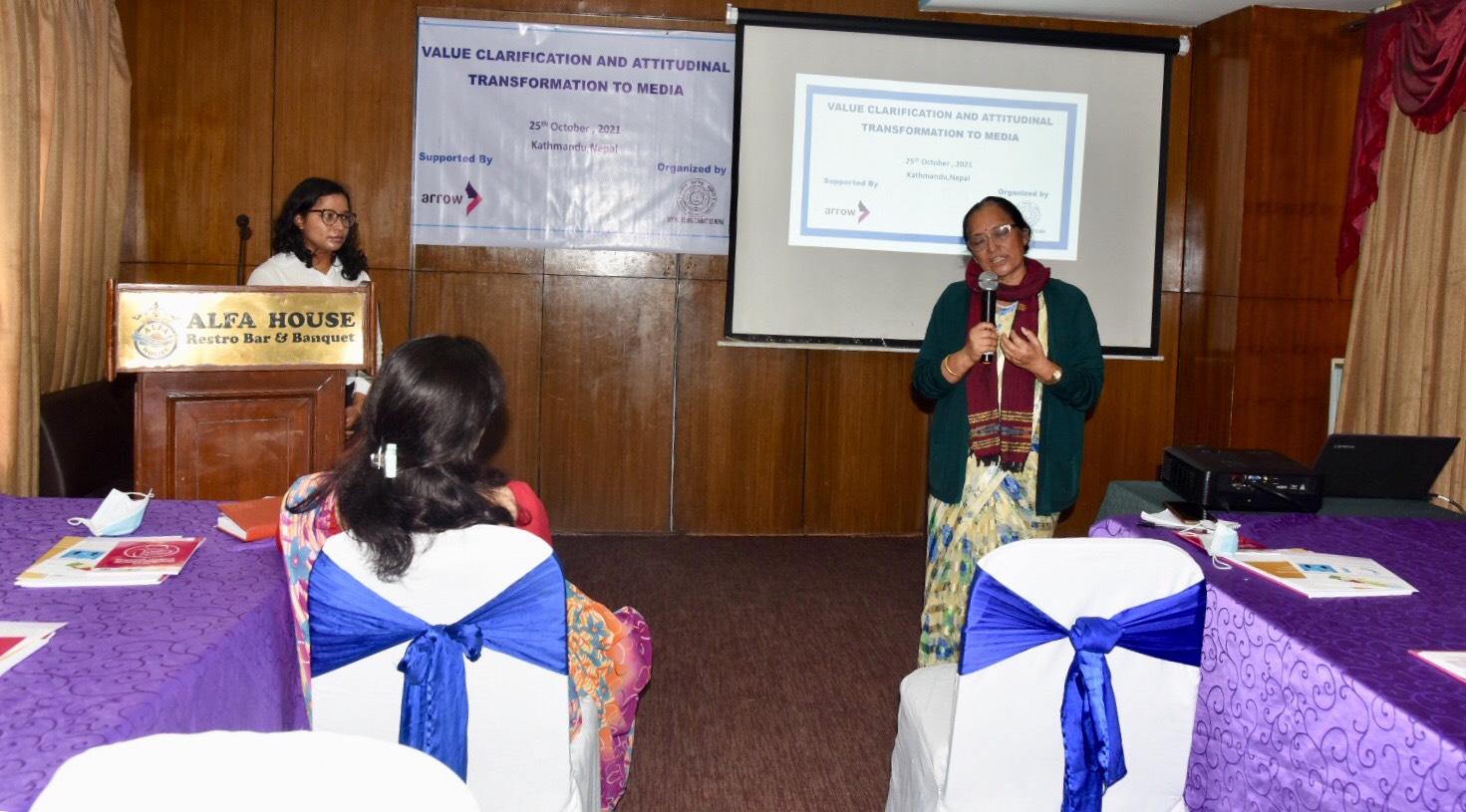
Presenting a working paper on ‘Role of Media in Advocating the Right to Safe Abortion’ at a program organized by Beyond Beijing Committee (BBC) in Kathmandu Monday, journalist Krishna Poudel pointed out the misconception held by the media that changing the name of victims protected them. But, in fact, it has affected the lives of victims and their families when all other facts of the victim are made public in the media, she elucidated.
“In many cases, women’s lives have been ruined due to the inappropriate dissemination of news,” she said, “Journalists ought to be careful while covering sensitive issue such as women’s sexual and reproductive rights.”
At the program, BBC Chairperson Sushila Shrestha said the organization has been raising many women’s issues, including ‘Her body, her choice”. She stressed that in the present Nepali society, the woman’s control over her body was not hers but of her family, husband, relatives and others.
She said that the BBC would focus on raising awareness and building the women’s capacity to take independent decisions for equality for an egalitarian society.
Unsafe abortion’s significant contribution to maternal mortality and morbidity led to the liberalization of Nepal’s abortion law in 2002, she highlighted in the program.
According to a working paper, out of 80 thousands women, 54 thousands have done unprotected abortions from health institutions lacking government’s accreditation.
So far, according to data of 2017, over 1.3 million women have accessed the service of safe abortion.
Abortion is available up to 12 weeks’ gestation on request, up to 18 weeks’ gestation in cases of rape or incest, and at any time if the pregnancy poses a danger to the woman’s life or physical or mental health or if there is a fetal abnormality.
Many women in Nepal continue to face barriers to obtaining safe and legal procedures for safe abortion. Obstacles include lack of awareness of the legal status of abortion, lack of services, lack of transport to approved facilities, gender norms that hinder women’s decision-making autonomy, the often-prohibitive cost of the procedure and fear of abortion-related stigma.






Comment