




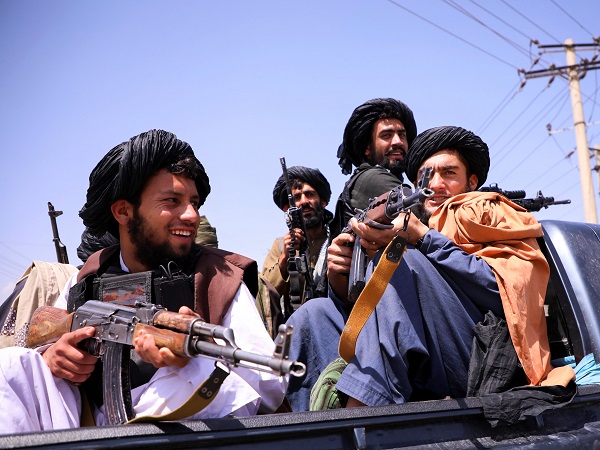
KABUL, AFGHANISTAN: After the Taliban’s messy takeover of Afghanistan last month, experts familiar with the region believe that the instability in the troubled country will ultimately spill over to neighboring countries.
Writing for The Jerusalem Post, Kelly Alkhouli, director of international relations at the Center of Political and Foreign Affairs (CPFA), said that the Islamic State Khorasan (ISIS-K) took advantage of the chaos in Kabul to launch a deadly attack when the western countries were struggling to evacuate their citizens.
“The Islamic State Khorasan (ISIS-K) took advantage of the chaos in Kabul to launch a deadly attack outside the airport, killing at least 170 people and injuring another 200. The terrorist attack not only jeopardized the evacuation mission, but it has also demonstrated ISIS-K’s growing strength and their determination to undermine the Taliban’s control,” Alkhouli said.
The United States forces completed the process of leaving Afghanistan on August 31, marking the end of a chaotic and messy exit from America’s longest war.
Referring to the warming up of ties between China and the Taliban, Alkhouli wrote that due to the disastrous withdrawal of American troops, the deteriorating humanitarian crisis and the looming terrorist threat, Beijing has been developing ties with the Taliban and has even indicated its willingness to recognize its government.
In July, frontline Taliban leader Mullah Baradar Akhund met Chinese foreign minister Wang Yi in China. Beijing earlier also said that it is willing to develop “friendly relations” with the outfit.
China is indifferent to the internal politics of Afghanistan; its main priority is to ensure its own security. Wary of a terrorist threat in Xinjiang, Beijing has worked with the Taliban and the Haqqani network for the past seven years to track down Uighur Muslims in Afghanistan,” she said. “The Taliban wishes to gain China’s recognition and potential investments. Before the heavily publicized meeting in July between Chinese Foreign Minister Wang Yi and a Taliban delegation, the Taliban publicly refused to condemn China’s persecution of Uighurs and has pledged to not harbor Uighur fundamentalists in Afghanistan,” Alkhouli added.
Talking about the challenge posed by the Taliban, Alkhouli said, “While the Taliban take over Afghanistan at an unprecedented pace, it’s doubtful that they’ll be able to retain control over their territory. Competing jihadi groups will emerge and challenge the Taliban’s authority.”
On Tuesday, the Taliban formed the interim “Islamic Emirate”, appointing hardliners in its new government who oversaw the 20-year fight against the US-led military coalition.
Mullah Muhammad Hassan Akhund has been appointed as interim Prime Minister with two deputies Mullah Abdul Ghani Baradar and Molavi Abdul Salam Hanafi. (ANI)





Comment