




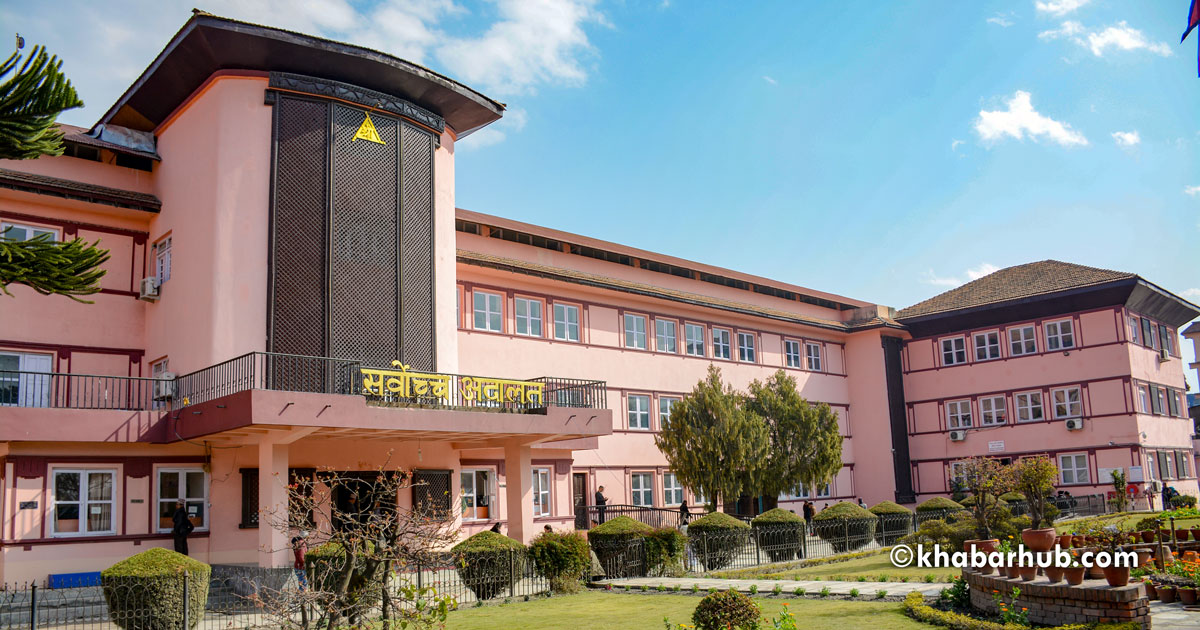
KATHMANDU: The Supreme Court (SC) has given the permission to review its own verdict to commute sentence of former APF DIG Ranjan Koirala found guilty of murdering his wife.
The SC said that Koirala’s sentence even doesn’t seem to qualify for the commutation as per the Clause 188 of the Muluki Ain.
The Apex Court has also furnished three reasons for its decision to review the verdict.
Hearing the review petition registered by the Office of the Attorney General against the previous verdict of Chief Justice Cholendra Shumsher Rana and lej, Bahadur KC, a joint bench of Judges Barn Kumar Shrestha, Prakash Kumar Dnurigana and Kumar Regmi gave the permission for the review in the verdict.
The joint bench said that the verdict of 0 Rana and Justice KC should be reviewed as former DIG Koirala pleaded not guilty in the court even as he had pleading guilty with the police.
According to the ruling, the verdict seemed to be violating the SC’s own precedents. The bench further stated that the verdict to commute sentence citing clause 188 of the Muluki Ain is against four of the SC precedents.
It should be noted that CJ Rana and Justice KC had on June 29 commuted Koirala’s sentence by 11 years through their ‘discretionary’ powers granted by the Muluki Ain to them.
They had stated that the wife was the instigator of the incident. Koirala was released last Thursday after serving eight and half year.






Comment