




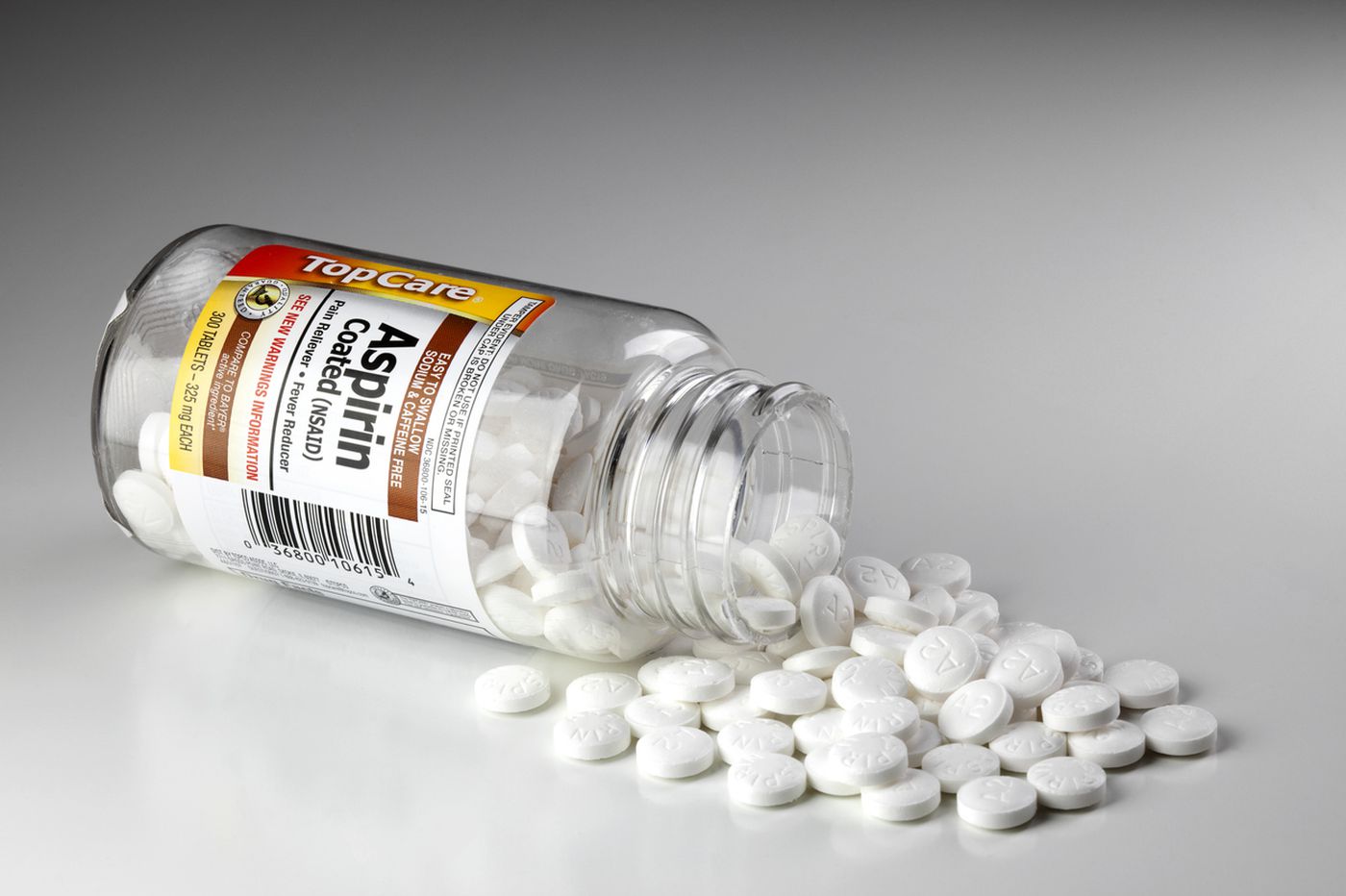
WASHINGTON: Millions of people who take aspirin to prevent a heart attack may need to rethink the pill-popping, Harvard researchers reported Monday.
A daily low-dose aspirin is recommended for people who have already had a heart attack or stroke and for those diagnosed with heart disease.
But for the otherwise healthy, that advice has been overturned. Guidelines released this year ruled out routine aspirin use for many older adults who don’t already have heart disease — and said it’s only for certain younger people under doctor’s orders.
Some 29 million people 40 and older were taking an aspirin a day despite having no known heart disease in 2017, the latest data available, according to a new study from Harvard and Beth Israel Deaconess Medical Center. About 6.6 million of them were doing so on their own — a doctor never recommended it.
And nearly half of people over 70 who don’t have heart disease — estimated at about 10 million — were taking daily aspirin for prevention, the researchers reported in Annals of Internal Medicine.
“Many patients are confused about this,” said Dr. Colin O’Brien, a senior internal medicine resident at Beth Israel who led the study.
After all, for years doctors urged people to leverage aspirin’s blood-thinning properties to lower the chances of a first heart attack or stroke. Then last year, three surprising new studies challenged that dogma. Those studies were some of the largest and longest to test aspirin in people at low and moderate risk of a heart attack, and found only marginal benefit if any, especially for older adults. Yet the aspirin users experienced markedly more digestive-tract bleeding, along with some other side effects. .
In March, those findings prompted a change in guidelines from the American Heart Association and American College of Cardiology:
—People over 70 who don’t have heart disease — or are younger but at increased risk of bleeding — should avoid daily aspirin for prevention.
—Only certain 40- to 70-year-olds who don’t already have heart disease are at high enough risk to warrant 75 to 100 milligrams of aspirin daily, and that’s for a doctor to decide.
(with inputs from Associated Press)






Comment