




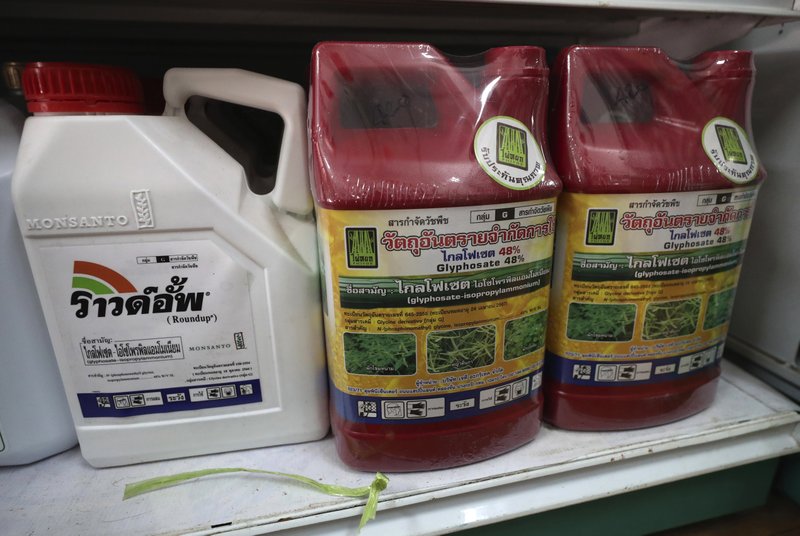
BANGKOK: Thailand’s government agreed Tuesday to ban the use of three farming chemicals widely regarded as dangerous to human health.
The government’s National Hazardous Substances Committee voted to put the herbicides paraquat and glyphosate and the insecticide chlorpyrifos in the category of banned chemicals, automatically barring their use under existing law.
The ban takes effect Dec. 1. Industry Ministry Deputy Permanent Panuwat Triyangkulsri said the Agriculture Ministry would establish what to do with remaining stocks of the chemicals, taking into consideration the effects on farmers and sellers.
The ban, proposed by the Agriculture Ministry, had met with strong opposition from some farmers groups and academics, who argued that the chemicals were not unacceptably dangerous and banning their use would drive up farmers’ costs significantly.
Deputy Prime Minister and Minister of Public Health Anutin Charnvirakul, who took office in July with the installation of a newly elected government, had said earlier this month he would resign if the chemicals were not banned.
Prokchol Ousap, the dinator of the Thailand Pesticide Alert Network, said that Tuesday’s passage of the ban hinged on political support that was a reflection of public sentiment. She said that bipartisan support for studying the potential problems of the chemicals was crucial, as well as a rare example of an issue all sides could agree on. The network campaigned for banning the chemicals, publicizing studies that found residues of the chemicals on fruits and vegetables sold to consumers.
The use of paraquat, especially, has been sharply debated worldwide. Farmworkers are at particular risk from the toxic chemical, which can cause immediate death through ingestion as well as chronic health problems from another contact.
The European Union has banned its use, but it is still popular in many countries. In Southeast Asia, paraquat was banned by Vietnam in 2017, and Malaysia in March announced a total ban on paraquat starting Jan. 1 next year.
(Agencies)





Comment