




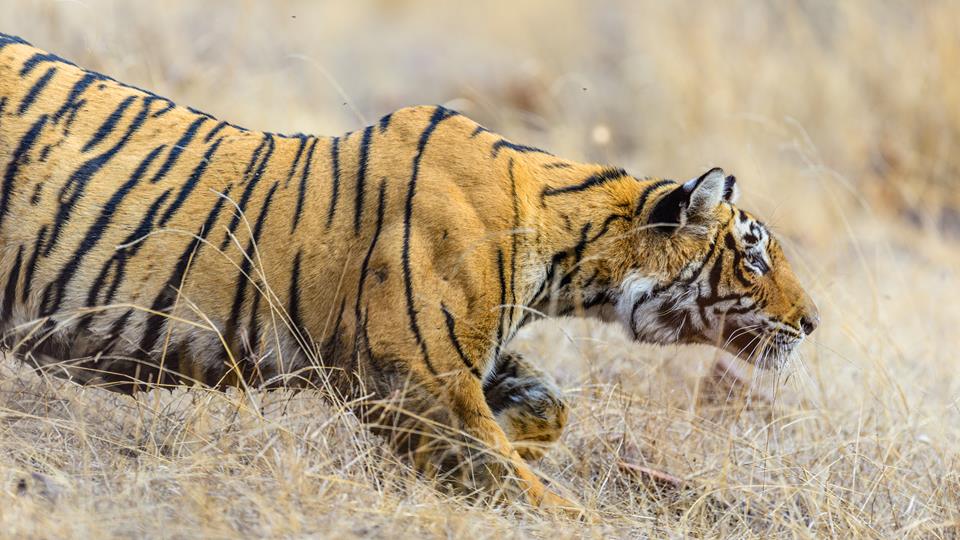
Nepal and India are set to sign an agreement on biodiversity conservation, including the transboundary conservation of the rhino, Bengal tiger and Asian elephant.
The agreement is expected to be signed before India’s parliamentary elections in April, according to the Indian media.
According to media reports, the Valmiki Tiger Reserve in India runs into Nepal’s Chitwan National Park, and Parsa National Park. Likewise, India’s Dudhwa Tiger Reserve in Uttar Pradesh shares a border with Shuklaphanta National Park in Nepal.
Nepal-India border stretches more than 1,850 kilometers includes several transboundary wildlife habitats. The agreement is expected to manage the transboundary landscape.
According to media reports, the Valmiki Tiger Reserve in India runs into Nepal’s Chitwan National Park, and Parsa National Park. Likewise, India’s Dudhwa Tiger Reserve in Uttar Pradesh shares a border with Shuklaphanta National Park in Nepal.
The Indian media quotes S.P. Yadav, member secretary of Uttar Pradesh’s State Biodiversity Board as saying that Nepal and India do have any formal agreement at present.
The agreement is expected to lead to the better conservation of rhinos, tigers and elephants. It is also expected to help immensely in “tackling illegal trafficking”.
According to Yadav, the agreement will be a formal instrument that will lead to better transborder cooperation.
“Nepal and India have been working in close coordination,” Man Bahadur Khadka, director-general of the department of national parks and wildlife conservation at Nepal’s Ministry of Forests and Environment said.
Likewise, Nakul Chettri, a senior biodiversity specialist with the International Centre for Integrated Mountain Development (ICIMOD), in Kathmandu said the agreement would be a welcome step.
The agreement will help in cementing the bilateral cooperation and strengthen the management of important transboundary wildlife habitat, he viewed. Chettri said it will be a win-win for both the countries.
“Nepal and India have been working in close coordination,” Man Bahadur Khadka, director-general of the department of national parks and wildlife conservation at Nepal’s Ministry of Forests and Environment said.
According to him, all work regarding the agreement have been complete adding that the agreement would focus on biodiversity conservation, wildlife habitat management, tiger conservation and protection.
Meanwhile, the agreement is expected to put an “emphasis on cooperation” for the conservation and protection of tiger. According to the 2014 tiger population census, India is home to 2,226 tigers. Similarly, according to latest estimates, Nepal’s tiger numbers has been put at around 235, up from 120 in 2009.






Comment