




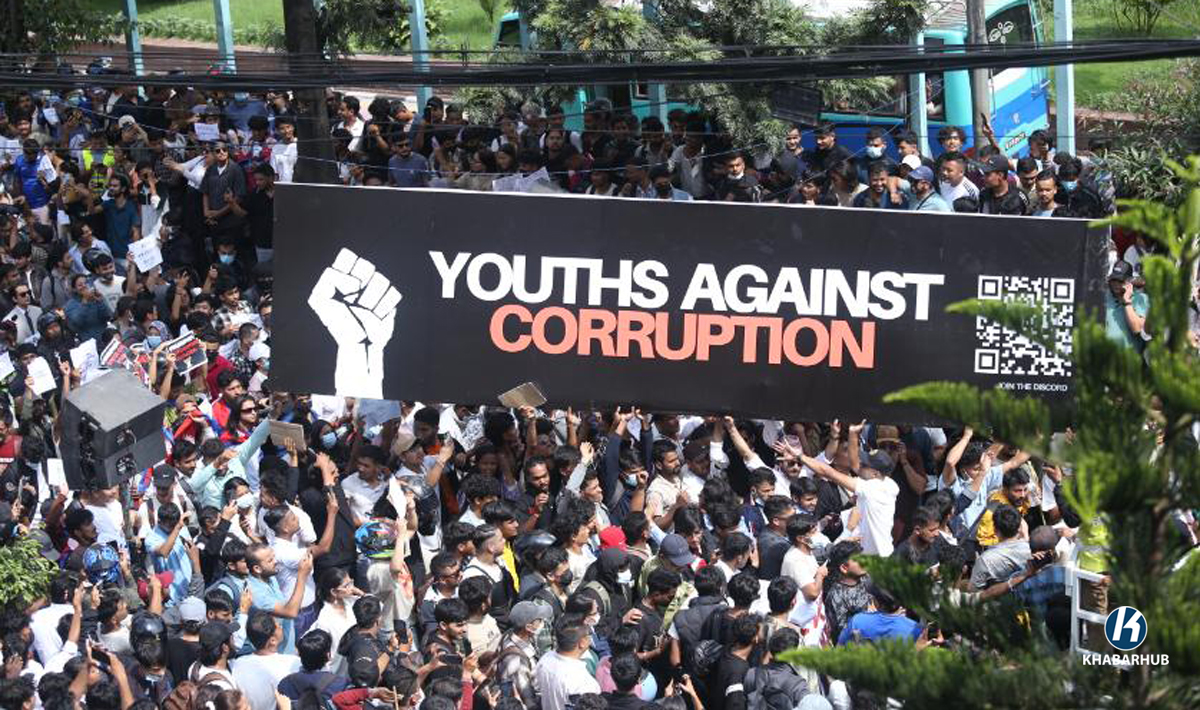
KATHMANDU: The scenes witnessed on the streets of Kathmandu a year ago on this day will be remembered for a long time in Nepal’s political and social history.
On this day, 19 people, most of them young protesters, were killed as security forces opened fire on Gen-Z-led demonstrations across the country, turning the day into one of the most tragic chapters in Nepal’s recent political history.
Thousands of young people took to the streets with placards in their hands, live broadcasts on their mobile phones, and aspirations for change in their hearts. Although their immediate anger was triggered by a government decision at the time, beneath it lay a deeper dissatisfaction that had been building for years.
The Gen-Z movement, which began with a ban on social media, gradually evolved into a broader expression of discontent over the style of state governance, the effectiveness of political leadership, corruption, nepotism, unemployment, poor public services, and inequality of opportunity.
Today, Bhadra 23 (September 8), marks one year since the beginning of the movement. The government has declared a public holiday to commemorate and honor the young people who lost their lives during the protests.
Over the past year, the country has experienced significant political changes. At the same time, the issues of good governance and accountability raised by the movement have become central to the broader debate over how the state should be governed.
From Social Media to the Streets
The immediate trigger for the Gen-Z movement was the ban on social media platforms. Following the ban, dissatisfaction among young people intensified. For the digital generation, social media was not merely a source of entertainment; it had become an important platform for accessing information, expressing opinions, pursuing education, conducting business, finding employment, and maintaining social relationships.
Young people therefore viewed the ban as an infringement on their freedom of expression and digital rights. The protest, which initially unfolded online, moved to the streets within days.
On Bhadra 23 and 24 (August 8 and 9), large numbers of young protesters gathered in Kathmandu and other parts of the country. As the movement expanded in both scale and scope, it ceased to be merely a protest over social media restrictions.
Calls for stronger action against corruption, greater political accountability, reform of public institutions, job creation, equality of opportunity, transparency, and meaningful participation of the younger generation in state governance became the movement’s central demands.
Why Was the New Generation Angry?
The dissatisfaction among the Gen-Z generation was not created by a single day or a single incident. Years of political instability, unemployment, rising prices, slow public-service delivery, allegations of corruption, unequal access to opportunities, and a culture of political patronage had steadily increased frustration among young people.
Despite attaining higher levels of education, many young people continued to face the compulsion to go abroad in search of employment. Those who attempted to start businesses in Nepal often encountered administrative hurdles, limited access to capital, policy uncertainty, and market constraints.
Young people were not simply asking the state to provide them with jobs. They were demanding a fairer system—one in which opportunities were based on merit and access to government services did not depend on political connections or personal acquaintances.
At its core, the movement expressed a demand for a state that is accountable to its citizens.
The movement also raised serious questions about political parties and their leadership. The new generation sought to establish itself as an active participant in policymaking and governance, rather than merely as a group of voters remembered by political parties during elections.
Political Change and the Demand for a New Direction
The political developments that followed the movement also appear to reflect the public’s desire for change. In the elections held on 21 Falgun, new political forces received a strong mandate.
Many analysts have interpreted the election results as an expression of dissatisfaction with the traditional political style, an expectation of new leadership, and a desire for political change.
In this sense, the Gen-Z movement appears to have influenced Nepal’s political discourse not only directly but also indirectly. What began as street discontent over a specific government decision evolved into a broader demand for good governance, accountability, institutional reform, and a more inclusive political system.
One year on, the most important question is no longer simply what the Gen-Z movement protested against, but what the state and political leadership have learned from it—and whether the aspirations expressed on the streets can be translated into lasting institutional transformation.





Comment