




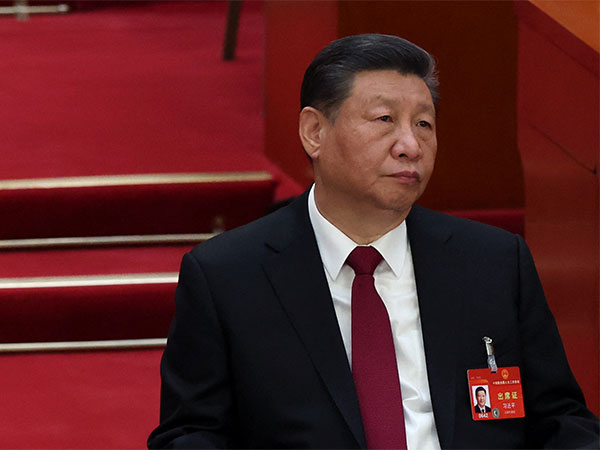
Chinese President Xi Jinping is heading towards the People’s Liberation Army’s 2027 centenary with its senior command structure increasingly hollowed out by an unprecedented purge.
Five of the seven members appointed to the Central Military Commission (CMC) in 2022 have either been expelled or placed under investigation. The development has left Xi Jinping and CMC Vice Chairman Zhang Shengmin as the only members publicly carrying out top-level duties without a disclosed investigation against them.
The Communist Party of China’s Central Committee will hold its Fifth Plenum in October. While the announced agenda does not mention personnel changes, the meeting could provide Xi an opportunity to fill some of the vacancies.
The previous plenum offers a precedent. In October 2025, the Central Committee elevated Zhang Shengmin, then the military’s top discipline official, to CMC vice chairman. The appointment was not announced as a separate agenda item.
The vacancies have widened since then. In January, Beijing announced that CMC Vice Chairman Zhang Youxia and Joint Staff Department chief Liu Zhenli were under investigation for suspected serious disciplinary and legal violations. Neither has publicly resumed his former duties.
Senior command hollowed out
The CMC appointed in 2022 comprised Xi, Zhang Youxia, He Weidong, Li Shangfu, Liu Zhenli, Miao Hua and Zhang Shengmin.
Li Shangfu was removed as defence minister in October 2023 and expelled from the party and military in June 2024. He and Miao Hua were expelled in October 2025.
The purge has extended well beyond the CMC. Investigations and removals have reached its departments, the four military services, all five theatre commands and military academies.
A CSIS ChinaPower assessment published in February identified 36 generals and lieutenant generals who have been officially purged since 2022. Another 65 officers were listed as missing or potentially purged.
The impact has been most visible in senior appointments. Of 52 key PLA leadership positions tracked by CSIS, 23 were held by interim or acting officials, 12 were vacant, and 6 had unclear status.
The vacancies have not paralysed routine operations. The PLA’s centralised bureaucracy has allowed acting commanders to manage smaller, day-to-day activities. But CSIS found indications that leadership losses could hamper planning for larger, more complex military exercises.
The bigger question is whether acting officers have the authority and experience to respond to a major crisis.
Fifth Plenum becomes a personnel test
The depleted CMC makes senior military appointments more pressing than changes to the Politburo.
“The likelihood of filling vacancies on the military commission is greater than that of filling Politburo vacancies because the commission’s current leadership is too thin,” an analyst said.
Xi may also need to look beyond the surviving military members of the current Central Committee. His 2022 elevation of He Weidong showed that he was willing to promote an officer who was not then a Central Committee member or alternate.
CSIS has described Xi’s traditional pool of senior military candidates as “heavily winnowed”. Only 17 of the 67 military members and alternate members originally appointed to the current Central Committee had neither been purged nor placed under investigation as of its April update.
That makes rebuilding the command structure a potentially lengthy exercise. Developing officers with the operational experience required for top CMC positions could take years.
Six full generals publicly active
Xi promoted Zhang Shuguang and Wang Gang to full general on July 3. Zhang was identified as secretary of the CMC Discipline Inspection Commission and head of the military supervisory commission. Wang was identified as Air Force commander.
Their promotions followed the December elevation of Eastern Theatre Command chief Yang Zhibin and Central Theatre Command chief Han Shengyan.
Publicly disclosed appointments now identify six full generals serving in senior roles: Zhang Shengmin, Defence Minister Dong Jun, Yang Zhibin, Han Shengyan, Wang Gang and Zhang Shuguang.
But the list remains a reconstruction from public disclosures. Beijing does not publish a complete, up-to-date roster clarifying the status of every serving general.
Loyalty versus operational readiness
Xi’s purge has created a difficult balance. Officers associated with Zhang Youxia or Liu Zhenli could remain vulnerable, further narrowing the pool of candidates.
The prolonged absence of a publicly announced successor to former Political Work Department Director Miao Hua also suggests caution in choosing an official responsible for political supervision and senior personnel.
The central dilemma is becoming clearer – Xi appears determined to ensure loyalty before restoring the PLA’s command hierarchy.
“Xi has placed the security of his own power above the completeness of the military command system,” the analyst said.
For Xi, the October plenum could therefore be more than a routine party meeting. It could offer the clearest indication yet of whether he believes the PLA’s command structure can continue to operate under acting leaders or whether the growing vacancies have become too costly to ignore.


Comment