




KATHMANDU: As the Rastriya Swatantra Party (RSP) prepares for its first general convention, debates have intensified over a new draft statute that reshapes internal leadership dynamics, broadens the central committee, and strengthens the president’s role in party appointments.
Initially, a drafting committee led by coordinator Bipin Acharya, along with members Ganesh Parajuli, Prakash Chandra Pariyar, Dr. Chanda Karki and others, had proposed a 136-member central committee.
However, the secretariat has now advanced a proposal to expand it to 158 members, which is reportedly close to final approval. The proposal also includes restructuring the secretariat and increasing the number of office bearers.
Under the proposed statute, the party chair would have expanded authority to nominate several secretariat members and office bearers. The current structure of the RSP includes a president, senior leader, three vice-presidents, two general secretaries, five joint general secretaries, a treasurer, two co-treasurers, a spokesperson, and two co-spokespersons.
The revised framework envisions around 18 office bearers, with a secretariat comprising 28–30 members, including office bearers.
A party leader said the central committee would consist of 151 elected members, with seven provincial presidents included ex-officio, bringing the total to 158. “There are also suggestions to automatically include all 182 MPs as central members, but the current proposal aims to balance representation and functionality,” the leader said.
The drafting team had initially proposed four joint general secretaries, but the secretariat has suggested increasing the number to five. One woman member has been made mandatory among the co-treasurers. Similarly, provisions are being discussed to ensure gender inclusion among co-spokespersons, while the party president would retain the authority to appoint the spokesperson.
Expanded nomination powers for party chair
The proposed statute includes provisions allowing the party chair to nominate one of the three vice-presidents. Similarly, one of the two general secretaries is expected to be nominated by the president, while the other would be elected. The same applies to other office bearers, including co-ministers and co-treasurers, where the president would have nomination authority.
Some leaders within the party have expressed reservations over the expanded nomination powers, although most are reluctant to publicly oppose the proposal. Party insiders say the Central Committee may further review and refine these provisions before final adoption.
If implemented, the statute would limit elections at the convention primarily to the president, one vice-president position, one general secretary, three joint general secretaries, and the treasurer. Efforts are reportedly underway to build consensus on these arrangements ahead of the convention.
A secretariat leader said the structure is intended to promote internal unity. “There is no election for the presidency itself, and the framework aims to balance competing groups. It is designed to present a unified message at the first general convention,” the leader said.
Push for consensus-based structure
According to party discussions, only those who pass the central committee election would be eligible for positions in the secretariat. The party is also considering allowing central committee members to automatically contest at the general convention.
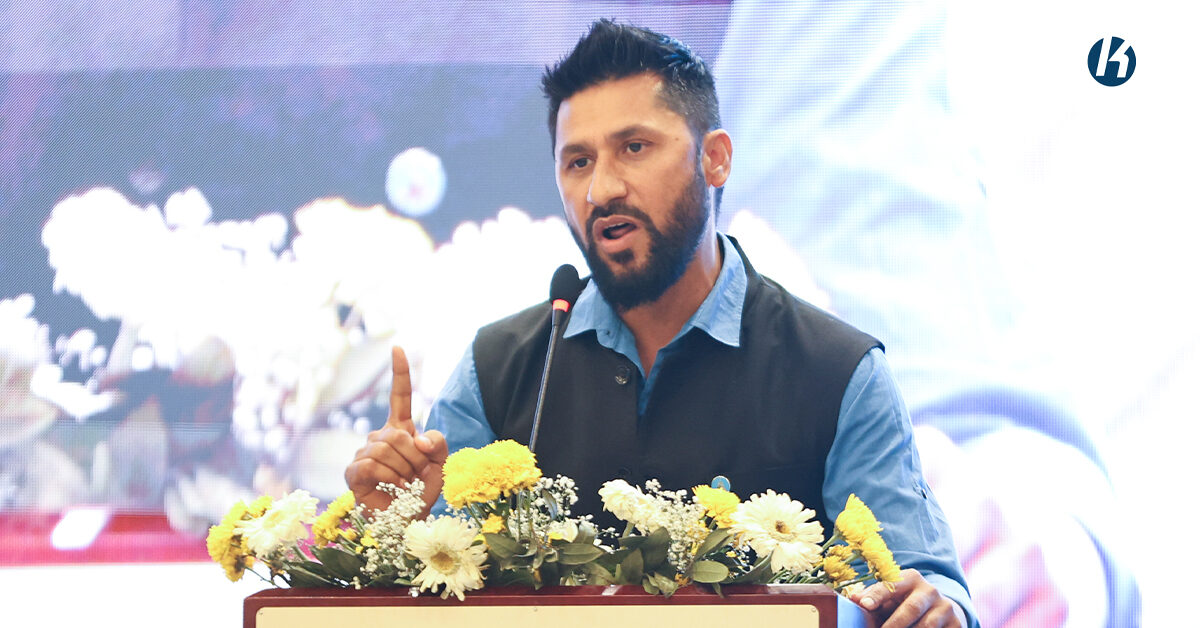
At the secretariat meeting, party chair Rabi Lamichhane emphasized the need for consensus-driven decision-making. He said the statute and other organizational matters should be finalized in a way that ensures unity and inclusion of all factions.
The draft statute is expected to be presented for approval at the Central Committee meeting scheduled for Saturday morning. Some leaders have suggested reducing the size of the secretariat, arguing that the proposed structure may be too large, while others are advocating for a more “scientific and functional” organizational design.






Comment