




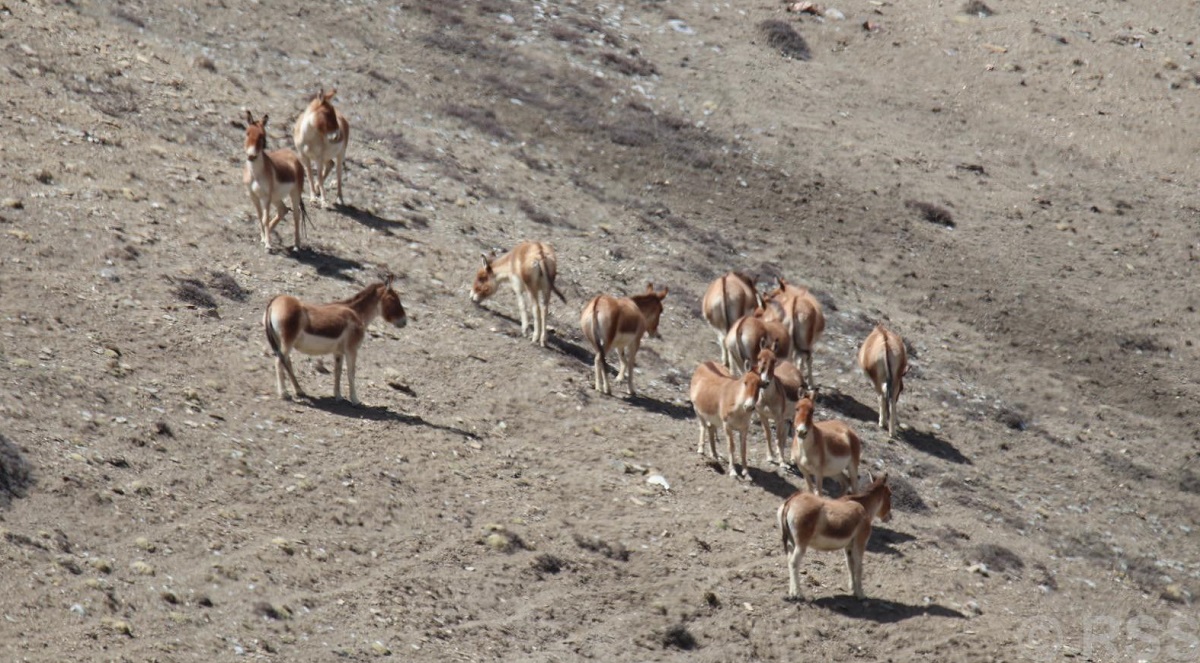
KATHMANDU: A significant number of wild donkey have been spotted in the northern border region of Nepal along the Nepal–China frontier in Upper Mustang.
The animals were observed grazing in the high-altitude pastures of Dhalung and Setara in Lomanthang–1, located in Upper Mustang at an elevation of around 5,000 meters above sea level.
According to Annapurna Conservation Area Project (ACAP) Lomanthang office chief Umesh Paudel, the herd was seen while returning from the Korala border area. He reported sighting a total of 116 wild donkeys—102 in Dhalung and 14 in Setara.
Paudel said the species inhabits the trans-Himalayan region spanning Tibet and Mustang, with seasonal migration patterns. The animals spend most of the year—around eight months—on the Tibetan plateau, moving to the highlands of Upper Mustang for about four months during warmer seasons.
Typically, the wild donkeys enter Upper Mustang between April and June in search of food, as fresh grass begins to grow in the high pastures. Areas near the border, including Lomanthang and Loghekar Damodarkunda rural municipalities, regularly witness seasonal movement of these animals.
Although camera trapping has previously been used to estimate their population, officials say this is the first time such a large herd has been observed in the region. A 2004 study had recorded only 37 individuals in Upper Mustang.
Experts attribute the movement partly to climate patterns, noting that the animals migrate in response to seasonal changes and food availability.
The kyang is considered one of Asia’s largest wild mammals. It is known for its brownish-reddish coat with a white underbelly, long legs, and strong running ability. These animals typically live in groups and are highly alert.
Conservationists warn that climate change and increasing human activity remain major challenges for the species.





Comment