




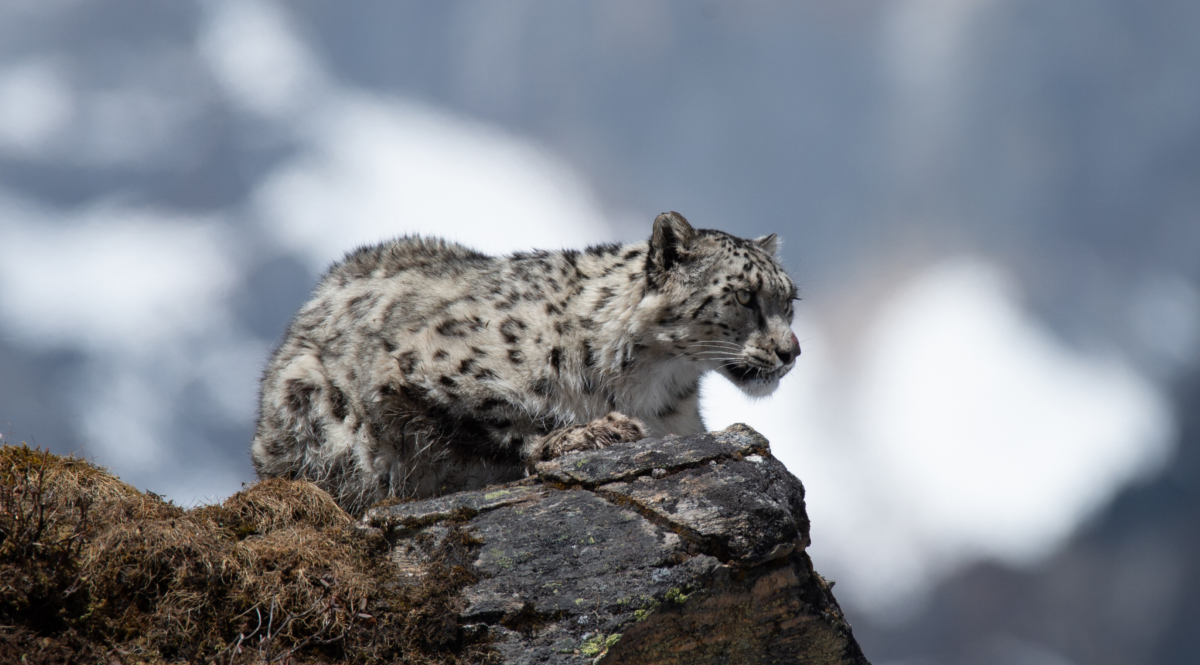
BAGLUNG: For the first time in its history, a formal census of snow leopards is set to be conducted in the Dhorpatan Hunting Reserve, Nepal’s only hunting reserve.
While the reserve is globally renowned for the legal hunting of Blue Sheep and Himalayan Tahr, the population of snow leopards inhabiting its high-altitude regions has never been officially documented.
According to Reserve Ranger Sagar Subedi, preparations are underway to train enumerators for the census. The team will consist of reserve staff, trained wildlife experts, and local residents. To capture data, 56 automated camera traps will be installed across various hunting blocks in the high-altitude terrain.
“We are working to determine the status of snow leopards here for the first time,” said Subedi. “Ten enumerators will spend 45 days placing cameras, capturing direct photos and videos, and collecting physical evidence such as pugmarks and scat to prepare a comprehensive report.”
The census will utilize “capture-recapture” technology, where automated cameras placed along probable paths, ridges, and rocky outcrops identify individual leopards based on the unique spot patterns on their bodies. Additionally, DNA testing of collected scat and footprint surveys will be used to verify the findings.
The Dhorpatan Hunting Reserve, which spans 1,325 square kilometers across Baglung, Myagdi, and Rukum districts, provides a prime habitat for snow leopards at altitudes ranging from 4,000 to over 7,000 meters. The census will specifically focus on the Seng, Sundaha, Dogadi, Ghustung, Barse, and Fagune hunting blocks.
While this year’s focus remains on the snow leopard, the reserve plans to conduct a census of Blue Sheep and Himalayan Tahr next year. According to the 2022 census, the reserve was home to 1,290 Blue Sheep and 744 Himalayan Tahr. This new initiative is expected to provide vital data for the conservation of the “Ghost of the Mountains” and help maintain the ecological balance within the reserve.




Comment