




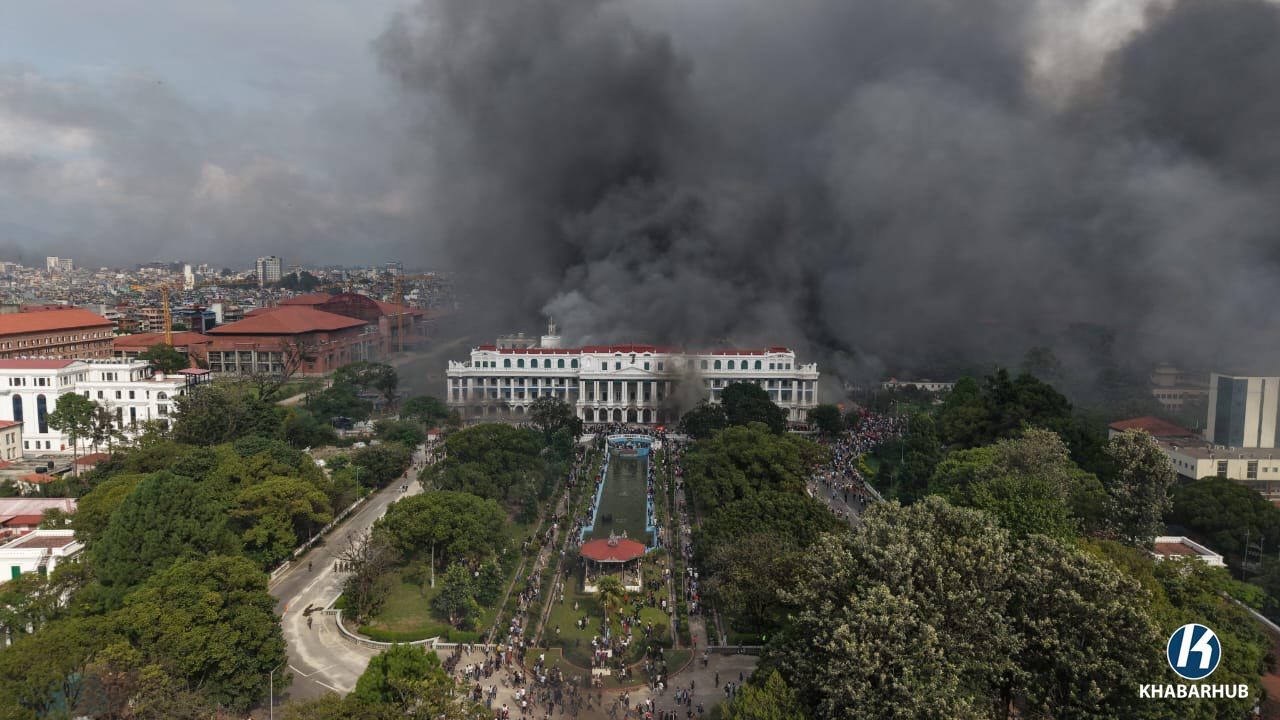
KATHMANDU: The year 2082 has witnessed three governments, marking one of the most dramatic political transformations in Nepal’s recent history.
The Nepali Congress–UML coalition, formed under a seven-point agreement, was first ousted, followed by an interim government led by former Chief Justice Sushila Karki. After a youth-led uprising, the country now has a new mandate, with Balendra Shah of the Rastriya Swatantra Party serving as Prime Minister.
As 2082 draws to a close, it stands as a year of unprecedented change. The “Gen-Z movement” of Bhadra 23–24 toppled the alternating Nepali Congress–UML governments, pushing the country into a period of intense political upheaval. The groundwork for this shift had already been laid in 2081, when public frustration with poor governance and declining trust in major parties began fueling calls for systemic change.
Despite multiple protests in 2081, the major parties largely ignored public sentiment. Their focus on retaining power rather than delivering results ultimately triggered the mass uprising in 2082 that dismantled the existing government.
While 2081 was marked by political instability, 2082 brought both transformation and tragedy. Government negligence during the protests led to the deaths of 77 people. The unrest caused widespread destruction, with hundreds of government offices, private homes, businesses, political party offices, and police stations vandalized.
Nearly a thousand weapons were looted, many of which are still being recovered. Various studies estimate the total damage to be close to a trillion rupees, highlighting the scale of the crisis the country endured.
Despite the violence, the youth-led movement demonstrated discipline, integrity, and a commitment to democratic values. The new generation chose former Chief Justice Sushila Karki to lead the interim government. She played a crucial role in stabilizing the country during the transition and ensuring the movement remained largely peaceful.
Karki was appointed Prime Minister on Bhadra 27 with the support of President Ram Chandra Paudel. Within six months, she successfully conducted elections in a free and fair environment on Falgun 21, an achievement widely regarded as historic. Although major parties initially resisted, she eventually secured their cooperation and completed the electoral process.
After fulfilling her mandate, Karki stepped down with dignity, paving the way for a new leadership. On Chaitra 13, coinciding with Ram Navami, Balendra Shah was appointed Prime Minister, representing an emerging political alternative.
The election results sent a powerful message. Voters had grown deeply disillusioned with traditional parties that had dominated politics for more than three decades. The Rastriya Swatantra Party, established in 2079, secured a near two-thirds majority with 182 seats, reflecting an unprecedented public shift.
By fielding young leadership under the age of 40, the party tapped into the public’s desire for change and managed to overturn long-standing voting patterns.
Traditional parties suffered major setbacks, shrinking significantly in both direct and proportional representation. Even parties that once campaigned on restoring the monarchy failed to gain meaningful traction, indicating a broader rejection of old political narratives.
The rise of Balendra Shah as Prime Minister symbolizes this shift. Having previously been elected as Kathmandu Metropolitan City’s mayor, Shah has built his image on action rather than rhetoric. His popularity, along with that of party chair Rabi Lamichhane, played a decisive role in the party’s success. Their partnership has so far appeared stable, with Lamichhane focusing on party leadership while Shah heads the government.
However, expectations from the new leadership are high. While Shah has demonstrated decisiveness by removing underperforming ministers, there are concerns about occasional impulsive actions, particularly in cases involving arrests without prior notice. Managing such tendencies will be crucial for maintaining public trust.
At the same time, the government’s decision to investigate the assets of officials who have held positions since 2046 has created unease among traditional political leaders. Former Prime Minister KP Sharma Oli and former Home Minister Ramesh Lekhak were arrested in connection with the violent protests and later released on bail, while investigations into others continue.
Public trust in traditional parties continues to erode, especially as political awareness among youth grows stronger. Digital platforms have empowered citizens to hold leaders accountable, increasing pressure on older parties to reform. Younger members within these parties are now demanding leadership change and institutional restructuring, though resistance from senior figures remains evident.
Overall, 2082 reflects a strong public desire for transformation. However, the responsibility now lies with the new government to meet these expectations. If it succeeds, it could redefine Nepal’s political landscape for years to come. If it fails, voters may once again turn to alternatives, including reconsidering traditional parties.
Nepali voters are no longer focused on the condition of political parties but on the condition of the people. They expect governance rooted in transparency, accountability, and merit rather than nepotism or legacy. All political forces must align with national interest and respond to evolving public expectations.
The challenge ahead is not just political change, but meaningful transformation that improves the lives of citizens.





Comment