




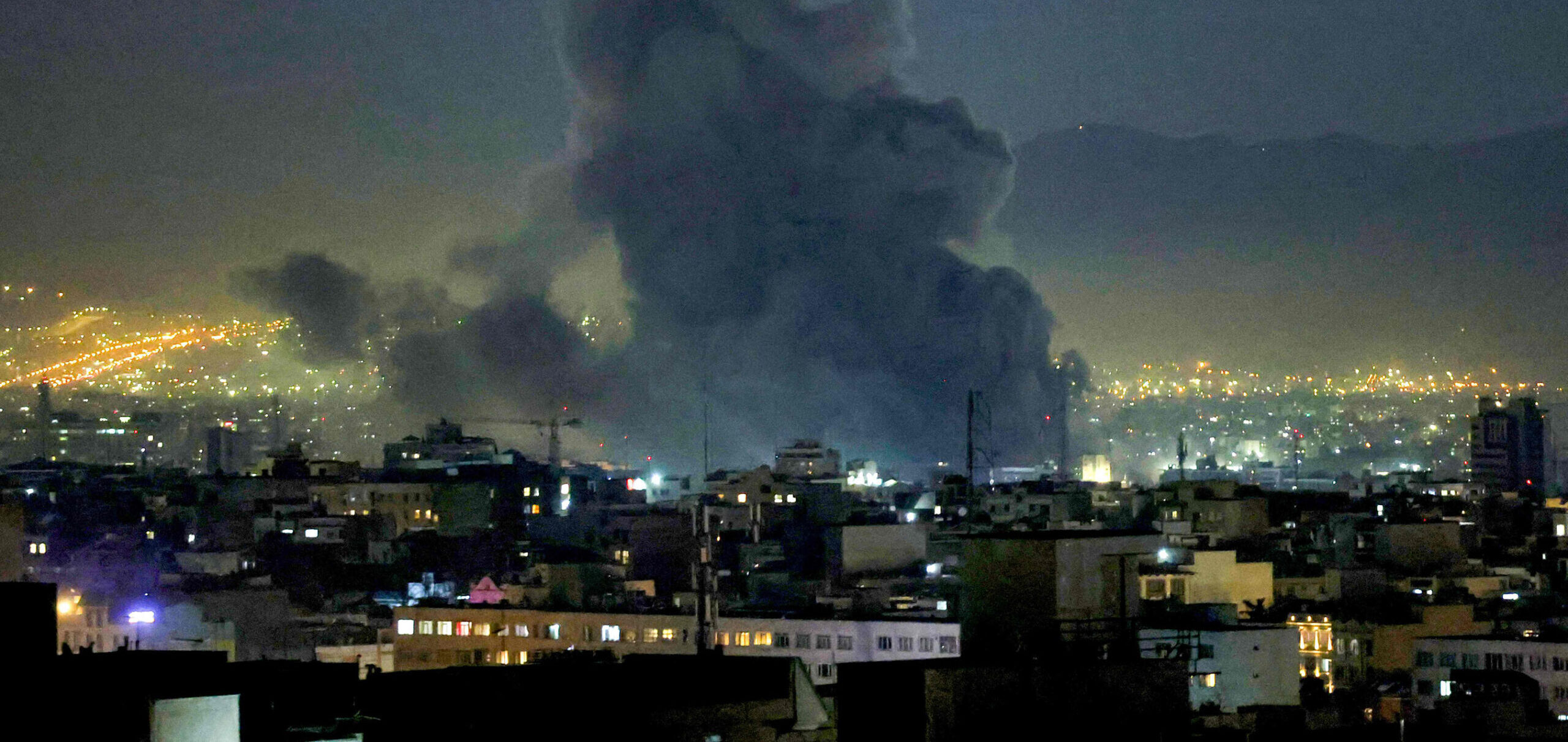
TEHRAN: Iran has vowed to continue fighting “as long as needed,” casting doubt on claims by U.S. President Donald Trump that the conflict would end soon.
Iran’s Foreign Minister Abbas Araghchi said Tuesday that Tehran is prepared to continue its military campaign for as long as necessary, dismissing prospects for negotiations with Washington.
“The firings continue, and we are prepared. We are well prepared to continue attacking them with our missiles as long as needed and as long as it takes,” Araghchi said in an interview with PBS News.
His remarks came as Iran launched a new wave of attacks targeting U.S.-allied Gulf nations only hours after Trump predicted the war would soon come to an end.
Speaking at a news conference in Florida on Monday, Trump said the conflict would be short-lived.
“It’s going to be ended soon, and if it starts up again they’ll be hit even harder,” Trump said, adding that the military campaign would be a “short-term excursion.”
He warned Tehran against disrupting global oil supplies, threatening an attack of “incalculable” scale if Iran blocks shipments.
“We will hit them so hard that it will not be possible for them or anybody else helping them to ever recover that section of the world,” Trump said.
Meanwhile, Iran’s Islamic Revolutionary Guard Corps said it would ultimately determine the end of the war, signaling continued resistance.
Araghchi also ruled out talks with Washington, citing previous failed negotiations.
“We have had a very bitter experience talking with Americans,” he said, recalling earlier attacks during diplomatic efforts. “I don’t think talking with Americans anymore would be on our agenda.”
Attacks across the Gulf
Early Tuesday, Iranian strikes again targeted several Gulf nations.
Authorities in the United Arab Emirates said they were responding to incoming missile and drone threats from Iran, while Bahrain instructed residents to take shelter as warning sirens sounded across parts of the country.
Saudi Arabia and Kuwait also reported intercepting and destroying drones launched toward their territories.
Inside Iran, local media reported fresh attacks in Tehran and Khomein. Israel said it struck an Iranian missile launcher shortly after an Iranian barrage triggered warning alerts in several areas of Israel.
The continued exchanges have heightened uncertainty in global markets, pushing fuel prices higher and raising fears of inflation and supply disruptions.
Oil markets shaken
Markets had reacted sharply to the escalating conflict earlier this week, with oil prices surging past $100 per barrel before retreating following Trump’s remarks suggesting the war could soon end.
Stock markets in Tokyo and Seoul opened stronger on Tuesday, while oil prices fell by as much as five percent.
In an effort to stabilize global energy markets, Trump announced that the United States would temporarily waive certain oil sanctions following discussions with Russian President Vladimir Putin.
The conflict has also threatened shipping through the Strait of Hormuz, a crucial maritime route through which nearly 20 percent of the world’s crude oil supply typically passes.
France and its allies are considering a defensive mission to reopen the strait after the most intense phase of the conflict subsides, according to French President Emmanuel Macron.
Regional tensions escalate
The war has increasingly spread beyond Iran and Israel, drawing in several countries across the Gulf.
Lebanon has been heavily affected after Iran-backed Hezbollah launched attacks against Israel following the killing of former Iranian supreme leader Ali Khamenei during the initial U.S.-Israeli strikes.
Lebanese authorities say Israeli attacks since March 2 have killed at least 486 people and wounded more than 1,300 others.
The new Iranian supreme leader, Mojtaba Khamenei, who succeeded his father after his death, has taken a hardline stance amid the conflict.
State media in Iran reported large public gatherings in Tehran celebrating his appointment, with thousands of supporters carrying images of the new leader.
Civilians face growing hardship
The expanding war has forced hundreds of thousands of people from their homes, particularly in Lebanon.
Government figures show that more than 660,000 people have been displaced as a result of Israeli strikes and ground incursions.
Among them is Zainab El Masry, a 40-year-old displaced resident in Beirut, who said her family has been struggling to survive.
“We have nothing to eat or drink, just a bit of bread,” she told AFP.
The conflict comes during the Muslim holy month of Ramadan, adding further strain on communities already grappling with economic hardship and war.
Residents in Iran also say financial pressures are mounting as banks restrict cash withdrawals and payment systems face disruptions.
Cafe manager Reza, 36, from the northeastern city of Boukan, said people were trying to maintain normal routines despite the bombardment.
“What amazes me most is that people sit on terraces watching the bombardments as if it were a show,” he said.
“The real problem is money. Banks are no longer distributing cash and many bank cards are blocked. In my café, I decided that if someone cannot pay for coffee, it’s on the house.”






Comment