




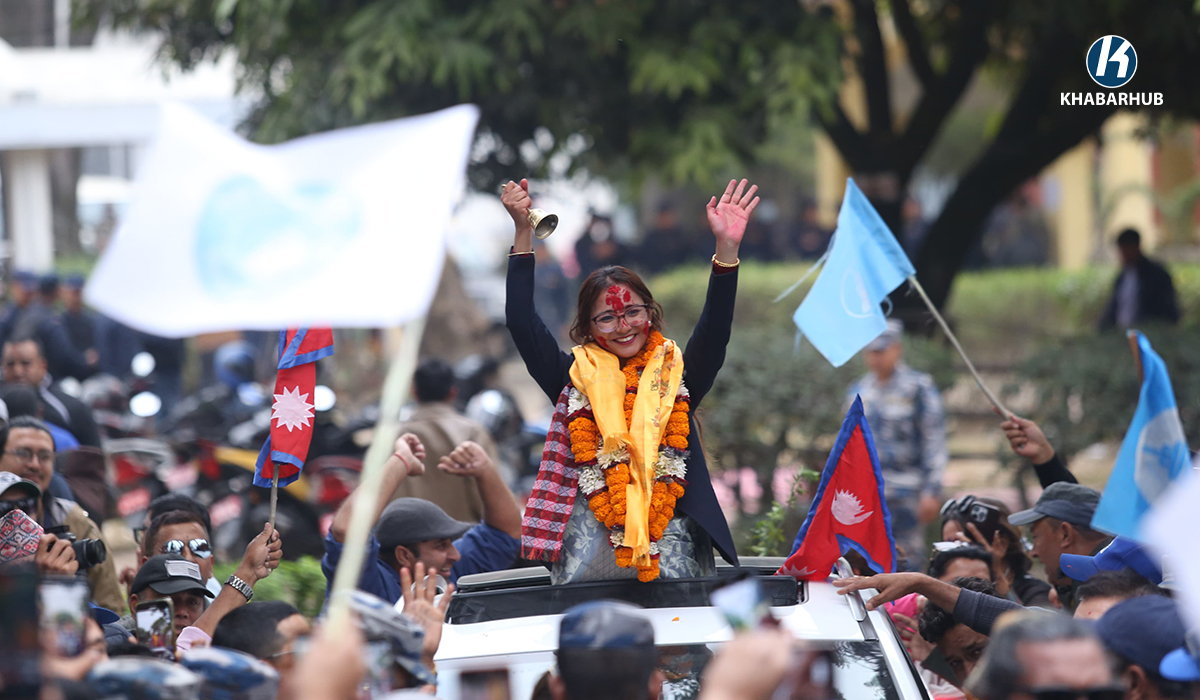
KATHMANDU: House of Representatives election held on March 5 has broken several traditional political norms in Nepal and established new benchmarks for future elections.
The election disrupted conventional standards related to party organization, affiliated groups, core areas, campaign spending, and demonstrations of power.
From the 2048 BS election after the end of the Panchayat system until 2079 BS, political parties relied heavily on their regional networks and affiliated organizations to secure votes. Swing votes occasionally altered outcomes, but overall party dominance remained stable.
For example, in the 2064 BS election, the then CPN (Maoist) won over 50% of direct seats but secured only 29.28% in proportional representation. Established parties like the Nepali Congress, CPN-UML, Rastriya Prajatantra Party, and Madhes-based parties largely maintained their traditional vote bases. This pattern continued through the 2079 BS elections.
March 5’s election, however, upended these patterns. Party-based vote banks were dismantled, allowing the Rastriya Swatantra Party (RSP) to secure more than 50% of votes in proportional representation based on its appeal alone, rather than traditional party networks.
Political parties have long relied on syndicates of teachers, students, laborers, and other affiliated groups to maintain consistent support. This election, however, saw the Janamat Party and other new forces break that model. Even long-dominant parties such as the Nepal Majdoor Kisan Party in Baglung and Bhaktapur, and the Rastriya Janamorcha, were challenged in ways that may reshape five-year political forecasts.
The election also shattered the notion that core areas, traditionally maintained by major and Madhesh-based parties, can remain loyal over time. Voters demonstrated that sustained support cannot be guaranteed merely by party ideology or organizational influence.
Additionally, the old belief that election outcomes can be swayed through heavy spending and displays of power no longer holds. Major parties invested millions in campaigns, yet their returns in votes were disproportionate to expenditure and influence.
This election highlighted voters’ growing insistence on accountability, transparency, and fair representation, emphasizing that historical loyalties or financial influence are no longer decisive. The outcome signals a significant shift in Nepalese politics, with voters prioritizing performance and credibility over traditional party dominance.





Comment