




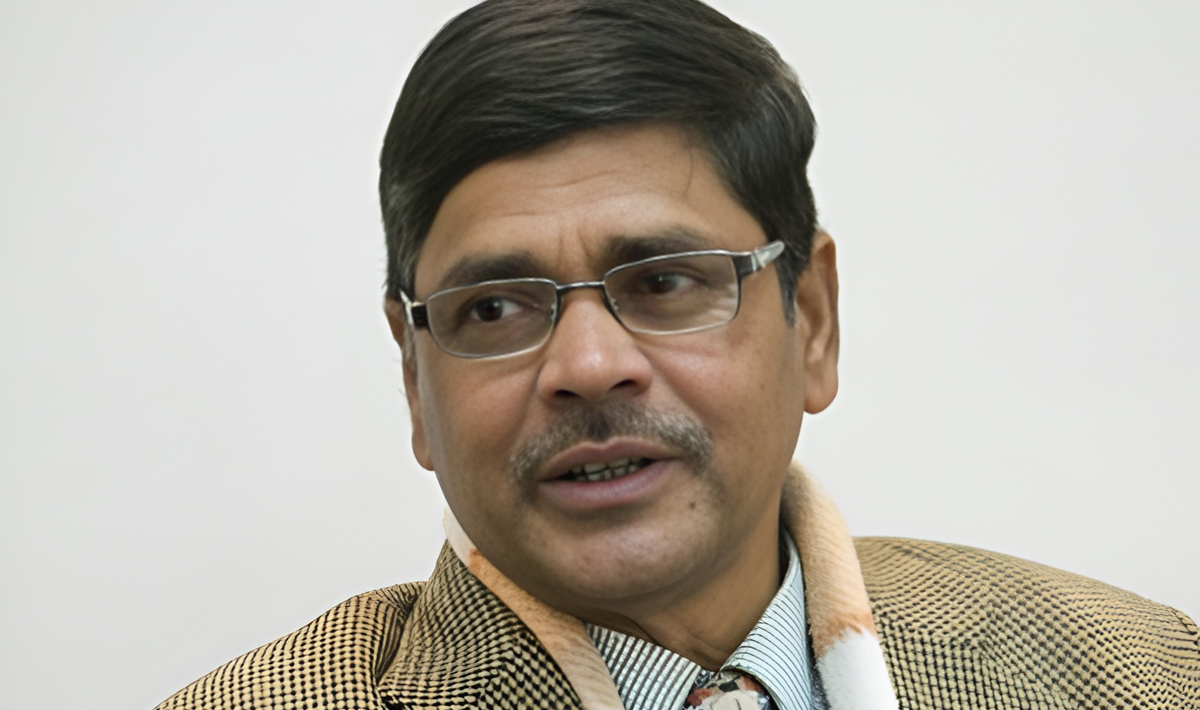
RAJBIRAJ: Dr. Ayodhee Prasad Yadav assumed office as Chief Election Commissioner on July 11, 2016. Previously, he served as Election Commissioner from January 11, 2007 to January 10, 2013, and was reappointed to the same position from March 14, 2013. He also served as Acting Chief Election Commissioner from August 28, 2015.
Presented below is an edited excerpt from an interview with former Chief Election Commissioner Dr. Yadav, focusing on various aspects of the upcoming House of Representatives election.
How do you view the House of Representatives election scheduled for March 5?
This House of Representatives election will be the first of its kind in the history of Nepal’s federal democratic system. It is a product of the Gen-Z protests on September 8 and 9, 2025. I believe this election will help strengthen, consolidate, and institutionalize democracy in the country.
Since the House of Representatives was dissolved following that movement, this election carries special importance in terms of democratic values and social transformation. It represents a fresh mandate from the people. We hope it will fulfill the aspirations and expectations for change that the country seeks.
What aspects of this election are being observed with particular interest?
This election follows a mixed electoral system, combining both proportional representation and direct (first-past-the-post) voting. While there are different perspectives on this system, it has become a subject of broad public discussion.
One key area of interest is the potential for greater involvement of the younger generation in political leadership and national transformation. There is growing hope among the public that the role of youth in politics will expand further.
At the same time, we must also acknowledge the contributions and experience of leaders from established political parties. Both generations have roles to play in shaping the country’s future.
Who holds responsibility for ensuring that the election is free, fair, credible, and fearless?
Elections must not only be free but also fair and credible. The Election Commission has the primary responsibility for ensuring a free and fair electoral process.
The Commission must properly manage all technical and administrative aspects of the election. If materials and logistics are handled efficiently, the election process will naturally be strengthened.
However, the responsibility does not lie with the Commission alone. Voters also have an equal role. They must exercise their voting rights independently and responsibly. Maximum voter participation is essential.
Political party leaders, candidates, security agencies, and observers also have important roles. Security arrangements, the safe transportation of ballot papers, and effective monitoring by observers all contribute to credibility.
The media plays a particularly vital role. It helps educate voters, encourages participation, and disseminates timely election results. Therefore, ensuring a free, fair, and fearless election is a shared responsibility among all stakeholders.
What should political parties and candidates keep in mind during campaigning?
Since the upcoming election will be held simultaneously across the country, political parties and candidates must focus on voter education. They should guide voters on how to cast their ballots correctly, including the use of sample ballot papers where necessary.
The Election Commission has already mobilized its mechanisms at the ward level to facilitate the voting process. During door-to-door campaigns, public meetings, and rallies, parties must operate within the framework of the election code of conduct.
Campaigning should be centered on party manifestos and policy agendas rather than confrontation. Coordination among candidates and mutual respect are essential to maintaining peace and order.
By adhering strictly to the code of conduct and prioritizing peaceful engagement, political parties can help ensure a dignified and credible electoral process.
Why is the average percentage of invalid votes high, and how can it be reduced?
There are several factors that contribute to a high number of invalid votes in elections. One key reason is low voter literacy. Many voters may not fully understand how to properly mark the ballot, leading to mistakes.
The design and layout of ballot papers can also create confusion. Similar election symbols on different sides of the ballot, unclear marking boxes, or poor-quality stamps and ink can result in votes being invalidated. Inadequate lighting at polling stations may further complicate the voting process. Elderly and differently-abled voters also face additional challenges, increasing the risk of invalid votes.
In some cases, political parties that choose to boycott elections may campaign specifically to encourage invalid votes, which can artificially inflate the percentage of invalid ballots.
Measures to reduce invalid votes could include: Simplifying ballot design and making election symbols more distinct; improving voter education through awareness programs and demonstrations on how to vote correctly; using high-quality stamps and ink to prevent issues with marking, and ensuring polling stations are well-lit and accessible, particularly for elderly and disabled voters.
What should be the role of the government and the Election Commission in conducting free elections?
In a democratic system, both the government and the Election Commission play essential roles in ensuring credible elections. In some countries, the government alone conducts elections, but Nepal has an independent Election Commission to oversee the process.
The Election Commission is responsible for the overall management and integrity of the elections, including organizing polling stations, voter lists, ballot papers, and manpower. The government, on the other hand, provides financial resources, ensures security, and mobilizes necessary staff to support the process.
The current government, formed after the Gen-G movement and often referred to as an interim government, has been praised for its role in holding elections on schedule. Meanwhile, political parties are making final preparations, and the Election Commission has finalized arrangements for all essential materials and logistics required for the upcoming House of Representatives election.
Could you clarify the rules on election campaigning and the silent period?
Election campaigning practices vary across countries, and the rules for the silent period also differ. In Nepal, open campaigning is prohibited for three days before the election.
This silent period allows voters to reflect on their choices and make informed decisions without external influence. At the same time, the Election Commission uses this period to finalize preparations for voting, ensuring that all logistics and arrangements are in place for a smooth election day.
Any message for voters?
This election holds historical significance in Nepal’s democratic journey. I urge all eligible voters to exercise their right to vote, helping strengthen democracy and facilitate the formation of a stable and permanent government for the welfare and prosperity of all Nepalis.
Voting is a fundamental right. Citizens should cast their votes freely, fairly, and without fear, intimidation, or external influence. By participating responsibly, voters play a vital role in shaping the country’s democratic future in the upcoming House of Representatives elections on March 5.
(RSS)



Comment