




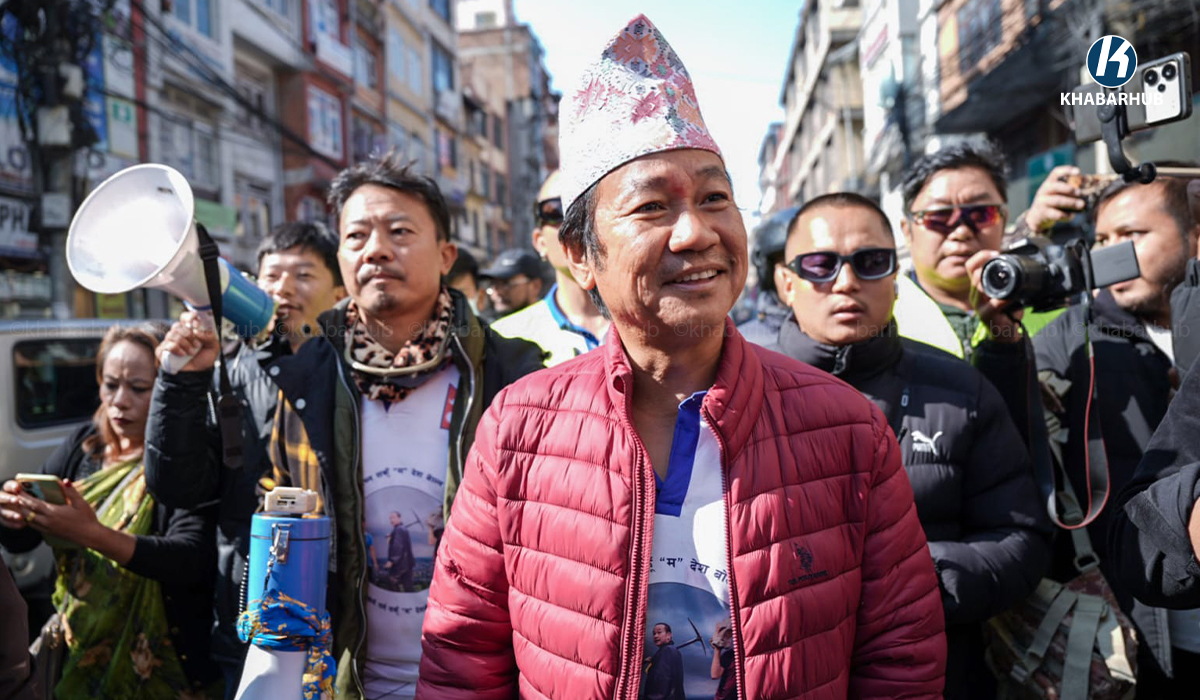
KATHMANDU: Dharan Sub-Metropolitan City’s former mayor Harka Sampang has expanded his political footprint in Koshi Province after registering the Shram Sanskriti Party and advancing Harkabad (Harkaism) as its guiding principle.
The party has fielded candidates in 109 out of 165 constituencies across the country for the House of Representatives election, with labor culture as its central agenda. It argues that only a balanced development of nature, culture and technology can ensure human progress, stressing mandatory labor and volunteerism as key pillars of national transformation.
How much public support Sampang’s new political experiment commands will become clear only after the polls.
Ambition beyond Dharan
Sampang himself is contesting from Sunsari-1, a constituency that includes all 20 wards of Dharan Sub-Metropolitan City, along with parts of Ramdhuni Municipality and Barahakshetra Municipality. Though he claims that multiple candidates from his party will secure “respectable victories” and has even spoken of becoming prime minister after the election, local observers say his own race remains challenging.
He faces strong competition from Goma Tamang Sarin of the Rastriya Swatantra Party, who had secured 16,606 votes in the 2022 general election, finishing a close second. That year, the constituency witnessed a tight contest, with a narrow margin separating the top candidates.
Local businessman Devendra Tamang says Sampang may not secure as many votes from Dharan as expected, citing tensions with ward representatives during his mayoral tenure. “It will be very difficult for him to win from Sunsari-1,” he said.
In 2022, Sampang won the Dharan mayoral post with 20,821 votes under the “Lauro” election symbol. However, translating local popularity into a parliamentary victory remains uncertain.
Vote-cutter across districts?
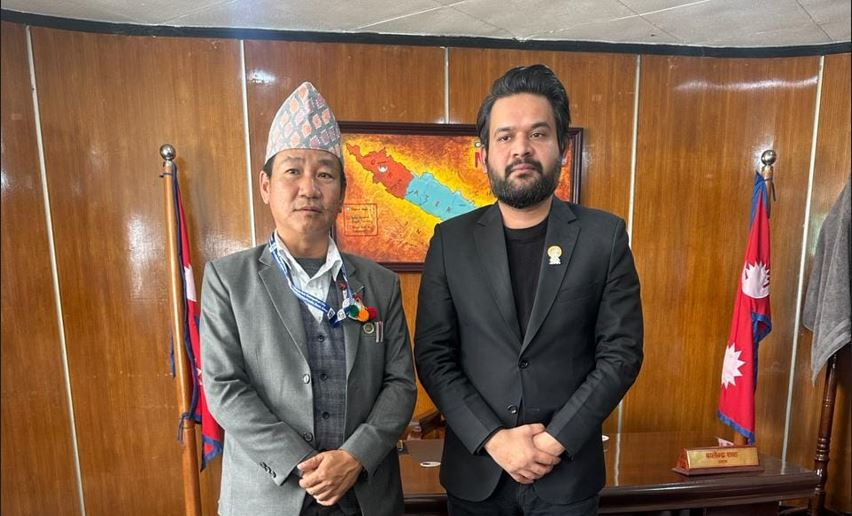
While the Shram Sanskriti Party appears unlikely to win in most Koshi constituencies, analysts say it could cut into the vote share of major parties.
In Jhapa-5, Sampang has claimed his party could defeat UML Chair KP Sharma Oli, but local observers dismiss such prospects as unrealistic. Businessman Ashutosh Bhandari from Damak says the main contest there remains between Oli and leaders of other major parties, with smaller parties unlikely to mount a serious challenge.
Similarly, in Bhojpur, the party’s candidate Dhruvaraj Rai is expected to attract votes from the Kirat Rai and other indigenous communities. Yet local voters say the contest will primarily revolve around candidates from established parties.
Across districts, including Panchthar, Taplejung, Ilam, Sankhuwasabha, Terhathum, Dhankuta, Morang, Udayapur and Solukhumbu, Shram Sanskriti Party candidates are seen as capable of drawing limited support from indigenous and identity-based voters. However, political observers say organizational weakness and limited grassroots structures reduce their chances of outright victories.
Journalist Parbat Portel in Jhapa notes that while indigenous voters may support the party symbolically, “the real contest will be among the Nepali Congress, UML, Rastriya Swatantra Party and Maoist Centre.”
National party aspiration

To be recognized as a national party, a political force must secure at least three percent of the total proportional representation vote nationwide and win at least one first-past-the-post seat under Nepal’s electoral law.
In previous elections, parties that failed to cross the proportional threshold were denied national status despite winning seats under the direct system.
Sampang’s aides say the party’s goal is to win at least one constituency and cross the three percent threshold nationwide. Political analyst Shyam Shrestha says that while Sampang has managed to build visibility through his labor campaign, the absence of a clearly defined ideological framework and organizational depth could make the threshold difficult to achieve.
“He appears to be running primarily to cross the threshold,” Shrestha said. “Public enthusiasm for new agendas may translate into votes, but it is too early to predict whether the party can secure three percent nationwide.”
Koshi’s past voting trends
In the 2022 general election, UML emerged as the largest party in Koshi Province, winning 13 out of 28 constituencies. The Nepali Congress secured nine seats, while the Maoist Centre won three. The Rastriya Swatantra Party, though it did not win a direct seat in Koshi, became the third-largest party nationwide through proportional votes.
The Rastriya Swatantra Party’s strong proportional showing in Koshi—surpassing the Maoists—suggested growing voter appetite for alternatives to traditional parties. Analysts say this trend could offer Sampang’s party an opening, particularly among youth and reform-oriented voters.
However, whether that sentiment will consolidate behind the Shram Sanskriti Party remains uncertain.
For now, Sampang continues his campaign tour across districts, banking on the goodwill he earned through his labor activism and civic initiatives. The ballot will ultimately determine whether that activism evolves into a sustainable national political force—or remains a localized phenomenon rooted in Dharan.





Comment