



In a democracy, it is unacceptable to suppress dissenting views simply because an election atmosphere is rapidly intensifying. Elections must become a means to create a way forward, not an end in themselves.
This raises a fundamental question: what is the purpose of this election? What problem is it meant to solve? Has it merely advanced an election originally due in 2027 to 2026, or has it achieved something more substantive?
The Nepali people have witnessed elections, governments, and even constitutional changes, yet they have also seen how things actually unfold. If we simply accept what has happened as inevitable, can these changes truly be called transformation? Or are they illusions, dreams mistaken for progress? The damage, once dismissed as imaginary, has proven very real. Reconstruction and a sustainable solution still seem distant.
As elections approach, the country stands at a crossroads. This is a grave moment. Every Nepali needs the courage to speak honestly from within. Yet we live in a paradox: we swear to speak the truth, but when the moment comes, we say something else.
Looking at the country from economic, political, security, and constitutional perspectives, one troubling reality stands out, our confidence has eroded. Confidence cannot exist without security. And security is not limited to the army or police; it is also the assurance that speaking the truth will not bring harm.
Today, it feels as though we have reached a point where truth cannot be spoken and necessary actions cannot be taken. How can a society survive in such a state?
Assuming the election proceeds successfully, there should be no excuses afterward. There must be a firm commitment to make necessary and sufficient constitutional amendments based on public consensus. Yet, so far, no political party or leader has clearly made such a commitment.
Nepal increasingly resembles a failed laboratory. From the political changes of 2007 BS to 2017 BS, 2046 BS, 2062/63 BS, and 2072 BS, each transformation has undermined the previous one. One system replaces another, only to deteriorate in turn.
We have seen victorious kings, Rana prime ministers born of palace coups, governments formed through compromise, reformed multiparty systems, parliamentary experiments, and now a republic. Yet it does not feel as though we are moving forward. We keep adding new arrangements without ever reaching our destination.
The election now stands before us. There is neither consensus to cancel it nor clarity on how to complete it meaningfully. We are trapped in a strange state, unable to embrace it, unable to abandon it. This dilemma poses a greater challenge than any past governing experience.
Regarding the Gen-Z movement, the spirit of reform and good governance among young people was strong until the afternoon of September 8. What followed must be owned by those responsible. The events of September 9, however, were deeply alarming.
Those who protested on September 8, remain on the streets, outside both government and elections. Meanwhile, forces linked to September 9 have entered government and the electoral process, creating fear and deep mistrust. The contrast between the two days is stark and cannot be ignored.
If criminal acts occurred, why was criminal law not enforced at the time? An inquiry commission does not suspend the rule of law. Investigation cannot replace accountability.
The criminal dimension of what happened between September 8 and 9, 2025 remains unresolved. Why is there an attempt to leave it untouched? Is it to clear the path for elections? If so, this only widens the moral and political gap between those two days.
An inquiry commission has been formed, but timing matters. If criminal law is not applied, the commission’s report must be prioritized, and a clear path for its implementation decided. The government was formed on September 8, and Parliament was dissolved on September 11, both now subject to constitutional scrutiny.
What are we trying to achieve by moving forward while inquiry reports remain pending and constitutional disputes unresolved? If this is truly a mid-term election, what necessitated such haste?
Even if cases are under judicial consideration, questions surrounding the legality of decisions made by the President and Prime Minister must be addressed promptly. Only after resolving these disputes should elections and other political processes proceed.
In a logical framework, once disputes are settled, elections become a genuine political process. Until then, the path forward remains unclear, and the risk of losing the nation in the pursuit of winning remains very real.
Instead of the usual democratic process, thinking first and acting later, we are now witnessing the opposite: actions are being taken before serious thought, and reflection comes afterward. This should not happen in a civilized society. We are not a country unfamiliar with democratic practice.
Nepal has witnessed seven constitutions and accumulated long experience in governance and political transition. Yet, despite this history, we are behaving as though we have learned nothing, as if we have seen nothing and experienced nothing.
This raises a troubling question: has the natural sequence been reversed? Are we now doing “two after one” and “one after two”? I once believed that many of today’s problems could have been avoided if certain steps had not been taken. Still, that does not mean I can withhold my hope for the upcoming elections.
However, the relationship between the events of September 8 and 9 must be examined carefully. After holding such an expensive election in a country like ours, it is only reasonable to expect the emergence of a trustworthy Parliament. If there are flaws in the Constitution, there must be credible assurance of constitutional amendment. There should have been a clear path toward good governance.
This election is not an ordinary one. It is a national election. It should serve as a platform to resolve national disputes, build broad consensus, and reflect the aspirations and hopes of the people. There must be a rational basis for hope.
We face multiple layers of problems, structural challenges, political failures, weaknesses of conscience, and gaps in public trust. Beyond this, there are constitutional and governance-related complications. The Constitution may have been well written, but it has not been well implemented. That failure of implementation itself has become a constitutional weakness.
Elections have been held regularly, not halted for lack of funds. Political arrangements have repeatedly been implemented, yet social, cultural, and institutional reforms affecting ordinary citizens have lagged behind. Why? Because alongside some progressive objectives, the Constitution suffers from structural, procedural, institutional, and coordination-related shortcomings.
Federalism offers a clear example. The formation and dissolution of provincial governments reveal deep flaws. Provinces remain weak, local governments are ignored, and the federal government dominates. Provinces sit in the middle with limited resources and unclear authority. This is not genuine federalism; it is centralized federalism, where power ultimately remains at the center.
There are problems in government formation, parliamentary functioning, and constitutional appointments, and their consequences are already visible. Taken together, the constitutional system we are meant to respect has failed to deliver results. As a consequence, good governance—demanded so strongly by the Gen-Z generation, has not materialized. Good governance does not descend from the sky; it emerges only through the proper implementation of the Constitution, laws, and institutions. It cannot be achieved overnight.
The Gen-Z generation neither has a political party nor is actively participating in elections. Who, then, represents them? Even the current government admits that no clear Gen-G representation exists. In such a contradictory situation, where are we leading the country? One can only hope that the fears surrounding the upcoming elections do not come true.
To safeguard the nation, everyone must cultivate a sense of belonging and practice accommodation. Every citizen’s presence and voice deserve respect, and we must create a political and social environment that allows this to happen.
The Nepali people want results, whether in economic recovery, governance reform, or constitutional restructuring. Above all, they want the protection of the nation itself.
Assuming the election proceeds successfully, there should be no excuses afterward. There must be a firm commitment to make necessary and sufficient constitutional amendments based on public consensus. Yet, so far, no political party or leader has clearly made such a commitment.
Nepal has experienced non-party systems, multiparty democracy, and repeated political transitions. But today, as unprincipled alliances form and individual ambitions dominate electoral contests, we must ask: is multiparty democracy truly strengthening political independence, or is it undermining it? Should this moment be seen as an opportunity, or as a serious warning?
This is the gravity of the situation we now face. There may be positive aspects in the Constitution, but if the values enshrined in the system are not transformed into practice, they remain merely words on paper. Written principles are not true values; it is their implementation that gives them meaning. Holding onto words that fail to create real value is meaningless. Therefore, we must change the words, their meanings, and the underlying intentions, and transform them into practice.
That is why it is essential to respect the Gen-Z, to acknowledge their voice, and to address their concerns. Ignoring this now, or failing to do so after the election, could invite further crises.
Nepal has reached a critical stage. Nations rise, fall, and sometimes perish. Political systems may fail, governments may change, but the nation itself is sacred. This nation belongs to all of us, and it must be preserved. Preserving it requires understanding, compassion, and inclusivity, qualities that appear to be in short supply today.
No one should win or lose at the expense of the nation. In a democracy, there will always be victories and defeats, but these are insufficient if the country itself suffers. To safeguard the nation, everyone must cultivate a sense of belonging and practice accommodation. Every citizen’s presence and voice deserve respect, and we must create a political and social environment that allows this to happen.
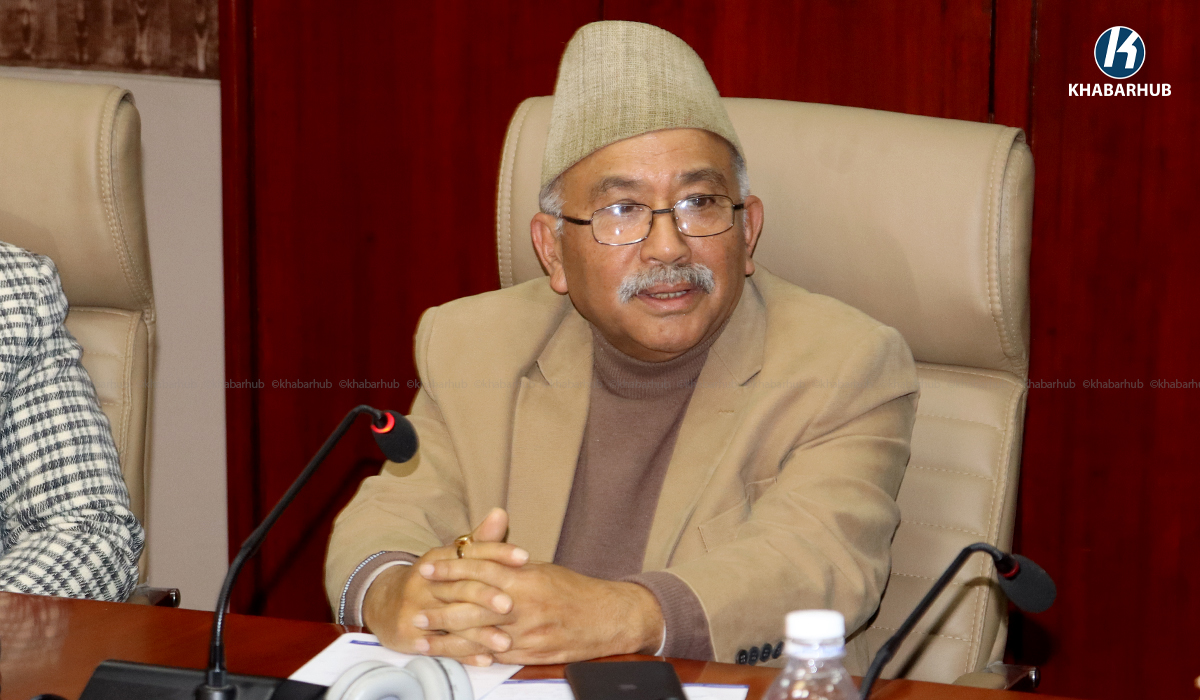
(Views expressed by former Chief Justice Kalyan Shrestha while participating in a discussion program organized by the Institute for Strategic and Socio-Economic Research in Kathmandu)




Comment