




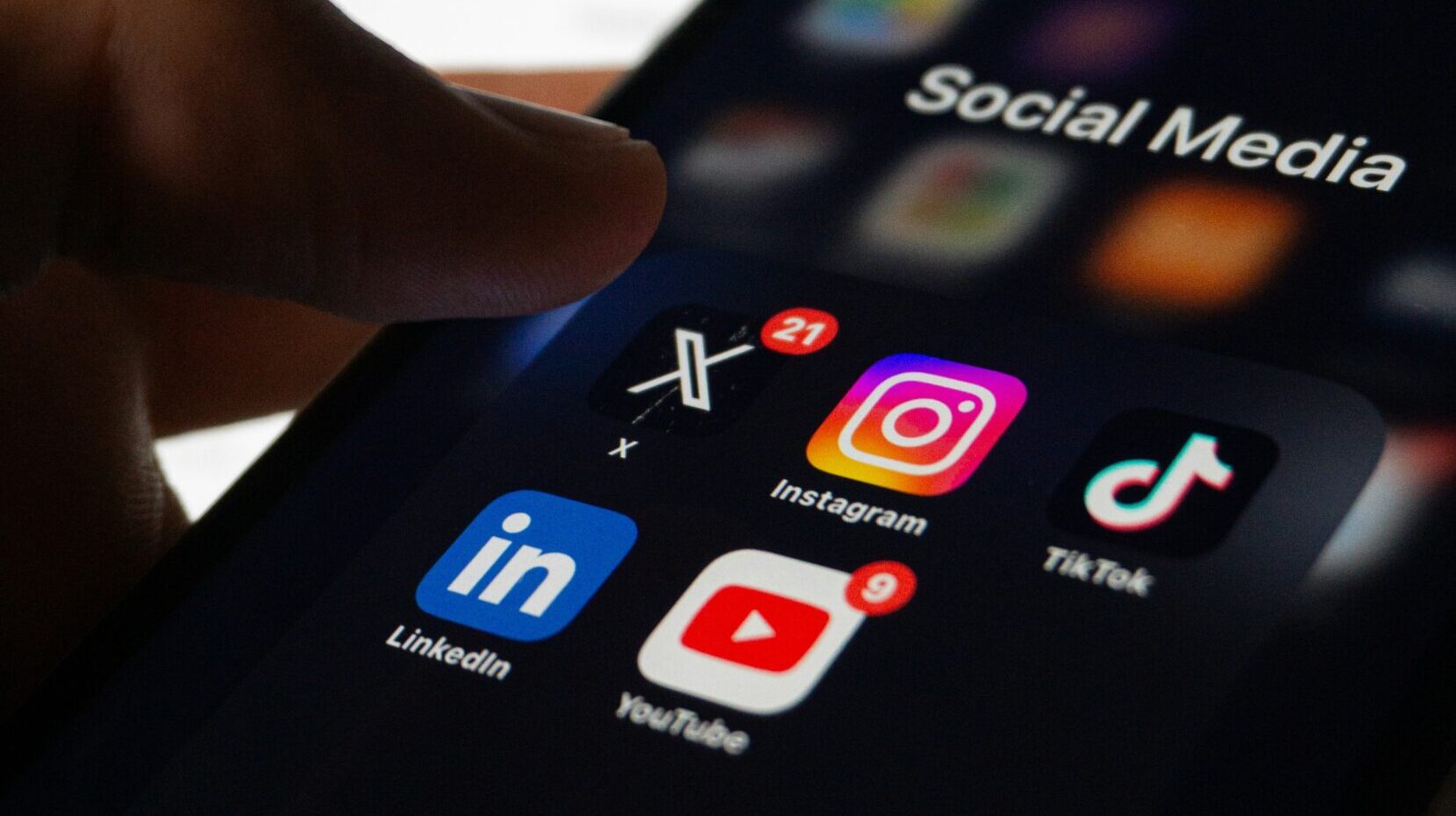
KATHMANDU: When Gen-Z youths called for protests on September 8 and 9, 2025, one of the key triggers was the government’s decision to shut down social media platforms. Despite the restrictions, young users continued to access social media using tools such as virtual private networks (VPNs) and alternative DNS methods, underscoring how deeply embedded digital platforms have become in everyday life.
Today, life outside social media is increasingly difficult to imagine for ordinary people. From small traders to large entrepreneurs, the entire cycle of production and consumption is closely linked to digital platforms. Students rely on social media not only for learning but also for accessing health-related information and services. Rather than returning to offline realities, society appears to be becoming even more dependent on social media.
However, in a fragile state like Nepal, the growing influence of social media algorithms raises serious questions. The invisible logic that determines what people see online has the potential to affect individual lives, family and social values, and even the direction and functioning of the state itself.
What is an algorithm?
According to Google’s AI system Gemini, the primary role of social media algorithms is to keep users engaged on their screens for as long as possible. To achieve this, algorithms select content from thousands of posts and show users only what aligns with their interests.
From the moment a user opens a social media app until it is closed, every activity is recorded. Gemini explains that algorithms mainly track four things: where a user pauses after opening the app, whether a video is watched for just a few seconds or in full, and how long the user engages with specific content. Longer viewing times signal stronger interest.
Algorithms also closely monitor whether users like, comment on, or share a post. In addition, they assess relationships, who a user interacts with most frequently and whose profile they view first, prioritizing posts from those connections. Search behavior within the platform is also recorded and used to refine what appears on a user’s screen.
How algorithms make content viral
By continuously analyzing user preferences, algorithms subtly encourage people to spend more time on social media, often without their awareness. They also play a decisive role in making content go viral.
Gemini notes that after a post is uploaded, it is initially shown to a small group of users. If it receives strong engagement, views, likes, comments, the algorithm gradually expands its reach to hundreds or thousands more users. This process turns certain posts viral.
As a result, low-quality or sensational posts, poorly written texts, hastily made videos, or reaction-driven content, often receive disproportionate attention. While organized groups and influential users benefit from large followings, algorithmic amplification also significantly contributes to their reach.
Most users remain unaware of why specific content appears on their screens. Yet over time, such content subtly shapes emotions, opinions, and perceptions, influencing personal choices, social attitudes, and even national narratives.
Elections in the age of algorithms
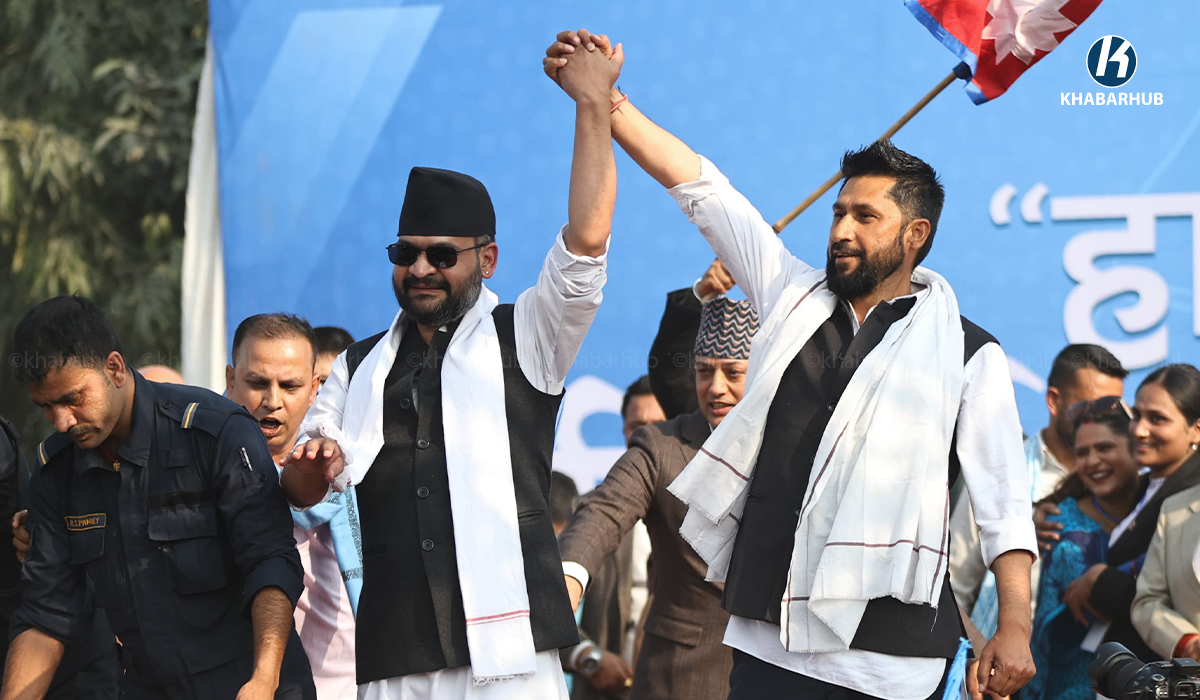
Nepal is now firmly in an election mode ahead of the March 5 polls, and social media platforms reflect this shift. Increased political engagement during elections is not inherently negative, as elections are tied to the country’s future.
The problem, however, lies in how political preferences are being shaped online. Instead of debates based on ideology, policy, or manifestos, social media is dominated by binary “pro” or “anti” campaigns. Some users oppose certain candidates without clear reasons, while others offer unconditional support to individuals without critical evaluation.
As users repeatedly engage with content they agree with, algorithms further tailor their feeds to reinforce those views. This deepens polarization, pushing people further into support or opposition camps. In this process, algorithms are widening the divide between what is labelled “new” and “old” politics in Nepal.
Mainstream political parties, despite their flaws, have long-established manifestos, ideological documents, and political philosophies that have shaped the country’s current system. They also acknowledge internal disagreements within that system.
By contrast, the Rastriya Swatantra Party (RSP), which entered electoral politics in the last election, has not presented a distinctly different economic or political vision from the Nepali Congress’s liberal economic outlook.
A striking example is Balen Shah. Before entering the electoral race under RSP’s banner, Shah had openly opposed federalism. As mayor of Kathmandu, he took uncompromising positions on issues such as informal settlements, scrap management, and footpath trade, often enforcing his own vision without exploring alternative approaches.
Yet upon joining the electoral contest, Shah suddenly emerged as a vocal supporter of federalism and an advocate for Madhesi rights. Despite such inconsistencies, a large section of the public, already deeply influenced by algorithm-driven content, has shown little inclination to critically examine political behavior or ideology.
As the country heads into elections, essential questions remain sidelined: Who are the so-called “old” forces, and why are they considered old? How, and to what extent, did they fail? What truly defines the “new”? Instead of nuanced debate, narratives are being built around isolated events and personalities.
This pattern raises a troubling possibility, which once again, public disillusionment may only emerge after expectations are shattered, repeating a cycle Nepal has witnessed many times before.





Comment