




CHITWAN: With candidate registration completed, election activities have gathered pace across the country. From tea shops and village squares to social media platforms, political discussions have intensified, and voters are increasingly aligning themselves with political camps.
All candidates and political parties are now fully engaged in campaign mode. However, among the constituencies drawing heightened attention online, Chitwan-3 has emerged as one of the most talked-about seats.
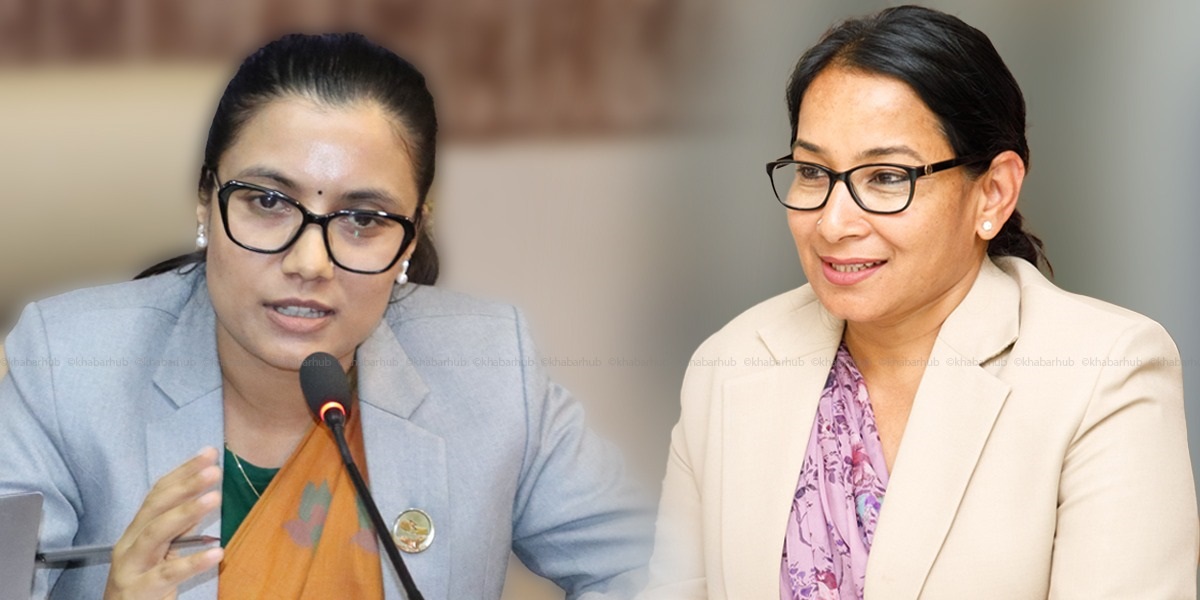
The constituency has become a focal point largely due to the candidacies of CPN (Maoist Centre) leader Renu Dahal and Rastriya Swatantra Party (RSP) leader Sobita Gautam. While social media narratives frame the contest as a direct face-off between the two, other candidates, Nepali Congress’s Tek Prasad Gurung, UML’s Shankar Raj Thapaliya, and RPP’s Deepak Thapa, also command strong organizational backing.
Despite this, online opinion polls and Facebook pages have largely reduced the contest to a “No Sobita” versus “No Renu” debate, sidelining other contenders. Such digital trends, driven by algorithms and echo chambers, are increasingly shaping voter perceptions, even though they may not fully reflect ground realities.
What local election results suggest
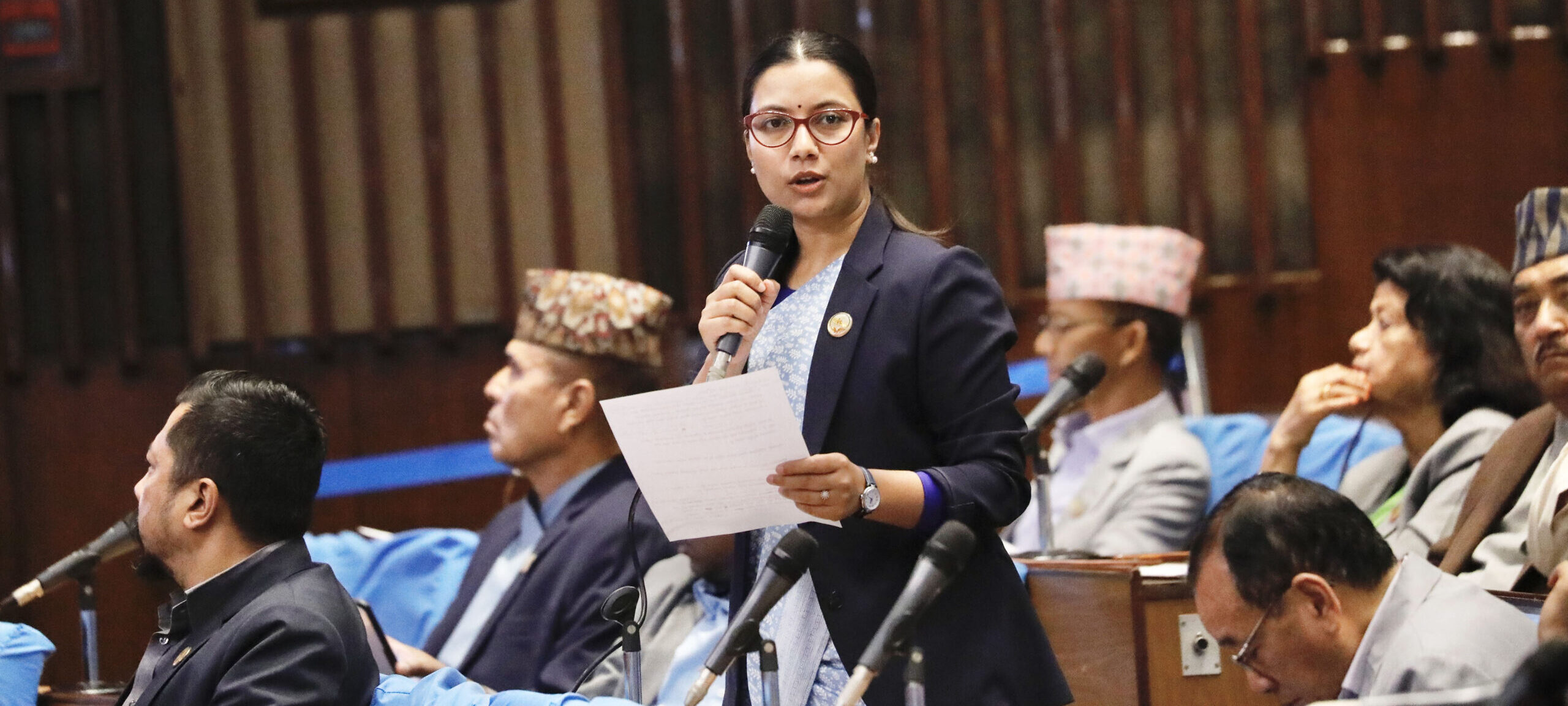
Chitwan-3 comprises the entire Madi Municipality and 19 wards of Bharatpur Metropolitan City. In the 2022 local elections, Renu Dahal won the Bharatpur mayoral race with Nepali Congress support, while UML secured the mayoral post in Madi.
Ward-level results showed Maoist dominance in Madi and a Nepali Congress-UML edge in most Bharatpur wards. In the same election, the Maoist Centre, supported by Nepali Congress, won six out of nine wards in Madi, while Nepali Congress failed to secure a single ward independently.
In Bharatpur, the Nepali Congress, backed by the Maoist Centre and Unified Socialist, won 15 wards, with UML as the main competitor in most areas. Dahal won the mayoral race with 52,028 votes, defeating UML candidate Bijay Subedi, who secured 39,582 votes. Nepali Congress rebel Jagannath Poudel polled 14,728 votes.
However, Nepali voters often differentiate between local and federal elections, voting for different parties depending on the level of government.
Lessons from the last federal election
In the 2022 House of Representatives election, alliance politics again shaped outcomes. UML-backed RPP candidate Bikram Pandey won Chitwan-3 with 35,060 votes. Maoist candidate Bhoj Raj Adhikari, backed by Nepali Congress, came second with 25,824 votes. RSP’s Jita Baral secured 14,843 votes, while Nepali Congress rebel Dinesh Koirala polled 12,275.
These results underline that Chitwan-3 does not have a fixed party vote bank, especially given repeated alliance shifts.
What could decide the outcome this time
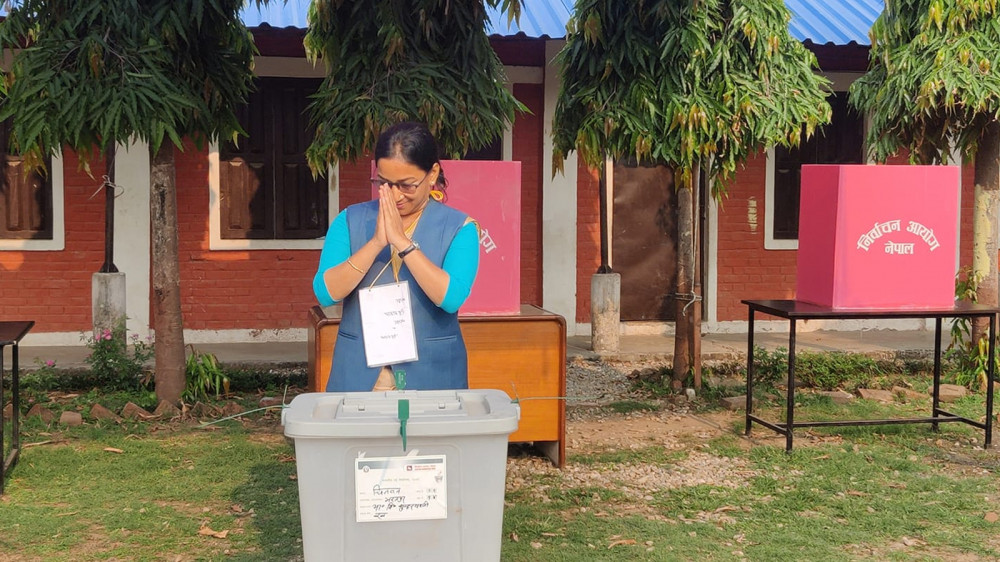
Several factors are likely to influence the outcome in Chitwan-3.
First, this election is being contested largely without formal alliances, reducing the likelihood of traditional vote transfers. This opens the possibility of a five-way competitive race rather than a two-party contest.
Based on past results and party bases in Bharatpur and Madi, candidates from Nepali Congress, UML and Maoist Centre appear to be the primary contenders.
Second, the perceived momentum in favor of RSP has become a major talking point. If this “wave” translates into actual votes, RSP could emerge as a serious challenger. The key question is how much of the traditional party vote RSP can draw from Nepali Congress, UML, Maoist Centre and RPP.
Third, development has become a central campaign issue. Supporters of Renu Dahal argue that Bharatpur has seen significant infrastructure progress over the past nine years under her leadership. Maoist leaders have framed this development narrative as a decisive factor for voters.
Fourth, candidate familiarity may also play a role. Dahal has worked continuously in Bharatpur for nearly a decade, while Gautam, elected from Kathmandu in 2022, has shifted her political base to Chitwan following her marriage to a local entrepreneur. This contrast between local continuity and recent relocation could influence voter sentiment.
At the same time, Gautam benefits from the broader RSP brand and the influence of party chair Rabi Lamichhane, who is contesting from Chitwan-2. RSP’s earlier electoral success in Chitwan has strengthened expectations of a repeat performance.
Ultimately, whether development narratives outweigh the anti-establishment momentum of RSP, or whether social media trends translate into ballots, will be decided by voters on election day. Chitwan-3, without doubt, remains one of the most closely watched constituencies in this election.






Comment