





KATHMANDU: Economic Digest offers a concise yet comprehensive overview of significant business happenings in Nepal, presented in easily digestible summaries.
Nepal’s recent economic indicators present a mixed but cautiously improving picture. Rising gold and silver prices reflect global dollar strength and investor preference for safe assets, while increased remittance inflows have supported foreign exchange reserves and household consumption.
The economy is showing gradual recovery driven by services, tourism, hydropower investment, and expanding digital payments, alongside controlled inflation. However, persistent structural challenges remain, including a widening trade deficit, weak industrial output, sluggish credit growth, low capital expenditure, and rising costs for small and medium enterprises.
Although government revenue collection has improved and foreign investment interest is growing, policy uncertainty, implementation delays, and overdependence on imports and remittances continue to constrain sustainable and inclusive economic growth.
Gold, silver prices hit new record highs in domestic market
Gold and silver prices have been rising continuously in the local market over the past several days, with both precious metals posting fresh record highs again on Friday. According to the Federation of Nepal Gold and Silver Dealers’ Association, the price of hallmark gold reached Rs 269,300 per tola, while silver is being traded at Rs 4,585 per tola. The current rates are the highest ever recorded for both metals in the domestic market. On Wednesday, hallmark gold was traded at Rs 268,100 per tola and silver at Rs 4,420. Prices dipped slightly on Thursday, with gold falling to Rs 267,500 per tola and silver to Rs 4,400, before rebounding sharply again on Friday. Market analysts attribute the continued rise in gold and silver prices to the strengthening of the US dollar, which has pushed up prices in the domestic market.
Food imports rise 14% through Birgunj border
Food items worth Rs 8.77 billion have been imported through the Birgunj border point during the first five months of the current fiscal year. According to the Birgunj Customs Office, a total of 183,149,808 kilograms of 17 different food items were imported during the period. Information Officer Udaya Singh Bista said that food imports during the first five months of the current fiscal year increased by 14 percent compared to the same period of the previous fiscal year.
Nepal’s economy shows gradual recovery amid structural challenges
Nepal’s economy has shown signs of gradual recovery in the first half of the current fiscal year, supported mainly by increased remittance inflows, stable inflation, and recovery in service-sector activities. Government data indicate modest growth in construction, transport, and hospitality sectors. However, industrial production and private investment remain weak due to high operational costs, policy uncertainty, and limited access to affordable credit. Economists say structural reforms, improved capital spending, and investor-friendly policies are necessary to sustain long-term economic growth.
Remittance inflows strengthen foreign exchange reserves
Remittance inflows to Nepal increased notably during the first five months of the fiscal year, providing critical support to foreign exchange reserves and domestic consumption. Nepal Rastra Bank reported higher remittance transfers from Gulf countries, Malaysia, and South Korea. Increased use of formal banking channels has also improved transparency and financial inclusion. Economists note that while remittances help stabilize the economy, overdependence poses long-term risks unless accompanied by productive domestic investment and job creation.
Trade deficit widens as imports continue to rise
Nepal’s trade deficit widened further as imports continued to outpace exports, according to recent customs data. Imports of fuel, food grains, machinery, and industrial raw materials increased, while exports remained limited due to low production capacity and competitiveness issues. Despite government efforts to promote exports, trade imbalance remains a major concern. Analysts warn that sustained import dependency could pressure foreign reserves and stress the economy unless export diversification and domestic manufacturing are strengthened.
Govt revenue collection improves but misses annual target
Government revenue collection has improved compared to the same period last year, driven mainly by customs duties and value-added tax. However, officials acknowledge that revenue remains below the projected annual target. Weak domestic production, lower imports of luxury goods, and tax compliance challenges have affected collection. Experts suggest expanding the tax base, improving enforcement, and digitizing revenue systems to strengthen fiscal sustainability and reduce dependence on borrowing.
Banking sector stability improves despite sluggish credit growth
Nepal’s banking sector has shown improved liquidity conditions as credit growth slowed and deposit collection strengthened. Nepal Rastra Bank officials said cautious lending practices and reduced loan demand helped stabilize interest rates. However, private sector borrowing remains low due to weak investor confidence and limited business expansion. Bankers stress the need for economic stimulus and policy clarity to revive credit demand and encourage productive investment across sectors.
Hydropower sector gains momentum with export prospects
Nepal’s hydropower sector has gained renewed momentum as private and foreign investors show increased interest in new and ongoing projects. Improved power purchase agreements and growing electricity export opportunities to India have boosted investor confidence. Energy officials believe hydropower development can play a transformative role in Nepal’s economy by reducing energy imports, generating export revenue, and creating employment, provided regulatory stability and infrastructure development are ensured.
Tourism industry records strong seasonal recovery
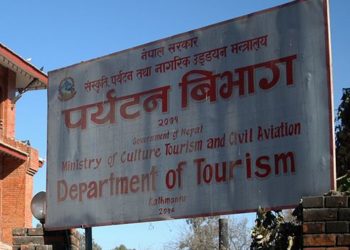
Nepal’s tourism sector recorded a strong recovery during the winter season, with increased arrivals of foreign and domestic tourists. Popular destinations such as Kathmandu, Pokhara, Lumbini, and Chitwan saw improved hotel occupancy rates and higher tourism-related spending. Tourism entrepreneurs credited improved air connectivity, promotional campaigns, and political stability for the growth. However, they emphasized the need for better infrastructure and service quality to sustain long-term recovery.
Inflation remains controlled, but food prices cause concern
Consumer inflation in Nepal remained within the central bank’s target range, offering relief to households amid global economic uncertainty. However, food prices showed periodic volatility due to seasonal supply issues and transportation costs. Economists warn that fluctuations in global commodity prices and climate-related disruptions could impact domestic inflation trends. They stress the importance of strengthening agricultural productivity and supply chain management to maintain price stability.
Capital expenditure improves marginally
Government capital expenditure improved slightly compared to the previous fiscal year, though overall spending remains low. Delays in project approvals, land acquisition problems, and weak coordination among government agencies continue to hamper infrastructure development. Economists caution that persistent underspending on capital projects could slow economic growth and reduce employment opportunities. Strengthening project planning and accountability mechanisms remains a key challenge.
Small and medium enterprises struggle with rising costs
Small and medium enterprises (SMEs) across Nepal are facing mounting challenges due to rising costs of raw materials, transportation, energy, and labor. Business associations say high interest rates and limited access to credit have further strained operations. SMEs, which are major sources of employment, have urged the government to introduce targeted tax relief, affordable financing, and policy stability to support business sustainability and economic resilience.
Digital payment usage expands rapidly
Digital payment transactions in Nepal continued to grow rapidly, driven by widespread adoption of mobile banking, QR payments, and e-wallets. Nepal Rastra Bank reported increased transaction volumes across urban and semi-urban areas, contributing to financial inclusion and transparency. While digital finance is reducing cash dependency, experts highlight the need for stronger cybersecurity measures and consumer awareness to protect users and maintain trust in digital systems.
Foreign investment interest grows despite policy challenges
Foreign investment interest in Nepal has shown gradual improvement, particularly in hydropower, tourism, and information technology sectors. Investors remain attracted by Nepal’s natural resources and market potential. However, policy uncertainty, bureaucratic delays, and legal complexities continue to discourage large-scale commitments. Analysts stress that simplifying procedures, ensuring policy consistency, and improving governance are essential to convert interest into sustainable foreign investment.



Comment