




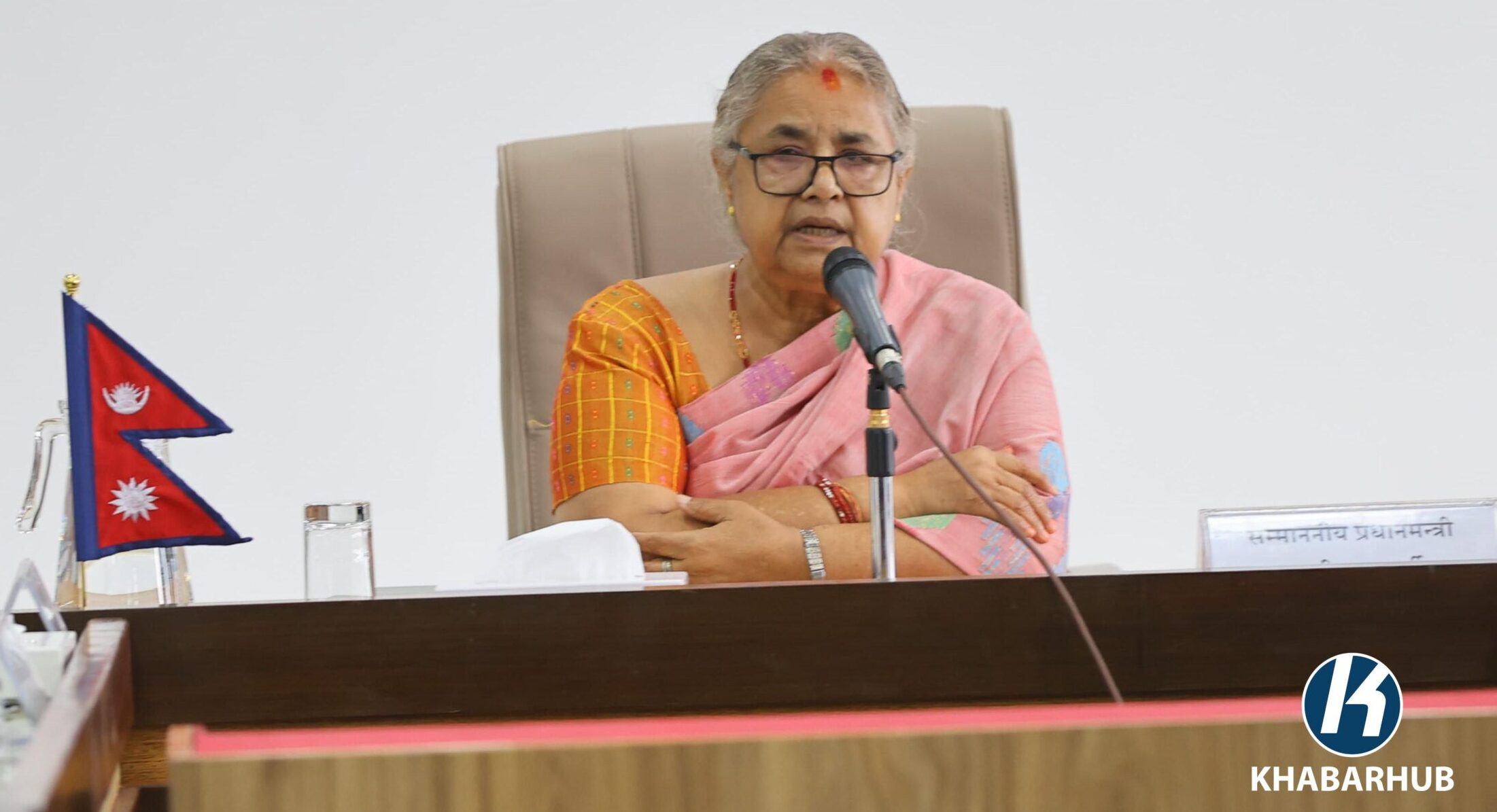
KATHMANDU: Prime Minister Sushila Karki has signaled a major shift in Nepal’s governance model by publicly questioning why the country’s Prime Minister must also serve as Chancellor of every major university.
Addressing the Tribhuvan University Assembly on Wednesday, PM Karki said the current system, where the head of government automatically leads 11 universities and six health academies, has become unmanageable and counterproductive. Her remarks come as she pushes to reduce the overwhelming number of institutions under the Prime Minister’s direct command.
PM Karki argued that assigning the Prime Minister as Chancellor is neither practical nor beneficial to academic institutions. Nepal currently has 17 universities, and 11 of them legally require the PM to serve as Chancellor. “It is impossible for one person to carry the responsibility of all these universities,” she said, stressing that the role should not be held by a political figure.
She explained that the dual burden of politics and academia has weakened rather than strengthened universities. Because the PM is involved in everything from national intelligence to disaster committees, she said, the university system ends up neglected.
“As a political office-bearer, the Prime Minister should not be the Chancellor of academic institutions,” Karki noted. She revealed that important academic decisions, such as annual policies and programs that should have been passed in June, often get stuck simply because the PM cannot attend meetings on time.
Karki said the position should instead be filled from within the university. “The Chancellor should be selected by the University Assembly itself,” she said, arguing that academic autonomy is the only way to ensure timely governance, accountability, and progress.
Burdened by dozens of institutions
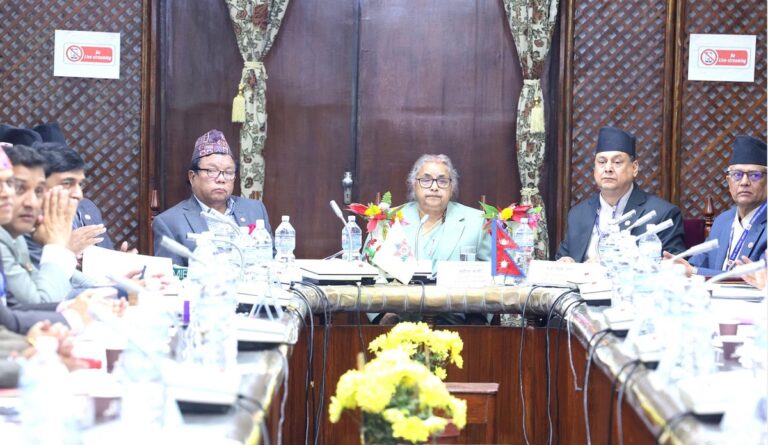
The Prime Minister currently oversees a long list of high-stakes institutions: the National Investigation Department, Department of Money Laundering Investigation, Revenue Investigation Department, Investment Board Nepal, National Planning Commission, National Development Council, several health academies, and even the Tiger Conservation Committee.
Former secretaries and governance experts say this centralization has weakened the state rather than strengthened it. They argue previous governments concentrated authority instead of delegating it, most notably former PM KP Sharma Oli, who pulled key investigative agencies under his office, drawing criticism that it politicized oversight bodies.
Because of such centralized control, PMs rarely find time to carry out even basic university duties. University laws mandate two senate meetings per year, but these meetings often happen only once, and sometimes at the PM’s residence rather than on campus. Karki’s decision to travel to the TU premises on Wednesday was itself unusual; several former PMs reportedly never stepped foot inside the universities they chaired.
Push for delegated authority
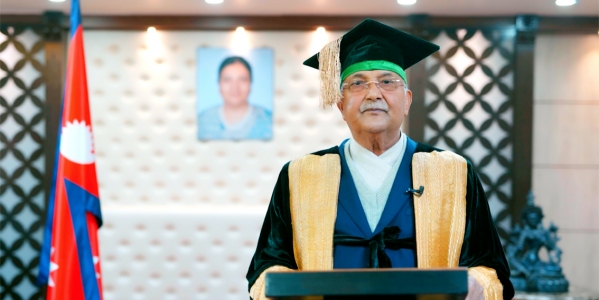
Governance expert Umesh Mainali said Nepal’s PM-centric administrative culture has failed to deliver results. “The Prime Minister’s main job is coordination, inspection, and direction—not doing everything personally,” he said. “Election-period governments must delegate authority as much as possible.”
Karki has echoed that view, signaling that the interim government will promote decentralization instead of accumulating power at the center.
Cabinet delays add to pressure
Despite her push for reforms, the PM continues to face pressure to complete her cabinet. Nearly six weeks after assuming office, she still holds seven ministries, Foreign Affairs, Defence, Water Supply, Women and Senior Citizens, Forest and Environment, Culture and Tourism, and Labor and Employment, due to a lack of consensus on new appointments.
Critics say the delay is eroding confidence, especially since several ministers recommended by Gen-Z groups have sparked controversy.
Political uncertainty and Gen-Z unrest
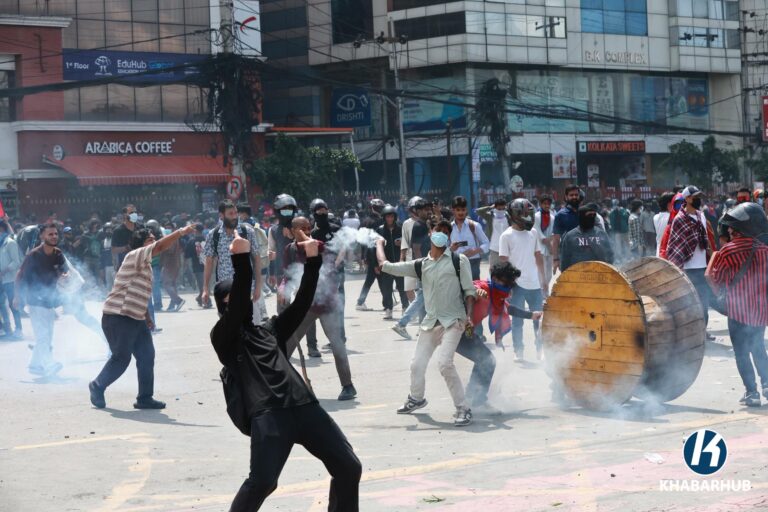
The government is also navigating growing tensions within the Gen-Z movement, whose fragmented groups continue meeting the Prime Minister with differing and often conflicting demands, from restoring the monarchy to abolishing federalism.
Mainali warns that the lack of unified leadership among Gen-Z groups has pushed the government into deeper uncertainty. “They must immediately form a common leadership and a clear set of demands,” he said.
Meanwhile, political parties are unsure whether elections will take place on the scheduled date of Falgun 21, citing security concerns and the volatile political climate. The Election Commission insists the polls will proceed as planned, but security arrangements and political trust remain major obstacles.
Pending investigations add pressure
The government has also formed a judicial inquiry commission led by former Special Court chair Gauri Bahadur Karki to investigate deaths and damage during the Gen-Z protests on September 8 and 9, when police firing killed 12 people. However, the commission’s work has stalled amid resistance from senior leaders and the Nepal Army.
As PM Karki attempts to guide the country toward elections while restructuring a heavily centralized system, her push to step away from ceremonial and administrative burdens, starting with the university chancellorship, signals a broader effort to redefine the role of Nepal’s Prime Minister.





Comment