




KATHMANDU: Modern medical science has made remarkable progress worldwide. Diseases once considered life-threatening have now become manageable, and compared with health services from a decade ago, today’s medical sector has achieved significant success.
However, this progress has also brought challenges—especially the widespread practice of taking medicines without consulting a doctor. Antibiotic resistance has emerged as a major concern and is listed among the top ten global public health threats identified by the World Health Organization (WHO).
According to Nepal’s National Antibiotic Action Plan, an estimated 1.3 million people die globally each year due to antibiotic resistance. The plan further warns that by 2030, antibiotic resistance could result in a loss of USD 100–300 billion in global GDP, pushing an additional 28 million people into extreme poverty.
What is antibiotic resistance?
Antibiotics are medicines used to stop the growth of bacteria or kill them to prevent infections in humans or animals. Antibiotic resistance occurs when bacteria develop the ability to survive or grow despite being exposed to these drugs.
More broadly, when bacteria, viruses, fungi, or parasites no longer respond to the medicines designed to treat them, the condition is known as antimicrobial resistance (AMR).
Among the many factors contributing to AMR—especially in bacteria—the most prominent is the misuse and overuse of antibiotics. Experts warn that commonly prescribed drugs are becoming ineffective against many infections.
Impact and prevention efforts
Pharmacologist Dr. Santosh KC says the unnecessary use of antibiotics has become a major public health challenge in Nepal. Speaking to Khabarhub, Dr. KC noted that although the government has prepared a list of essential medicines to ensure effective and affordable treatment, improper usage remains widespread.
Antibiotics are classified into three groups: Access, Watch, and Reserve. Access group medicines should be used for common infections, and WHO recommends that at least 60 percent of antibiotic prescriptions fall under this group. However, in Nepal, medicines from the Watch and Reserve categories—intended for more serious or resistant infections—are being used far more frequently than they should be, Dr. KC said.
Watch group antibiotics are used when first-line medicines do not work, while Reserve group antibiotics are considered a last resort. Excessive or inappropriate use of these stronger drugs—either in normal health situations or during community outbreaks—can render them ineffective, leading to severe consequences for both health and the economy.
Dr. KC also noted the widespread practice of taking antibiotics without medical consultation. In many villages and neighborhoods, people commonly take antibiotics based on suggestions from friends or shopkeepers, especially for seasonal illnesses like colds, where antibiotics are unnecessary.
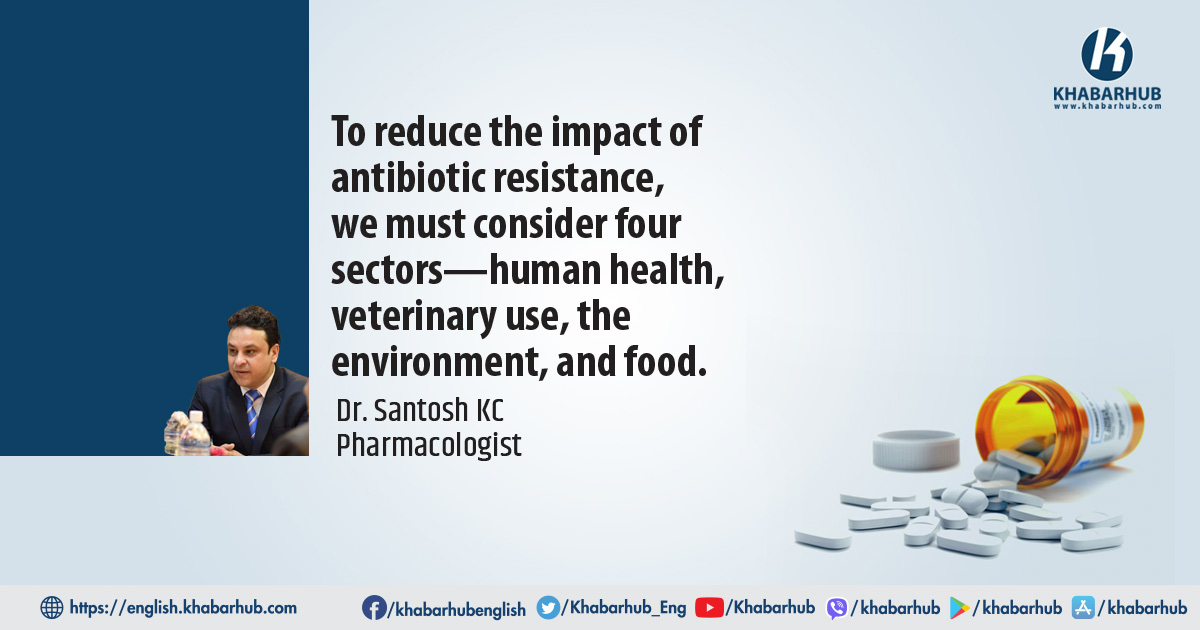
He emphasized that antibiotic resistance cannot be addressed by focusing only on human health. “To reduce the impact of antibiotic resistance, we must consider four sectors—human health, veterinary use, the environment, and food,” he said.
Work in Nepal to tackle global antibiotic resistance
Dr. KC said that high-level committees have been established to address environmental health issues related to food, medicine, animals, and humans—the sectors where antibiotics are used most in Nepal. Technical committees are functioning under their supervision, and a five-year operational plan has been developed to guide their work.
Laboratories across the country are also testing antibiotics to determine their effectiveness and identify emerging resistance patterns. Dr. KC emphasized the need to stop the practice of giving antibiotics to animals to promote rapid growth or prevent disease without proper justification.
According to him, antibiotics used in livestock can later affect people who consume meat, which is why efforts are underway to regulate and eventually ban such practices. Monitoring and inspection work is also being carried out in the food sector. Likewise, environmental measures are being taken to control contamination, as antibiotic residues can enter wastewater systems and spread to humans and animals through plants, soil, and water.
Associate Professor Dr. Meghraj Banjara of the Central Department of Microbiology, Tribhuvan University, said research shows that antibiotics are being used far more than necessary, and many drugs that once killed bacteria are no longer effective.
“No new antibiotics have been discovered in the past 36 years. If we use the antibiotics we currently have only when needed, they will remain effective for a longer period,” he said. He added that misuse continues due to incorrect prescriptions by some doctors and patients taking antibiotics without proper medical advice.






Comment