




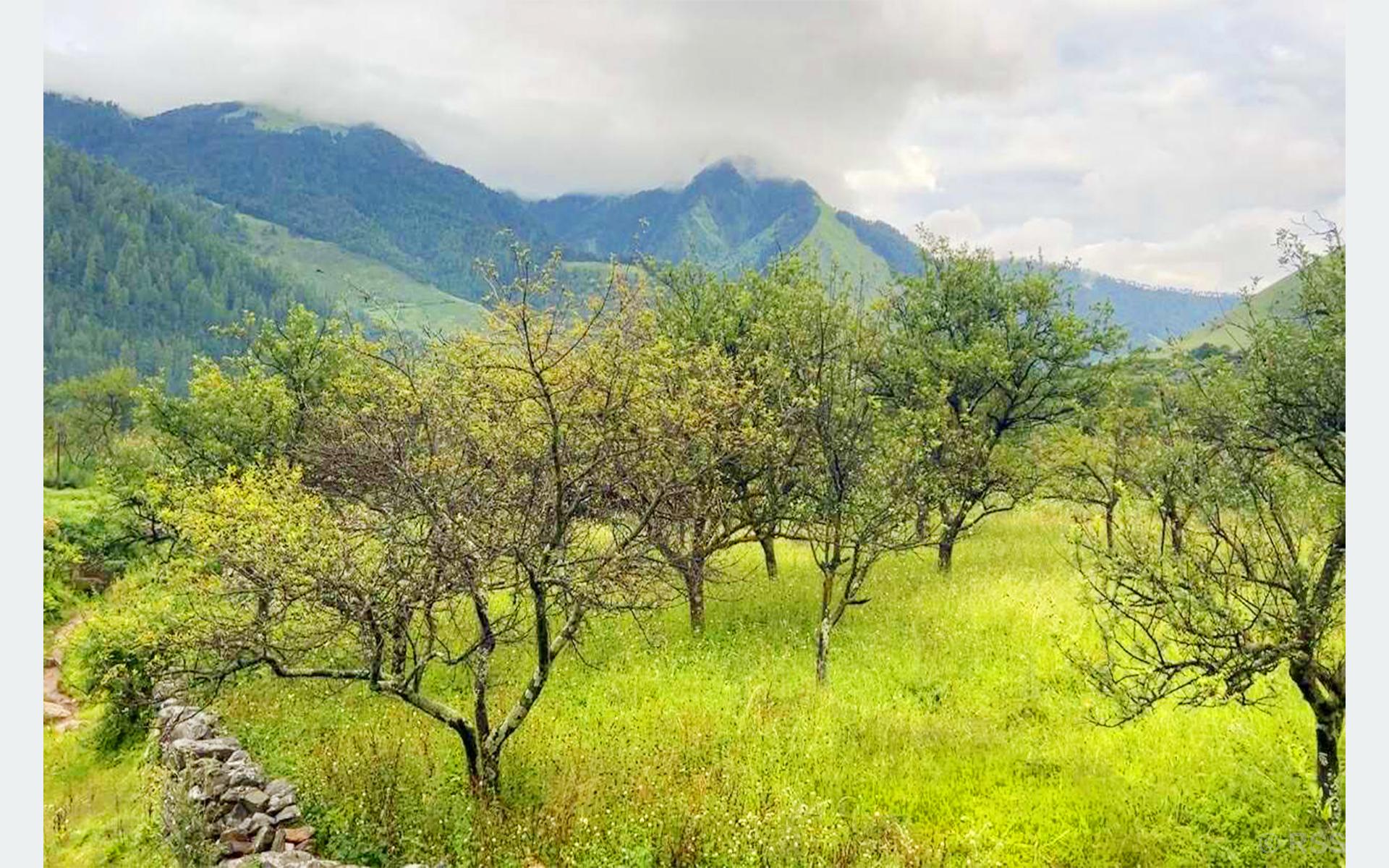
TAPLEJUNG: Apple farming trials in the Himalayan settlements of Ghunsa and Phaletar under Faktanglung Rural Municipality-6, Taplejung district, have yielded successful results, raising hopes for commercial apple cultivation in the region.
Apple saplings imported from Italy, including ‘Fuji’ and ‘Golden Delicious’ varieties, bore fruit within six months of planting, generating enthusiasm among local farmers and organizations.
Phaletar and Ghunsa, located near the Kanchenjunga base camp, now showcase model apple orchards under the Sustainable Ecological Agriculture System Program. These orchards, developed in collaboration with Manang Agro Farm, the Putali Sahib Yojana from Switzerland, and the local community, aim to empower farmers economically through apple and other agricultural products.
The Ghunsa orchard currently hosts 60 female Fuji trees, 10 male Golden Delicious, and 10 male Kala apple trees, complemented by honey bees and chickens to enhance pollination and soil fertility.
Soil tests conducted in Switzerland four years ago confirmed the suitability of the region for apple farming, and the apples produced have passed quality checks, including taste, grain, and sugar content.
Among apples from Ghunsa, Fuji registers 13 Brix, Gala 13.5 Brix, and Golden 17 Brix, while Phaletar apples measure 12, 13.5, and 15 Brix, respectively. Encouraged by these results, locals like Nupudunduk Sherpa are planning to expand their orchards, viewing apple cultivation as a promising source of additional income.
With continued foreign support and guidance from Swiss apple experts, farmers in Ghunsa and Phaletar are poised to scale up production, potentially transforming apple farming into a sustainable commercial venture for the eastern Himalayan region.




Comment