




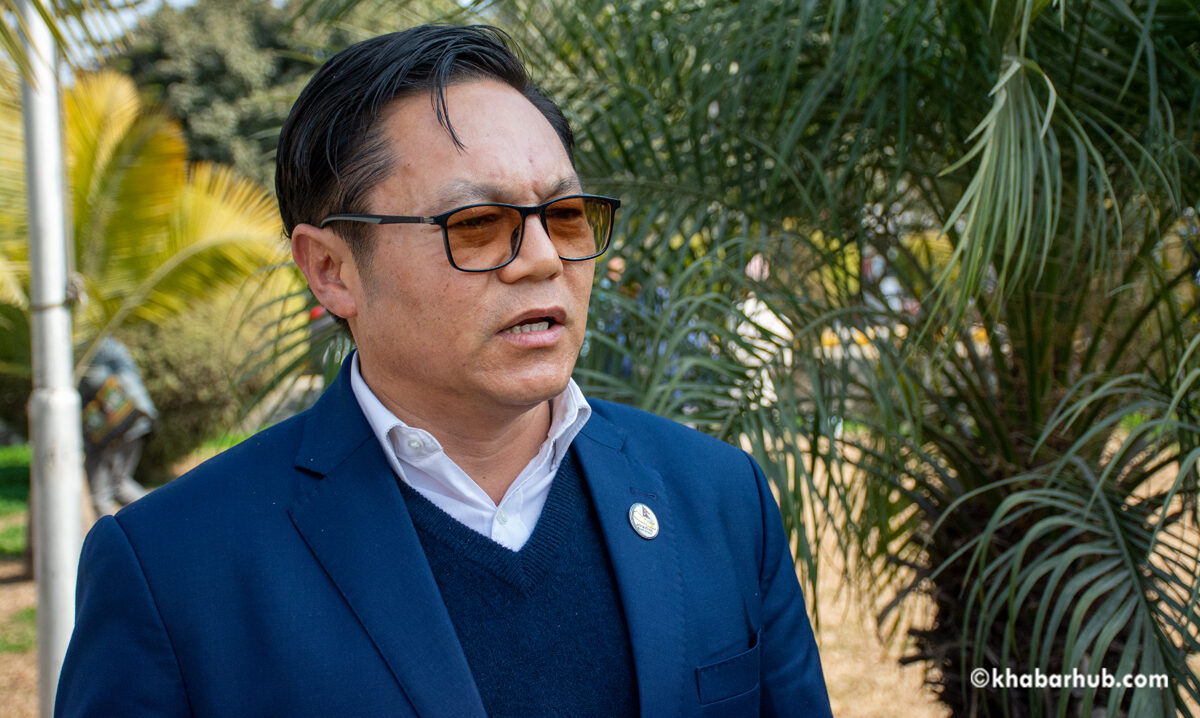
KATHMANDU: Sudan Kiranti, known as an ideological youth leader of the Maoist Centre, emerged as a prominent political figure after winning general elections from Bhojpur, defeating former Koshi Province Chief Minister Sherdhan Rai.
Following his victory, he became the Minister for Culture, Tourism, and Civil Aviation for the first time. From the beginning, Kiranti has consistently advocated for Maoist reorganization and generational change within the party.
A vocal critic of Maoist Chair Pushpa Kamal Dahal Prachanda, Kiranti is regarded as a strong supporter of Janardan Sharma. He is also known as a close confidant of former Maoist Secretary Ram Karki and has consistently expressed his disagreement with the unification of eight political parties, including the Maoist Centre.
In an interview with Khabarhub, Kiranti stated that the recent eight-party unity—which he described as a coalition for the protection of personal interests and technology rejected by the people—was unacceptable.
He emphasized his intention to build a party centered on issues that resonate with the people, adding that he would never join an alliance led by self-serving figures such as Maoist Chairman Prachanda and Unified Socialist Chairman Madhav Kumar Nepal. “It is not an alliance,” he said, “but a dissolution.”
When asked whether he intended to form a new Maoist party, Kiranti replied: “We don’t want to become another shop. What we need is ideological strength and a campaign that addresses the problems of the people and the nation. The party itself is secondary.”
Kiranti acknowledged that he has recently held discussions with leaders including Unified Socialist General Secretary Ghanashyam Bhusal and CPN General Secretary Netra Bikram Chand Biplav. However, he clarified that no decision has yet been made regarding the formation of a single party or the announcement of a new political campaign.
Below is an edited excerpt from Khabarhub’s conversation with Sudan Kiranti on the latest political developments and current affairs:
You have been opposing party unity. How will you move forward?
We will not pursue unity under any circumstances. We will reorganize the party in favour of farmers and workers.
There’s gossip that you’ll return after two or three days. Is that true?
My words and my actions are consistent. Speech is one thing; behaviour is another. I will continue to fight against this trend. Please record what I am saying: my behaviour remains the same. I will not join the current immature, position-based unity under any circumstances.
I would rather stand alone than drink the blood and sweat of the people. I will remain the voice of the people. I will not join a game that misleads people in the name of unity.
Here, Janardan Sharma and Ram Karki are on the same path, right?
It seems this is a time to accept that poverty, corruption, and illiteracy are the biggest common enemies of Nepalis — and to work to eliminate them. They are also with us on this.
How can you be sure those three leaders will stay together under any circumstances?
I am not claiming to be different. But if anyone tries to overshadow the issues we have raised, that will not be right. So far, we have reached consensus on the core issues. All those who decide to serve the country with wisdom and knowledge will join this campaign. I also appeal to others to do so.
Are talks taking place with disgruntled leaders from the Unified Socialist Party, Ghanashyam Bhusal, and NCP General Secretary Netra Bikram Chand Biplav?
Yes. Discussions have been held with everyone who agrees on the issues. Unity can happen, but not the way it has been presented — as if unity has already been achieved. It hasn’t. They are positive toward us, and we are positive toward them. But the issue must be understood by the people.
What should the unity be based on?
It should focus on the people’s needs. People need rice; they don’t want a party that feeds them philosophy. We do not want that. The door is open from today. Dialogue is continuing. We will move forward by bringing together all who share similar views.
You say it is not good for eight parties to unite. Why are they protesting?
Which eight parties? If they had been active in Nepali society, people would know them as eight parties. This is not unity — not unity in ideas, politics, policies, programs, or organizational style. This unity is meant to protect vested tendencies that the people have rejected.
Because this unity is driven by interest groups, it is disintegration rather than unity. We should not enter a unity that deceives people through positions and vested interests. It is no longer possible to deceive the people; they have become aware.
What should be done to involve everyone?
Stop this kind of unity and transform the party based on the people’s sentiments. We can move forward only if we apologize to the people for past incidents and demonstrate that we have transformed our lifestyle, organization, program, and ideas. We remain where we are; others have moved on. We need to change.
Will the Maoist party be taken forward?
We are in discussions. All progressive forces should join the national campaign. Our enemies are poverty, corruption, and illiteracy.
Will a new party emerge in the end, or will the Maoists take the lead?
We don’t need to add another 26 parties to the existing 125 — that would be like opening another shop. What we need is ideological strength and a campaign to solve the people’s and the nation’s problems. The party itself is a secondary matter.





Comment