




KATHMANDU: The past week has been nothing short of consequential for Nepal’s political establishment. In a span of just seven days, one of the country’s most prominent political figures was arrested for alleged involvement in a smuggling operation; dozens of ambassadors were recalled; VIP security privileges were cut; new provincial leadership was sworn in; and the government reaffirmed its commitment to elections.
These events, while varied in scope, share a unifying theme: a rising demand for accountability, transparency, and change—a demand intensified by the ongoing impact of the Gen-Z movement.
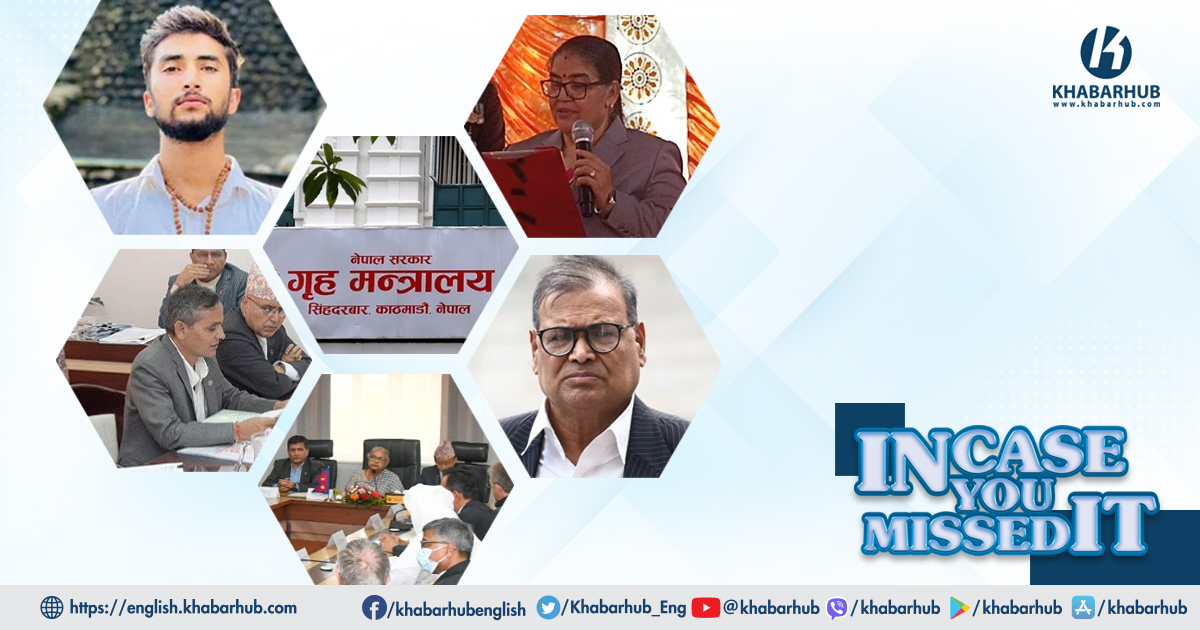
The arrest of former Speaker Krishna Bahadur Mahara in connection with the gold smuggling case was the week’s most explosive development. Detained by the Central Investigation Bureau (CIB) and later sent to judicial custody, Mahara’s alleged role in shielding smugglers who hid nearly 9 kilograms of gold inside electronic vapes imported from Dubai highlights the entrenched nexus between political power and illicit trade.
This is not Mahara’s first brush with scandal. However, the fact that he has now been formally charged—and could face a hefty fine of over Rs 85 million—indicates that Nepal’s legal institutions, long criticized for being toothless when it comes to political elites, are beginning to respond to public pressure and a shifting political climate.
This arrest also reflects the broader implications of the Gen-Z movement, which, though temporarily quieted, has left a lasting impact on the public discourse. The mass protests of early September demanded not only an end to corruption and nepotism, but a rethinking of how state resources are used.
But one thing is clear: Nepal’s political establishment is no longer insulated from scrutiny or consequence. The people are watching, demanding, and increasingly participating in the shaping of their democracy.
In this context, the government’s decision to recall 271 security personnel—assigned beyond protocol to political leaders and former officials—marks an important symbolic move. Leaders such as Prachanda and KP Sharma Oli were found to be using double the number of security personnel allowed by law, an excess that has long irritated a public dealing with economic hardship and state dysfunction. These cuts are more than bureaucratic housekeeping; they are a political gesture meant to realign the privileges of power with the principles of public service.
In a similar vein, the recall of ambassadors from 11 countries—including powerful diplomatic posts in the U.S., U.K., China, and Japan—signals a reset by the interim government led by Prime Minister Sushila Karki. The move strips away a number of politically appointed envoys, many of whom lacked diplomatic backgrounds, and reasserts the government’s authority over foreign policy.
Though such reshuffling is common after political transitions, the scale and speed of this recall reflect a growing intolerance for patronage appointments at a time when the public is demanding merit and professionalism in governance.
Prime Minister Karki, now one month into her caretaker government’s tenure, used the week to double down on her core mandate: preparing for free, fair, and timely parliamentary elections in March 2026. At a diplomatic briefing, she acknowledged the lessons of the Gen-Z movement, calling it a demand for integrity and good governance.
Her speech offered a rare blend of political realism and reformist intent—emphasizing electoral reforms, diaspora voting rights, and institutional strengthening. Karki’s tone suggested an administration aware of its limited timeline but determined to leave a legacy of procedural clarity and democratic renewal.
Meanwhile, provincial politics saw a quiet but notable development. Jitendra Sonal was sworn in as Chief Minister of Madhes Province, backed by a multi-party coalition. The use of Article 168 (2) of the Constitution to form the government underlines the shifting political sands at the provincial level, where traditional party alliances are proving increasingly fluid. As provinces grow in political and fiscal autonomy, this development is worth watching—it may reflect a slow but steady maturation of Nepal’s federal experiment.
Internationally, the confirmation of the death of Bipin Joshi, the Nepali national held hostage by Hamas, brought a moment of national mourning. The repatriation of his body, along with three Israeli victims, underscores Nepal’s growing entanglement in global events through its diaspora.
The tragedy has again raised concerns about the safety of Nepali migrant workers and the limited protection they receive in conflict zones. While the Foreign Ministry and the Red Cross played their roles, the incident demands a broader policy conversation about labor migration, diplomatic readiness, and consular support.
The week also brought administrative changes. The District Administration Office (DAO) Kathmandu issued a two-month ban on rallies and protests in key government and diplomatic areas, citing concerns over public order.
While such measures are legally justifiable under the Local Administration Act, they also raise valid questions about the balance between maintaining order and preserving the right to peaceful assembly—especially after a protest movement like Gen-Z which galvanized civic participation and political awakening across demographics.
Adding to the economic side of governance, the Nepal Rastra Bank (NRB) issued new regulations for casinos, requiring pre-approval for foreign exchange transactions and introducing stricter transaction limits on debit, credit, and prepaid cards. These steps reflect a push toward tighter financial regulation and control of capital outflows, at a time when Nepal’s foreign exchange reserves remain under pressure and the informal economy continues to expand.
Finally, one of the most striking political messages of the week came not from the state, but from within the opposition. Nepali Congress General Secretary Gagan Thapa, in a candid video address, openly called for a generational shift in leadership. Urging Sher Bahadur Deuba, KP Oli, and Pushpa Kamal Dahal to step aside, Thapa argued that Nepal’s future should not be dictated by the “musical chairs of power” between the same few faces.
His message resonated not only with his party’s base, but with a broader swath of citizens—particularly the youth—who are demanding leadership that reflects current realities rather than past loyalties.
Conclusion: Toward an Uncertain but Charged Political Future
Taken together, these events point to a country in transition. The wheels of justice, governance, and reform—though slow—are moving in response to a historic wave of public dissatisfaction. Whether this week’s developments will translate into meaningful, sustained change remains uncertain.
But one thing is clear: Nepal’s political establishment is no longer insulated from scrutiny or consequence. The people are watching, demanding, and increasingly participating in the shaping of their democracy. The system, long burdened by inertia and impunity, may finally be waking up. In this climate, political leaders—both old and new—must choose: resist the tide, or ride it toward reform.






Comment