




KATHMANDU: Last week in Nepal was marked by a dynamic convergence of politics, policy actions, institutional assertiveness, and cultural transitions. From travel bans imposed on top political figures to decisive action on long-stalled infrastructure projects, and from cultural rituals to sporting triumphs, the developments reflected a country in the throes of transformation—cautiously moving toward greater accountability while grappling with the weight of history and public expectations.
Institutional assertion and the accountability question
The most politically significant move of the week came with the Commission’s decision to bar former Prime Minister KP Sharma Oli, former Home Minister Bal Krishna Khand Lekhak, and three other high-level officials from leaving the Kathmandu Valley, as they may be required for questioning in connection with an ongoing investigation. The decision, coupled with a recommendation to suspend their passports, signals a firm assertion of investigative authority—a step rarely taken against top-level political figures in Nepal’s post-monarchy democratic history.
For decades, Nepal’s politics has been dogged by allegations of impunity, elite capture, and unaccountable governance. The Commission’s travel ban can be interpreted as a potential break from that legacy. However, such a move also walks a fine line—it must be seen as impartial and procedural, not politically motivated or selectively applied. The Commission’s request for additional expert manpower suggests it is mindful of both the legal complexities and the heightened public scrutiny surrounding this case.
Whether this action leads to meaningful justice or fizzles into bureaucratic theater will depend on the transparency of the investigation process and the state’s political will to pursue accountability at all levels—regardless of rank or legacy.
PM Karki’s balancing act
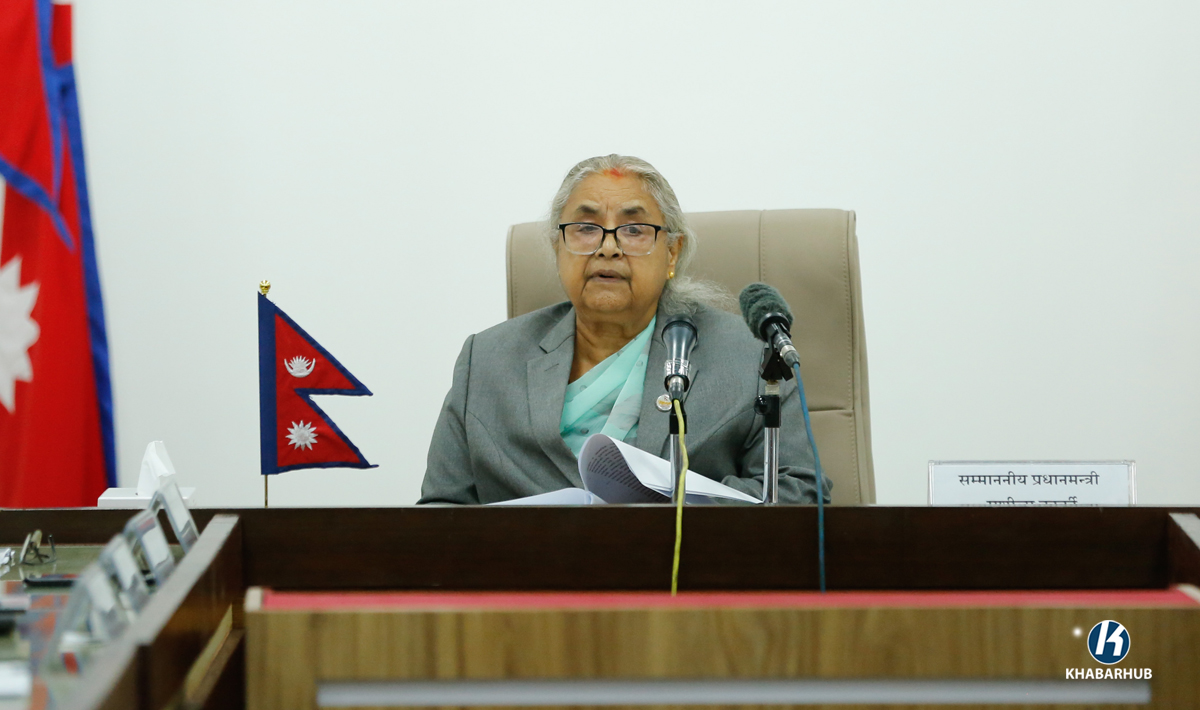
Prime Minister Sushila Karki used her Dashain message not just as a seasonal greeting but as a strategic reaffirmation of her government’s reformist agenda. Emphasizing timely elections and good governance, Karki highlighted the Gen-Z Protest as the moral foundation of her administration—a reminder that her government emerged from a moment of youthful revolt and deep public frustration with the political establishment.
Notably, PM Karki’s decision to abstain from receiving or offering Dashain tika reflected a moment of collective mourning. In the aftermath of the Gen-Z movement—which saw over 75 deaths—the symbolic gesture was poignant. It sent a message that state leadership must remain attuned to public grief, not just political routine. It also offered a contrast to the performative politics often associated with festivals in South Asia.
Her appointment of three key advisors, including media veteran Ajay Bhadra Khanal and social campaigner Govinda Narayan Timilsina, indicates a strategic effort to build a principled inner circle—one that can both manage public perception and assist in delivering on key reform promises.
Infrastructure must deliver
Meanwhile, Minister Kulman Ghising’s dual announcements—termination of 234 long-stalled contracts and a 21-day ultimatum to industries for unpaid NEA dues—signaled a sharp break with bureaucratic inertia. The practice of receiving large government contracts, securing advance payments, and then failing to deliver has long plagued Nepal’s infrastructure landscape. Ghising’s direct confrontation of this issue, including naming key locations and benchmarks, reflects a hands-on governance approach.
The contract termination process also includes a commitment to investigate past and present officials responsible for stalled projects—another indication of rising institutional accountability. If enforced consistently, it could disrupt entrenched networks of corruption and set a new precedent for how public funds are managed.
Similarly, the Nepal Electricity Authority’s (NEA) ultimatum to clear trunk line dues—historically a hotbed of political interference and favoritism—underscores a move toward fiscal responsibility. With MD Manoj Silwal publicly committing to long-term structural reforms, there appears to be genuine momentum in sectors that have long suffered from mismanagement and underperformance.
Sampang and the politics of authenticity
Beyond formal government institutions, Dharan Mayor Harka Raj Sampang’s move to register the ‘Shram Sanskriti Party’ suggests an evolving political narrative where authenticity and grassroots credibility are increasingly valuable political currency. Sampang, who rose to national prominence through his outspoken activism and independent electoral win, is attempting to institutionalize his populist appeal.
While details about the party’s ideology remain unclear, the mere formation of a political vehicle reflects a shift in Nepal’s democratic landscape—from career politicians to cause-driven leaders. Sampang’s antagonism toward Kathmandu Mayor Balen Shah and his earlier attempt to join the Karki government point to ongoing tensions and realignments within the non-traditional political space.
Dashain in the shadow of disaster
Even as the country celebrated Bijaya Dashami, the week was marked by the aftershocks of natural calamity. With dozens of lives lost and hundreds displaced due to landslides and floods in eastern districts like Ilam, Jhapa, and Panchthar, the festive season was subdued for many. The National Disaster Risk Reduction and Management Authority’s decision to offer immediate Rs 2 lakh relief to families of the deceased and free medical treatment for the injured was a necessary but reactive measure.
At a time when climate-induced disasters are becoming more frequent, the government’s approach must go beyond relief—toward early warning systems, resilient infrastructure, and robust disaster governance mechanisms.
Moments of national pride and cultural continuity
In a much-welcomed moment of national pride, Nepal recorded a historic T20 victory over the West Indies—the first time Nepal defeated the two-time world champions. The win in the Unity Cup in Sharjah offered a morale boost and reflected the maturing of Nepal’s cricketing prowess, especially among a young and dynamic team.
On the cultural front, the selection and installation of Aryatara Shakya as the new Living Goddess (Kumari) highlighted the enduring power of tradition in Nepal’s civic life. Rooted in centuries-old beliefs, the Kumari institution coexists with Nepal’s modern identity as a secular republic, showcasing the country’s capacity to hold space for both reverence and reform.
A week that reflected Nepal’s complex transition
In sum, the week’s developments reveal a nation navigating multiple, often competing, transformations—institutional, cultural, political, and infrastructural. The travel restrictions on political heavyweights, the reform drive led by PM Karki and Minister Ghising, and the cultural rites of Dashain and the Kumari—all speak to a Nepal that is attempting to consolidate its democratic gains while confronting old ghosts.
However, the challenge remains in sustaining these efforts. Political accountability must not become selective. Administrative efficiency must outlive its headline. And disaster response must evolve into disaster preparedness. Only then can the bold promises of this new political generation be translated into tangible, lasting change.





Comment