




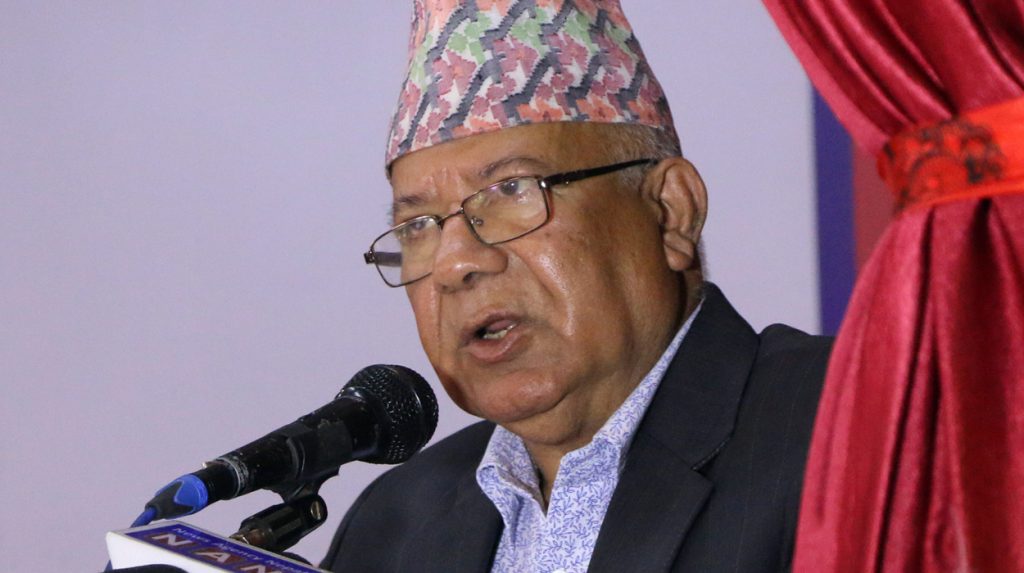
KATHMANDU: The Unified Socialist has laid the theoretical groundwork for transitioning party leadership to a new generation, signaling a shift toward internal reform and generational renewal.
In a recently issued manifesto, party chairman Madhav Kumar Nepal emphasized key priorities including reforming the Communist Party’s working style, addressing internal shortcomings, strengthening party democracy, and initiating a leadership handover.
The manifesto outlines the party’s organizational principle of democratic centralism, affirms socialism as its long-term strategic goal, and proposes advancing a socialist program with Nepali characteristics. It also serves as a guiding document for potential unity efforts with other groups and parties sharing similar ideological foundations.
As part of its strategic direction, the party has committed to resolving contradictions between the Nepali people and the capitalist class and taking a firm stance against neo-colonialism.
The Unified Socialist has already initiated dialogues with various leftist and socialist forces, including the Ashok Rai-led JSP, the Maoist Centre, and the Biplav-led CPN, as part of its broader effort to forge left unity in the country.




Comment