




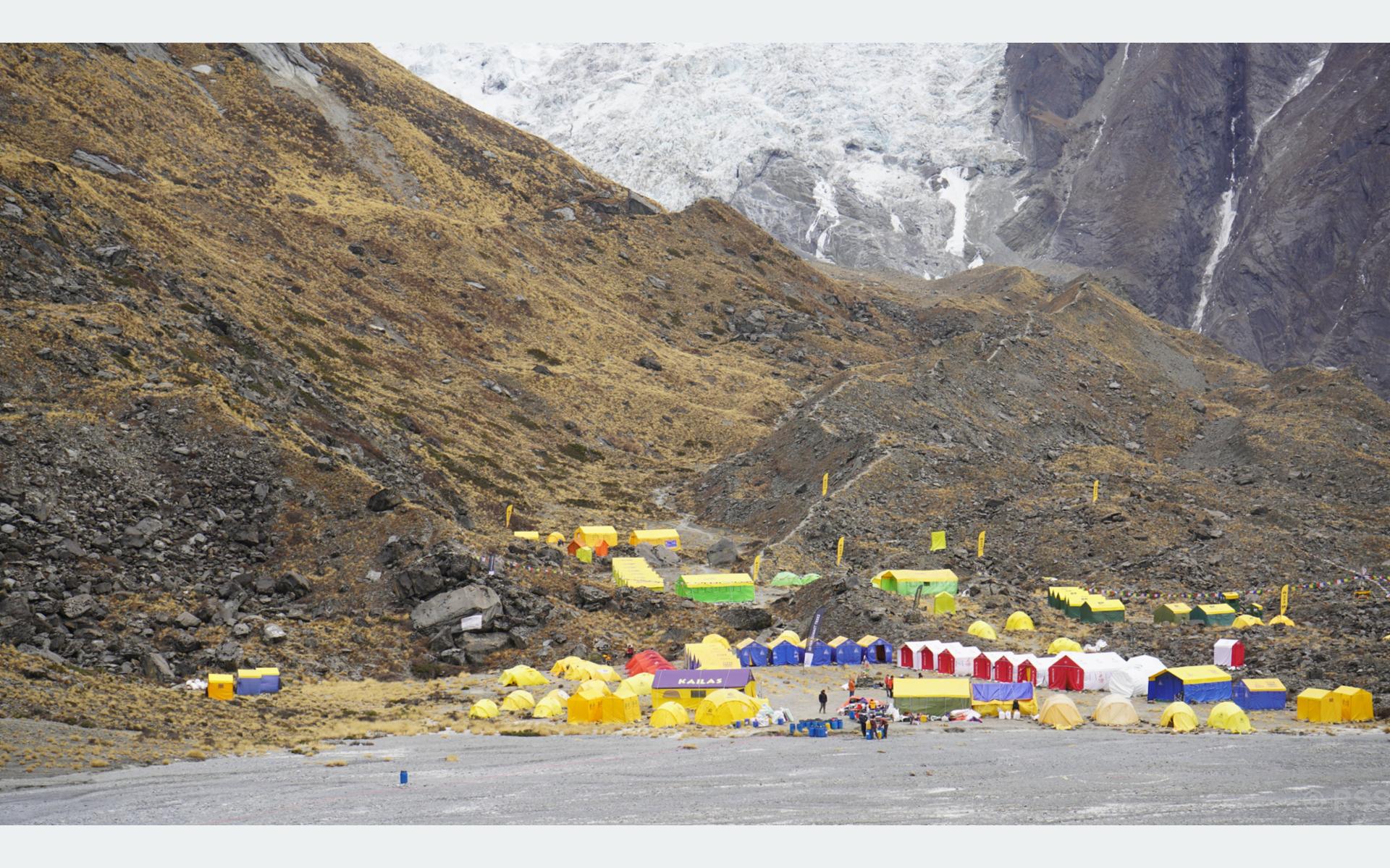
MYAGDI: Tourists are flocking to the Maurice Hargoz trek and Annapurna Base Camp with the onset of autumn. The 8,091-meter-high Annapurna Himal Camp, located in Annapurna Rural Municipality-4, has seen a steady increase in visitor traffic.
Currently, 15 to 40 trekkers reach the base camp daily, said Shyam Purja, a ward member of Annapurna-4. He added that the number of trekkers is expected to rise further after the Dashain-Tihar holidays begin.
The Annapurna Base Camp trek offers stunning views of high waterfalls, beautiful mountain ranges, unique geography, and rare flora and fauna along the banks of Mistrikhola. From Humkhola, accessible by a two-hour drive from Narchang, trekkers can reach the base camp in two days and return on the third day.
The base camp has become popular because it can be reached in a short journey. Visitors are drawn to its peaceful, secluded environment, abundant wildlife, forests, deep mountain gorges, rushing waterfalls, and the blue Panchkunda Lake at the foot of the Annapurna Himal.
Sandeep Bhatta, who traveled from Gorkha, said he chose the Maurice Hargoz trekking route and Annapurna Base Camp for a short trek to enjoy nature and escape the city’s hustle and bustle.
This trekking route was identified in 2067 BS under the leadership of Tej Gurung of Narchyang, and the Annapurna Rural Municipality officially opened it in 2077 BS, naming it after Maurice Hargoz.
The rural municipality has developed shelters, public toilets, drinking water facilities, maintained the trekking route, and established an open museum at the base camp, which sits at an altitude of 4,100 meters above sea level. With a grant of Rs. 500,000 from the Annapurna Conservation Area Project (ACAP), a wooden bridge was built at the Red Waterfall and Sunkhola.
Following private arrangements with ACAP and permission from the rural municipality, local youth from Narchyang have started operating campsites at Futfute Jharna (waterfall), Sadhikharka, Gufaphant, Bhusket, and the Panchkunda Lake area of the Annapurna Base Camp.
These camping sites offer comfortable food and accommodation, reduce the need to carry heavy luggage, and have created employment and income opportunities for locals. The camps have the capacity to host up to 50 tourists daily.





Comment